Spot the moment your mind wandered
Each bar is one tap: taller means slower. Watch for runs of faster taps right before a slip: that's autopilot kicking in.
Play a round to draw your attention trace.
Autopilot is fast, and blind
Because you tap for eight digits out of nine, tapping becomes a habit. The habit speeds you up, and the 3 slips through. Researchers call it "mindless" responding; it's the same thing that makes you drive past your exit.
Where sustained attention does the work
Long drives
Motorways are the classic setting for autopilot, and for missed exits.
Safety checks
Airport security and quality control mean spotting rare problems among thousands of normal items.
Studying
Reading a page and realising none of it went in is a sustained-attention lapse.
Monitoring
Nurses and air-traffic controllers watch for rare but important changes for hours.
Stay in the room
Notice the speed-up
If your taps start to feel effortless and quick, that’s the warning sign, slow down on purpose.
Read every digit
Silently name each one. Naming forces you to look before you act.
Reset after a slip
A mistake often wakes you up. Use it: take one breath and re-engage.
Short and often
A minute a day of real focus beats five minutes on autopilot.
Two networks, taking turns
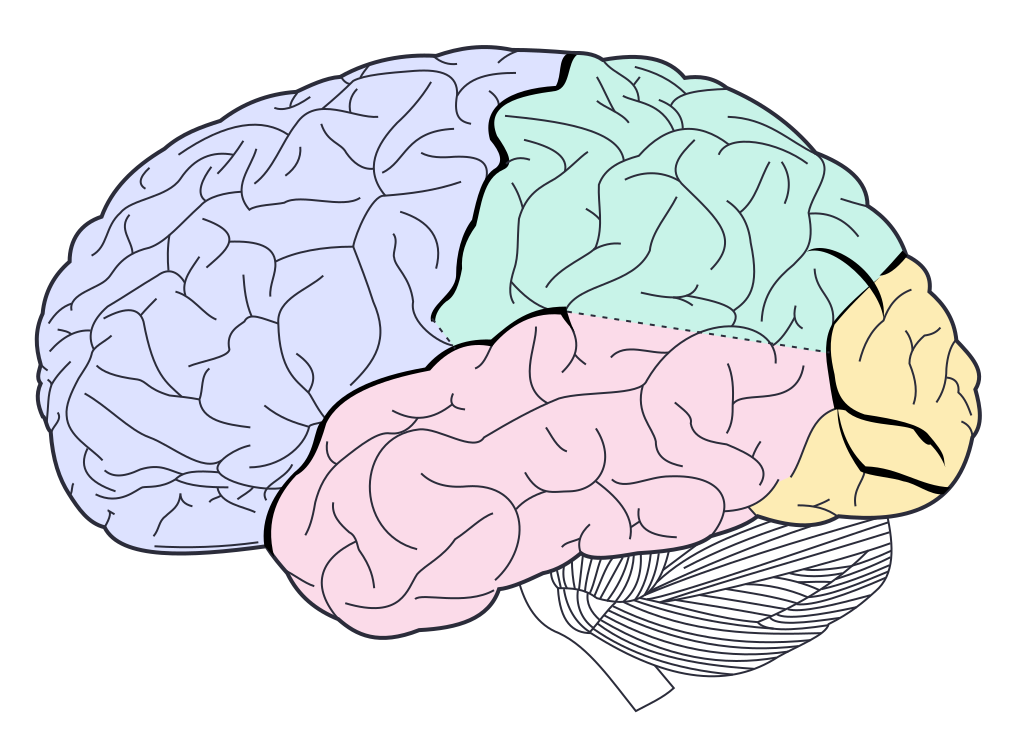
An attention network keeps you on task; a "default mode" network pulls you into daydreams. Pick a region.
In a study that pinged people's phones at random, they were thinking about something other than what they were doing almost half the time.
Killingsworth & Gilbert, 2010This game is based on the Sustained Attention to Response Task, designed to catch lapses in patients after brain injury, and now used in hundreds of mind-wandering studies.
Robertson et al., 1997Keeping focus over minutes
Respond to every digit except one. It's dull on purpose: the test is whether your attention drifts into autopilot and lets the rare target slip through.
Where it matters most day to day
More focus games
All 40 games →Spot the rare double-jump of a clock hand.
Count breaths to nine without drifting.
Tap for targets, hold back for lures.
Name the ink colour, not the word.