Sending a message
GOHit send on a routine reply.STOPPause on the angry one you’ll regret.
Green circle? Tap, fast. Red cross? Don't move. Most shapes are green, so your hand gets ready to go before you've looked.
Hits and correct stops are wins. The box to watch is false alarms, tapping when you should have held. That's your brake failing. The grid fills in as you play.
Each mark is one shape. Taller bars mean slower taps. Watch what happens just before a red slip, people often speed up right before they fail to stop.
The more often you tap, the more your hand expects to tap again. That's why the game makes red rare. Slide to see how the habit grows as green takes over.
Stopping isn't just not-going. A dedicated circuit, strongest on the right side of the brain, actively slams the brakes on a movement that's already on its way.
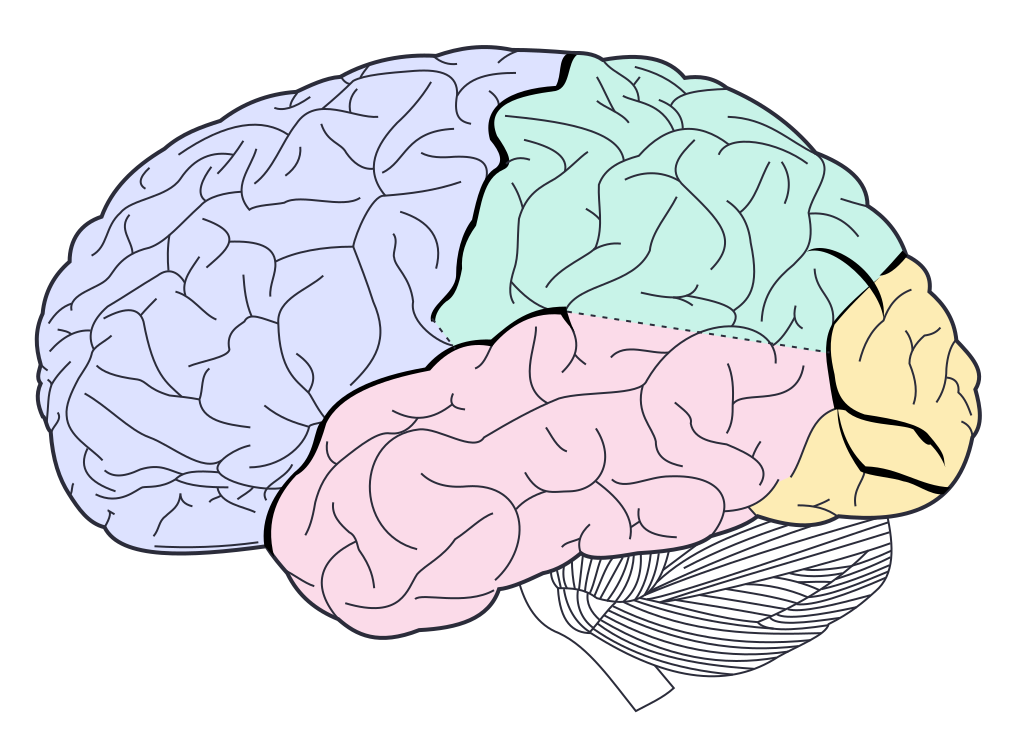
Spots the red cross and sends the “stop” signal. On the right side of the brain, it’s the area most tied to stopping.
Just in front of the motor strip, these areas hold the prepared tap in check before it reaches your finger.
A pathway through deep structures near the thalamus cuts the movement off, fast.
The map shows one side of the brain; the stopping circuit is strongest on the right.
Dutch physiologist Franciscus Donders measured how much longer people took when they had to respond to one signal but not another. The extra milliseconds, he argued, were the time it takes to decide: one of the first attempts to time a thought.
Respond fast to most signals, and hold back on the rare one. It's the simplest test of response inhibition: stopping a habit before it happens.
Start tapping, then cancel when the arrow turns red.
Answer the middle arrow, ignore its neighbours.
Name the ink, not the word.
Sort by colour, then by shape.