Catches fade as the minutes pass
The "vigilance decrement": when targets are rare, most people catch fewer of them as time goes on. Here's your session, split into quarters.
Play a session to see your vigilance curve. Longer sessions show the decrement more clearly.
Why a clock?
In the Second World War, radar operators hunting for U-boats missed more and more blips as their watch wore on. Norman Mackworth built a clock with a jumping pointer to study it in the lab. He found detection dropped sharply within the first half hour.
Rare targets
When the thing you’re watching for almost never happens, attention sags.
Monotony
Every tick looks the same, so the brain stops treating them as news.
Time on task
The longer the watch, the more you miss — even if you try hard.
Mental cost
Staying ready for nothing drains resources, like holding a weight.
Beat the decrement
Expect it now
Treat every tick as if it might be the jump. Waiting for "later" is how you miss it.
Track the gap, not the dot
Watch the empty mark ahead. A double jump skips over it — that gap is easier to spot.
Change posture
A small movement or a deep breath halfway through gives attention a small reset.
Keep sessions short
Two minutes of true watching beats ten minutes of drifting. Build up slowly.
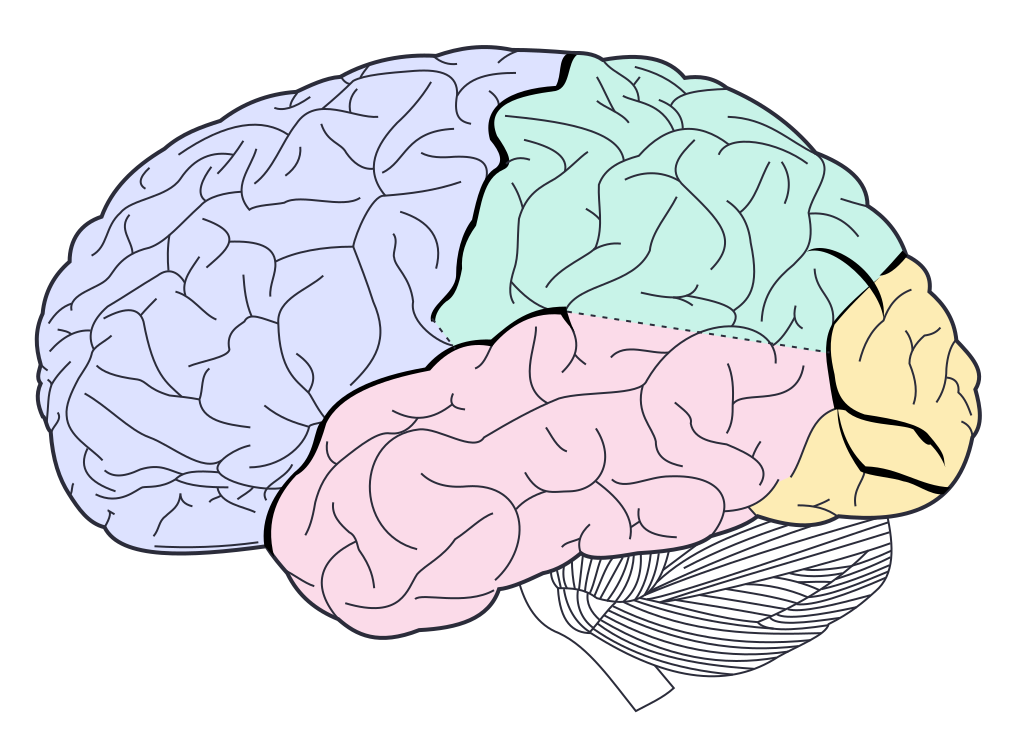
The right side keeps watch
Long, boring watches lean heavily on a network in the right hemisphere. Pick a region.
In Mackworth's studies, most of the fall in detection happened within the first half hour of a two-hour watch.
Mackworth, 1948Vigilance feels dull, but studies show it is mentally hard work — people rate it as demanding and feel drained afterwards.
Warm, Parasuraman & Matthews, 2008Watching for the rare skip
A hand ticks around a clock, and once in a while it jumps two steps. Based on the 1948 Mackworth clock test for radar operators, it measures how vigilance fades over time.
Pick a moment to see what's going on
Tap a situation to see which part of the skill it relies on.
More focus games
All 40 games →Tap every digit except 3.
Count breaths to nine without drifting.
Find the odd item in a crowded field.
Tap for targets, hold back for lures.