Every set of nine, and where it broke
A full cycle means you stayed present for nine breaths. Noticing you drifted is a win too — that's the skill being trained.
Your cycles will appear here as you count.
Three ways a count breaks
Each tells you something different about where your attention went.
Pressed "ninth" too early
You thought you’d reached nine but had only counted six or seven. Your mind skipped a few breaths without you noticing.
A silent lapse — the most common kind.Kept counting past nine
You tapped on and on, missing the ninth. The count ran on autopilot.
Autopilot — the habit took over.Pressed "I lost count"
You caught yourself drifting and said so. That is exactly the skill — noticing and returning.
A good catch, not a failure.Why count breaths at all?
Most focus tests use a screen. This one uses the inside of your head. That makes it one of the few ways to measure mind-wandering you didn't notice — the kind that costs you a page of reading.
Researchers found people who count breaths accurately also wander less during reading and report fewer lapses in daily life.
Noticing is the workout
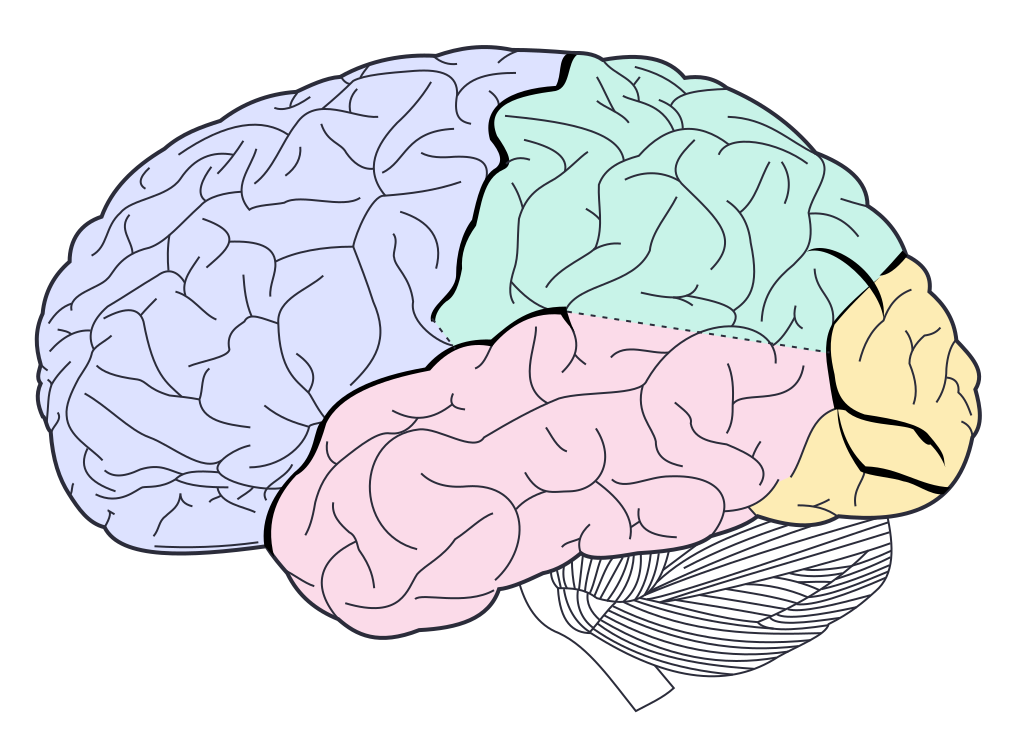
Every time you catch yourself drifting and come back, you exercise the brain's "noticing" circuit. Pick a region.
Levinson and colleagues turned the old meditation practice into a measurable task — the exact nine-count method this game uses.
Levinson, Stoll, Kindy, Merry & Davidson, 2014Focus, mind wanders, you notice, you come back. Brain scans show a different pattern for each step — and "noticing" lights up the insula and anterior cingulate.
Hasenkamp et al., 2012Noticing when your mind wanders
Counting breaths is simple; staying on count is not. The game catches the moments your attention drifts and builds the habit of noticing and coming back.
Three places this skill turns up
Each one leans on a different part of what the game trains.
More focus games
All 40 games →Tap every digit except 3.
Spot the rare double-jump of a clock hand.
Name the ink colour, not the word.
Read a story, recall the details.