Every stop is a race inside your head
When the arrow appears, a "go" process starts running. When it turns red, a "stop" process sets off after it. Whichever reaches the finish line first wins.
How long it takes you to stop
You can't see a stop happen, nothing moves. So we measure it indirectly: each time you stop in time, the red signal comes a little later; each time you don't, it comes sooner. Your stopping time is your go speed minus where that delay settles.
Not starting vs stopping mid-move
Self-control comes in two flavours. Go / No-Go trains the first. This game trains the second, and it's the harder one.
You see the signal before you act, and simply don’t begin.
Like not reaching for a second biscuit.The action is already on its way. You have to cancel it before it lands.
Like catching yourself before you hit "send".The brain's emergency brake
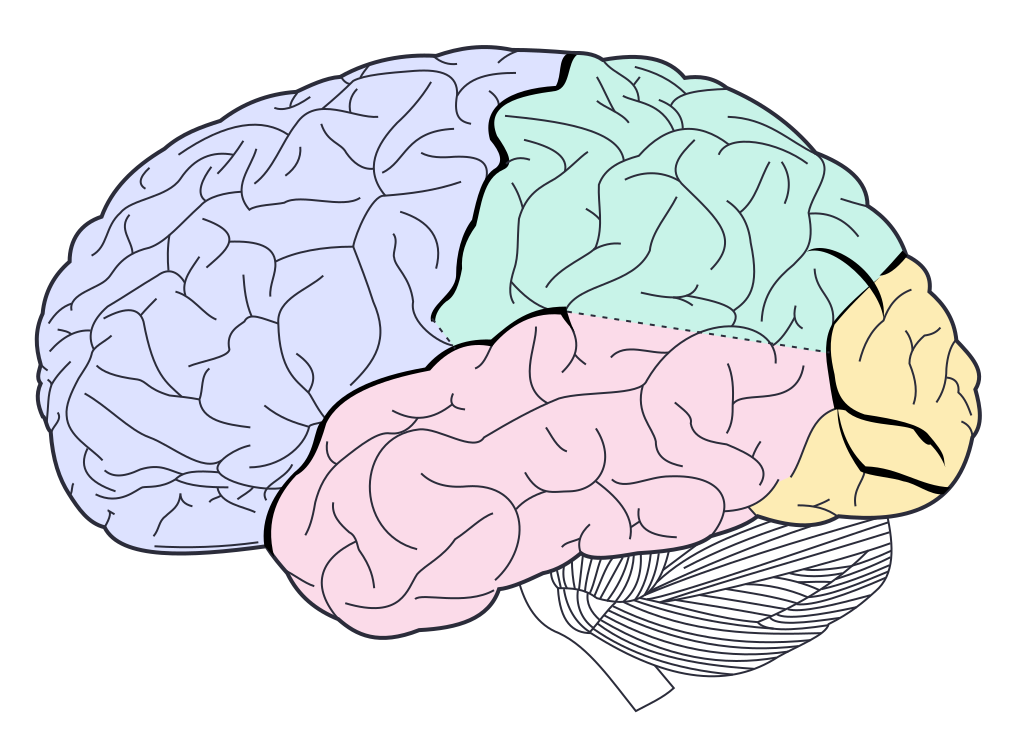
Cancelling a movement runs through a fast circuit from the front of the brain down to deep motor structures. Pick a region.
Healthy adults typically cancel a movement in roughly 200–250 milliseconds, often faster than it takes them to start one.
Logan & Cowan, 1984 · Verbruggen et al., 2019Damage to the right inferior frontal cortex was linked to slower stopping: one of the first clues to where the brake lives.
Aron, Fletcher, Bullmore, Sahakian & Robbins, 2003Cancelling an action already under way
Respond fast, but stop if a signal appears just after. Unlike go/no-go, you've already started to move: this measures how quickly you can cancel.
Pick a moment to see what's going on
Tap a situation to see which part of the skill it relies on.
More attention games
All 40 games →Tap for targets, hold back for lures.
Tap the moment the screen changes.
Respond to the centre arrow only.
React where the cue points, unless it lies.