EXAMPLE GAME · PLAY TO SEE YOURS
Did you plan, or did you fiddle?
Each problem has a shortest route. The dark part of each bar is the minimum; the striped part is extra moves. The dot shows how long you thought before your first move.
PERFECT SOLUTIONS4/6When you jumped straight in you used 1.3 extra moves on average, against 0.0 when you paused to plan.
4.0 saverage thinking time4extra moves in total
#MOVES · MINIMUM VS YOURSTHINKING
1
2perfect
2.4s2
3perfect
4.1s3
5 (3)+2
0.9s4
4perfect
6.2s5
7 (5)+2
1.5s6
5perfect
8.8sminimum movesextra movesthought 3 s or morejumped straight in
PLANNING LAB
Why the obvious move is often wrong
Hard problems need a move that seems to go backwards. And every extra step you look ahead multiplies the routes you have to hold in mind.
START
GOAL
1red → left2blue → middle3detour · red → right4yellow → middle5red → left
41
122
393
1234
3935
1.2k6
4.0k7
WHAT THIS GAME TRAINS
Planning several steps ahead
The Tower of London was designed by Tim Shallice in 1982 to measure planning: working out a sequence of moves in your head before you act, and holding back the urge to start too early.
corestrongsomelight
corePlanningWorking out the whole route before the first move.
strongWorking memoryHolding where each ball will be after several moves.
strongInhibitionResisting the obvious move that leads nowhere.
someProblem solvingSpotting when a detour is the quickest way.
ON AN ORDINARY DAY
Moments that use the same skill
INSIDE YOUR BRAIN
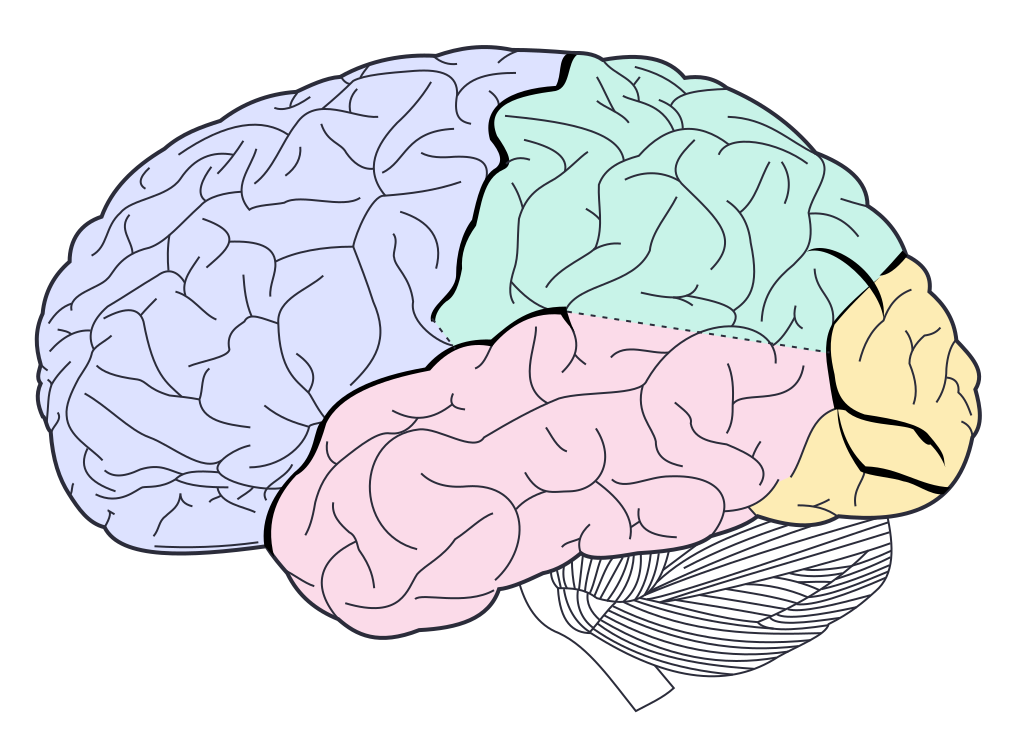
The brain areas doing the work
Step through each area, or tap one below. The matching marker grows on the brain; dashed markers sit deep inside.
1
Based on Gray's Anatomy, fig. 728 (public domain)
AREA 1 OF 4
1Prefrontal cortex
The brain's control centre for planning, decision-making and holding goals in mind. It's the last region to mature, finishing in your mid-twenties.ALL AREAS
WHERE TO GO FROM HERE
All focus games →Other ways to test your control
Planning is one part of executive function. These games stretch the others: switching rules, staying on task and holding things in mind.