Bread–butter is easy. Cabbage–pen is not.
Your game mixes both kinds on purpose. Related pairs ride on links you already have. Unrelated pairs need a brand-new link, the kind of learning this game trains.
Related: memory does the work
You've heard these together for years. Recall barely needs effort.
Unrelated: you do the work
No link exists yet, so you have to invent one. This is where the score gap appears.
Build a bridge between any two words
A lighthouse lamp shining out over a dark ocean.
A cabbage writing its own name with a giant pen.
A tiger eating cereal, slurping loudly from a spoon.
Being quizzed beats re-reading
Pulling an answer out of memory strengthens it more than looking at it again. That's why this game tests you instead of just showing the pairs twice, and why flashcards work for learning languages.
Illustration of the pattern found a week later in testing-effect studies.
The hippocampus ties the knot
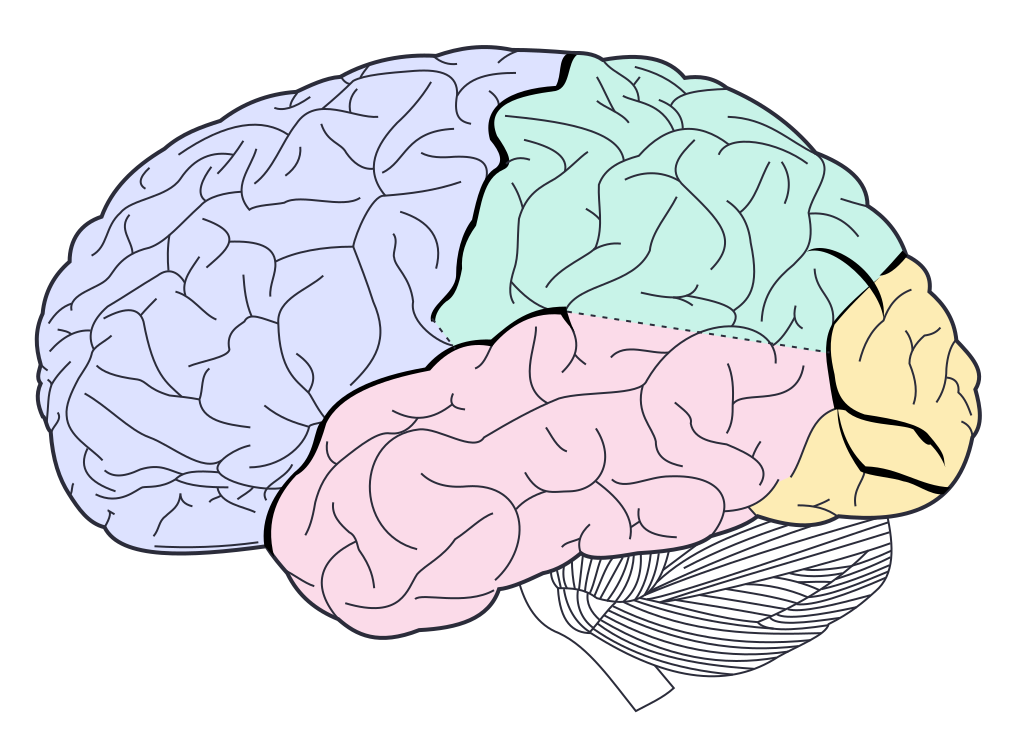
3 regions share the work in this game. Pick one to see its job.
In 1894 psychologist Mary Whiton Calkins invented the paired-associate method to study how links form. Word-pair recall is now part of standard memory tests such as the Wechsler Memory Scale.
Linking things that don't belong together
Learn arbitrary pairs, then recall one when cued with the other. Paired-associate learning is a classic memory test, and a sensitive early sign of memory change with age.
Pick a moment to see what's going on
Tap a situation to see which part of the skill it relies on.
More memory games
All 40 games →Meet faces, then recall names.
Twelve words, then recall them.
Recreate a grid you saw for a moment.
Flip cards to find matching pairs.