Training/Memory/Card Match

Card
Match

Flip two cards. Same icon? They stay. Different? They flip back — and you have to remember where each one was. Clear the board in as few flips as you can.

0
flips
16
perfect score
0
forgotten cards
Difficultyhelp & look-alikes
Board sizemore = harder
Medium · 16 cards

Two memories in every flip

To match, you need to remember what each card showed and where it was. Lose either, and you waste a turn.

What: the icon

Recognising you've seen the anchor before. This part is usually easy.

Where: the position

Binding the icon to its spot on the grid. This is where most wasted flips come from.

Play it like a pro

01

Flip unknowns first

Early on, turn cards you haven’t seen yet. Every new card is information.

02

Name what you see

“Anchor, top left.” Saying icon and place together helps bind them.

03

Sweep in order

Work row by row so you know which spots you’ve already checked.

04

Use your freebie

If the first card matches one you’ve seen, go straight for the pair.

INSIDE YOUR BRAIN

What meets where

3 regions share the work in this game. Pick one to see its job.
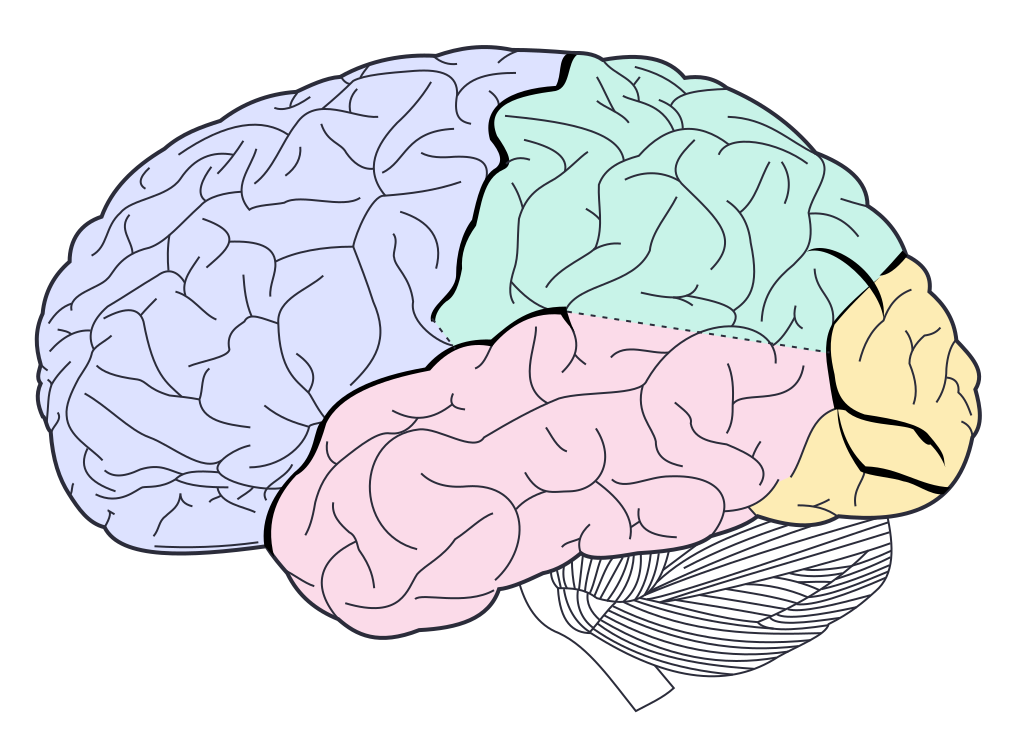
FRONTALPARIETALTEMPORALOCCIPITALCEREBELLUM
1
Based on Gray's Anatomy, fig. 728 (public domain)

The card game is often called Concentration or Pelmanism. Psychologists use the same idea in object-location memory tests.

SourcesPostma, A., Kessels, R. P. C. & van Asselen, M. (2008). How the brain remembers and forgets where things are. Neuroscience & Biobehavioral Reviews, 32, 1339–1345.Kessels, R. P. C. et al. (2001). Spatial memory in patients with hippocampal lesions. Neuropsychologia.
WHAT THIS GAME TRAINS

Remembering where things are

Classic pairs: flip two cards, remember what was where. It trains visual and location memory, and rewards having a search strategy.

corestrongsomelight
coreVisuospatial memoryRemembering which picture sits in which place.
strongShort-term memoryHolding recent flips in mind.
someStrategySearching systematically rather than at random.
someAttentionWatching every flip, including the misses.
BEYOND THE SCREEN

Where it matters most day to day

MOST COMMONFinding your thingsRemembering where you put keys, glasses or your parked car.
Navigating appsRecalling where buttons and files live on a screen.
Family game nightPairs, Memory and similar games get easier with a method.

More memory games

All 40 games →
Memory is one piece of the picture
The full IQ test measures memory alongside three other domains.
Take the IQ test →