HOW A ROUND WORKS
Compare each turn with the one n steps back
Here's a sample of eight turns. Switch the level and see which turns become matches: the further back you have to look, the more positions you must keep updating in your head.
turn 1too early
turn 2too early
turn 3MATCH
turn 4no
turn 5no
turn 6MATCH
turn 7no
turn 8MATCH
HOW YOU'RE SCORED · EXAMPLE ROUND
Pressing every time won't help
Every turn lands in one of four boxes, depending on whether it was a match and whether you pressed. Accuracy rewards both kinds of right answer.
WAS A MATCH
ACCURACY( 5 hits + 12 rejections ) ÷ 22 turns77%
level downstaylevel up
WHY GUESSING FAILS · ABOUT 30% OF TURNS ARE MATCHES
Press every turn30%
Never press70%
Your round77%
Perfect play100%
What the n-back does, and doesn't, do
WHAT THIS GAME TRAINS
Constantly updating what you remember
N-back never lets your memory settle: every new item has to be compared with one from n steps ago, then the list shifts along. It trains updating, the busiest part of working memory.
corestrongsomelight
coreWorking memory updatingDropping old items and adding new ones every few seconds.
strongSustained attentionStaying locked on the sequence for a whole block.
strongInterference controlIgnoring lures that match 1 or 3 back instead of n.
someProcessing speedResponding before the next item appears.
OUTSIDE THE GAME
Where you'll notice it in everyday life
INSIDE YOUR BRAIN
The brain areas doing the work
Step through each area, or tap one below. The matching marker grows on the brain; dashed markers sit deep inside.
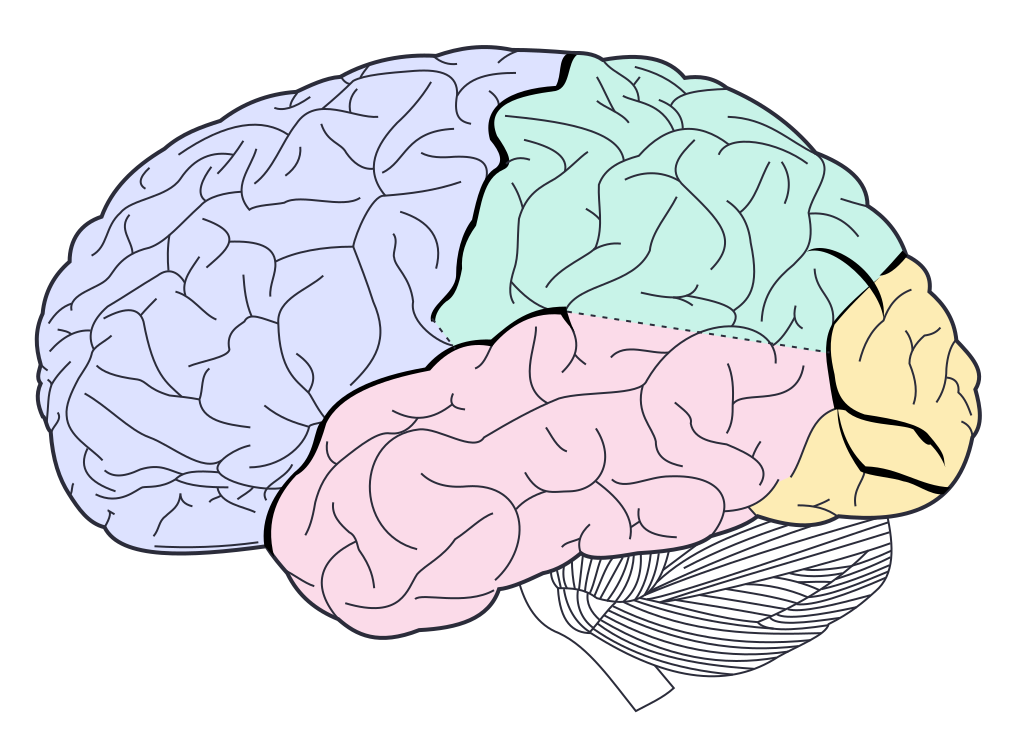
1
Based on Gray's Anatomy, fig. 728 (public domain)
AREA 1 OF 3
1Prefrontal cortex
The brain's control centre for planning, decision-making and holding goals in mind. It's the last region to mature, finishing in your mid-twenties.ALL AREAS
WHERE TO GO FROM HERE
All working-memory games →Your working-memory ladder
OUR SUGGESTIONReach 3-back here firstMost people find 3-back the sweet spot for training. Once you score 80% there, move on to Dual N-Back.
MEMORY LOAD AT EACH STEP
N-Back
Dual N-Back
Operation Span
Digit Span
K
Dual N-BackNEXT STEPSquares and spoken letters at once: two n-back streams, scored separately.5 mindifficulty ●●●adds: a sound stream
3×2+1=7?FQ
Operation SpanHARDERCheck a sum, then remember a letter. Recall the letters in order at the end.5 mindifficulty ●●●adds: maths distractor
7·3·9·5
Digit SpanWARM-UPHear a string of digits and repeat it, forwards or backwards. Pure capacity.3 mindifficulty ●○○adds: longer sequences