More items, more time, unless it pops out
Play both modes and compare. In Pop-out, your time barely changes with the crowd. In Hunt, each extra item adds a little time, because you have to check things one by one.
One difference or two?
One difference: it pops out
The target differs by colour alone. Your visual system scans the whole scene at once, so the crowd size hardly matters.
Two combined: you have to hunt
Red and round both appear elsewhere. Only the combination is unique, so attention has to visit items to check them.
People who search for a living
Visual search research started in the lab and now shapes how some of the most important searches in the world are done.
Airport security
Screeners look for rare threats among thousands of ordinary bags.
Radiologists
Doctors scan X-rays and scans for small signs of disease.
Search and rescue
Spotters scan terrain from the air for a person or a boat.
Search smarter, not harder
- 01
Know the target
Hold a clear picture of what you want before you look. It tunes your eyes to the right features.
- 02
Sweep in order
Scan in rows like reading a page, so you don’t re-check the same spot.
- 03
Soften your gaze
For pop-out targets, look at the whole grid at once instead of item by item.
- 04
Search for one feature
In a hunt, check only red items and skip the rest.
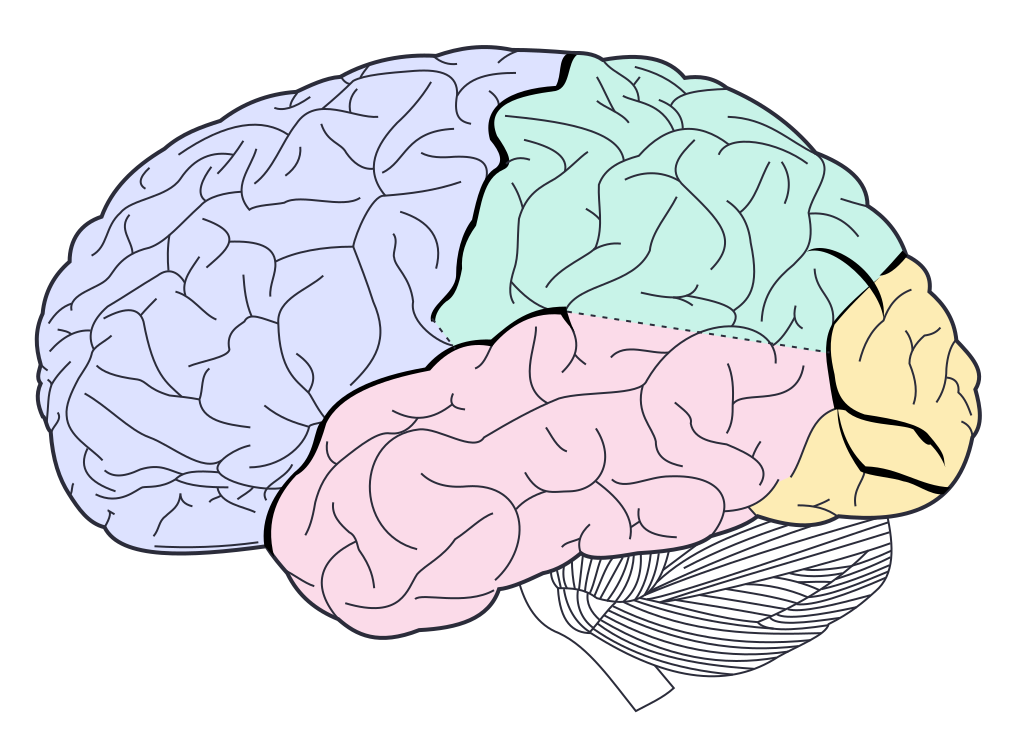
See, pick, look
1 · Visual cortex breaks the scene into colours and shapes. 2 · Parietal cortex keeps a priority map of what might be the target. 3 · Frontal eye fields move your eyes to the next best candidate.
Anne Treisman's feature integration theory proposed that single features are spotted in parallel, while combinations need focused attention, the pop-out versus hunt difference you just measured.
Finding the one that's different
Find the target among distractors. Some pop out instantly; others need a one-by-one search. The difference shows how attention builds up what you see.
Pick a moment to see what's going on
Tap a situation to see which part of the skill it relies on.
More attention games
All 40 games →Answer the middle arrow.
Name the ink, not the word.
Flip between two rules.
Tap green, hold for red.