EXAMPLE ROUND · PLAY TO SEE YOURS
Every response, plotted by speed
Each dot is one trial. Dots further right were slower. The gap between the two average lines is your interference effect: the time your brain spends resolving the clash between where the arrow is and where it points.
Same sideavg 509 ms
Conflictavg 605 ms
400 msreaction time700 ms
+96 msinterference effect
96%accuracy
1wrong-way presses
0timed out
ONE IDEA, MANY FORMS
What's clashing in each conflict task?
All of these pit an automatic reaction against the one you've been asked to give. Pick one to see its stimulus and where the conflict comes from.
Spatial Stroop
AnswerThe direction the arrow points.IgnoreWhere the arrow appears.Why it's hardLocation grabs attention automatically, so a left-side arrow pointing right pulls you towards the wrong answer.
WHAT THIS GAME TRAINS
Overriding an automatic pull
Where something appears pulls your response automatically. The spatial Stroop makes you answer the direction instead, measuring how quickly you resolve that conflict.
corestrongsomelight
coreInterference controlIgnoring the arrow's position and answering its direction.
strongResponse inhibitionHolding back the automatic side-matching response.
strongProcessing speedAnswering within the time limit.
someSpatial attentionLocating the arrow anywhere on the screen.
THE SAME SKILL, ELSEWHERE
Three places this skill turns up
Each one leans on a different part of what the game trains.
INSIDE YOUR BRAIN
The brain areas doing the work
Step through each area, or tap one below. The matching marker grows on the brain; dashed markers sit deep inside.
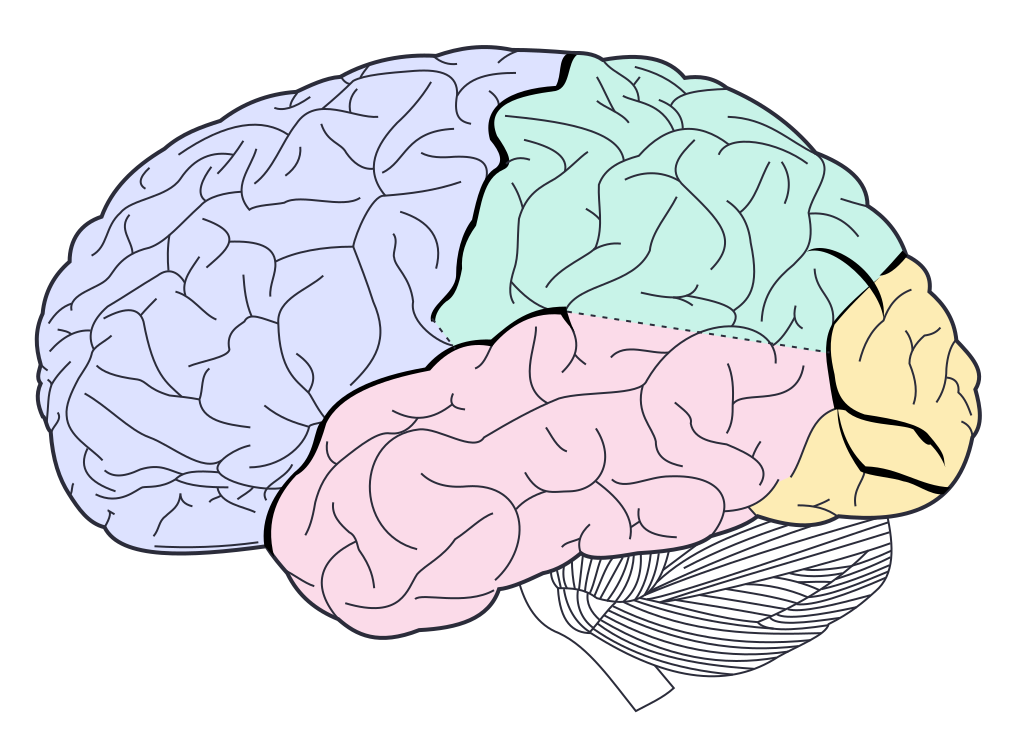
1
Based on Gray's Anatomy, fig. 728 (public domain)
AREA 1 OF 4
1Anterior cingulate
Acts as the brain's error alarm, noticing conflicts and mistakes so you can adjust. It also helps decide how much effort a task is worth.ALL AREAS
WHERE TO GO FROM HERE
All attention games →Three ways to train self-control
RECOMMENDED · SAME SKILL, HARDER3 minStroopName the ink, not the word. The classic, with a bigger effect than this one.
TRAINS
Play StroopInhibition
Speed
Focus
TRAINS
Play FlankerFiltering
Inhibition
Speed
TRAINS
Play Stop SignalStopping
Inhibition
Speed