Training/Attention/Continuous Performance

Continuous
Performance

Letters flash one after another. Tap only when you see an X that comes straight after an A. Every other letter — including an X after anything else — gets no tap.

A → XA → KM → XM → K
60 pairs
Tap or press Space for A → X only
YOUR FOUR TRIAL TYPES

Where your errors land says how you think

Every pair is a first letter (A or not) and a second letter (X or not). The mistakes you make in each box point to a different habit.

then Xthen not X
A first
A → XTAP
–
The target. Misses here mean attention drifted.
A → YNO TAP
–
Tapping here means you planned so hard for X that you jumped the gun.
Not A
B → XNO TAP
–
Tapping here means you reacted to the X and forgot what came before.
B → YNO TAP
–
The easy one. Errors here usually mean a slip of the finger.

Are you a planner or a reactor?

Everyone mixes both styles. Your balance of A → Y and B → X slips shows which you leaned on this round.

ReactorBalancedPlanner
Reactor
see X→ check what came before

Waits for the second letter, then looks back. Flexible, but under time pressure an X can trigger a tap before the check finishes.

Typical slip: tapping on B → X
Planner
see A→ get ready for X

Uses the first letter to prepare. Fast and accurate on targets, but a strong expectation can fire on A → Y.

Typical slip: tapping on A → Y
Play a round to see where you land. The few A → Y and B → X pairs decide it.

One of psychology's workhorse tests

Continuous performance tests have been around since the 1950s, in many versions. The A-then-X rule you just played is among the most studied.

1956

The first CPT

Researchers designed it to spot attention problems after brain injury — press for one letter among many.

1990s

A-then-X

Adding a cue letter turned it into a test of holding context in mind, widely used in research on schizophrenia and ageing.

Today

Part of the toolkit

Versions are used alongside interviews and questionnaires in attention assessments — never as a diagnosis on their own.

INSIDE YOUR BRAIN

Holding the context

The whole game hinges on remembering the letter before. Pick a region.
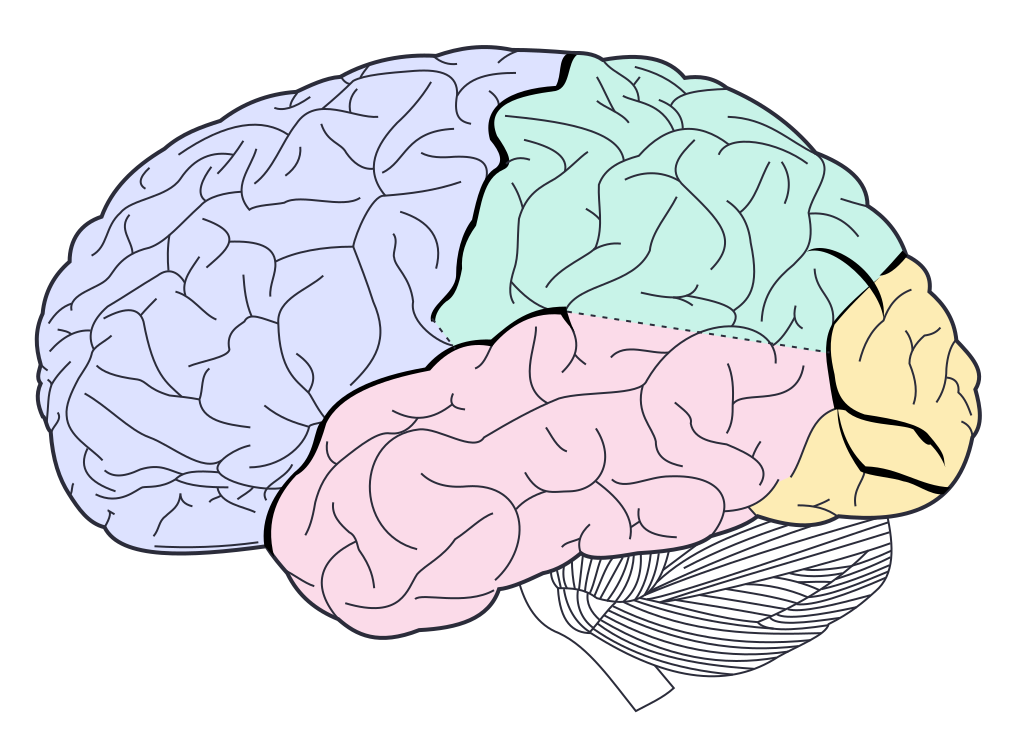
FRONTALPARIETALTEMPORALOCCIPITALCEREBELLUM
1
Based on Gray's Anatomy, fig. 728 (public domain)
SourcesRosvold et al. (1956), J. Consulting PsychologyBraver (2012), Trends in Cognitive SciencesCohen, Barch, Carter & Servan-Schreiber (1999), J. Abnormal Psychology
WHAT THIS GAME TRAINS

Staying alert for the rare target

A long stream of letters, with only a few that need a response. It's the classic clinical measure of vigilance, impulsivity and attention over time.

corestrongsomelight
coreSustained attentionStaying ready across a long, dull stream.
strongResponse inhibitionNot pressing for non-targets.
strongVigilanceCatching rare targets as the minutes pass.
someReaction consistencyKeeping your timing steady instead of drifting.
BEYOND THE SCREEN

Where it matters most day to day

MOST COMMONMonitoring jobsWatching screens or dials where problems are rare but important.
Quality checksCatching the one faulty item on a long run of good ones.
Call monitoringStaying ready for the rare call or alarm during a quiet shift.

More attention games

All 40 games →
Attention is one piece of the picture
The full IQ test measures four domains of thinking in about 30 minutes.
Take the IQ test →