Every extra letter multiplies the options
Four letters can be arranged 24 ways. Seven letters, 5,040. Your solve times by word length:
Play a sprint to see your times. Most people slow down sharply at six letters.
Three ways into a scramble
Nobody tries all 720 orders of a six-letter word. Good solvers narrow it down with a few tricks. Try each on the same scramble.
PL, AN and ET are all common in English. Three chunks are far easier to order than six loose letters: PL + AN + ET = PLANET.
Same length, very different difficulty
Length isn't everything. These pairs have the same number of letters, but one takes most people far longer.
How common the answer is
Everyday words come to mind much faster than rare ones, even with the same letters.
How word-like the scramble looks
A pronounceable scramble like "RAOD" tricks the eye into reading it as a word, which blocks the answer.
Where the first letter sits
If the scramble starts with the right letter, you’re already half-way. Hunting for the start is the slow part.
Searching, then the "aha"
Some anagrams are solved by steady trial and error. Others arrive all at once. Pick a region.
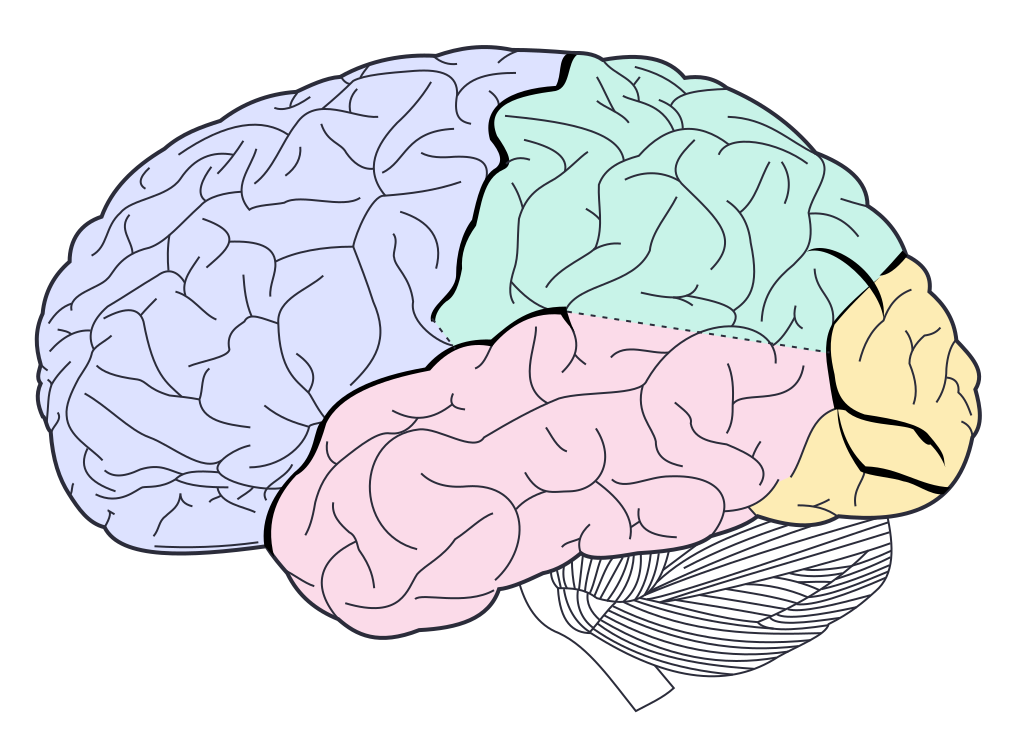
When a word puzzle is solved by sudden insight, brain recordings show a burst of activity in the right temporal lobe just before the answer reaches awareness.
Jung-Beeman et al., 2004Experienced solvers often report the answer simply "popping out" within a couple of seconds, no conscious shuffling at all.
Novick & Sherman, 2003Unscrambling words at speed
Anagrams make you search your mental dictionary from the inside out: juggling letters, testing patterns and retrieving a word that fits.
Where it matters most day to day
More word games
All 40 games →A is to B as C is to…?
Name items as fast as you can.
Learn a list, recall as many as you can.
Name the ink colour, not the word.