Letters and digits are fastest
Years of reading turn letters and digits into near-automatic names. Colours and objects take a beat longer, because the brain has to look up a word for them.
Four jobs in under half a second
Naming looks simple, but every item runs through the same chain. And while you say one, your eyes are already on the next — the real skill is overlapping the steps.
See it
The visual cortex recognises the shape or colour.
Find the word
Language areas look up its name from memory.
Say it
Speech areas plan and send the word to your mouth.
Move on
Your eyes jump to the next item — ideally while you’re still speaking.
A five-year-old's naming speed predicts their reading
Rapid automatised naming — RAN — is one of the strongest early signs of how easily a child will learn to read, alongside knowing letter sounds. Slow naming is common in dyslexia, even in adults.
Martha Denckla and Rita Rudel publish the first rapid naming tests for children.
The "double deficit": readers slow at both naming and sound skills tend to struggle most.
This game is for practice and curiosity. It isn't a screening test for dyslexia — that needs a qualified assessor.
Name faster
Look one ahead
While you say the current item, let your eyes already land on the next.
Keep a rhythm
A steady beat is faster than bursts and pauses.
Don’t fix mistakes
Say the wrong name? Keep going. Going back costs more than the slip.
Short names help
In real RAN tests, items have one-syllable names for a reason. Stick to "red", not "crimson".
From picture to spoken word
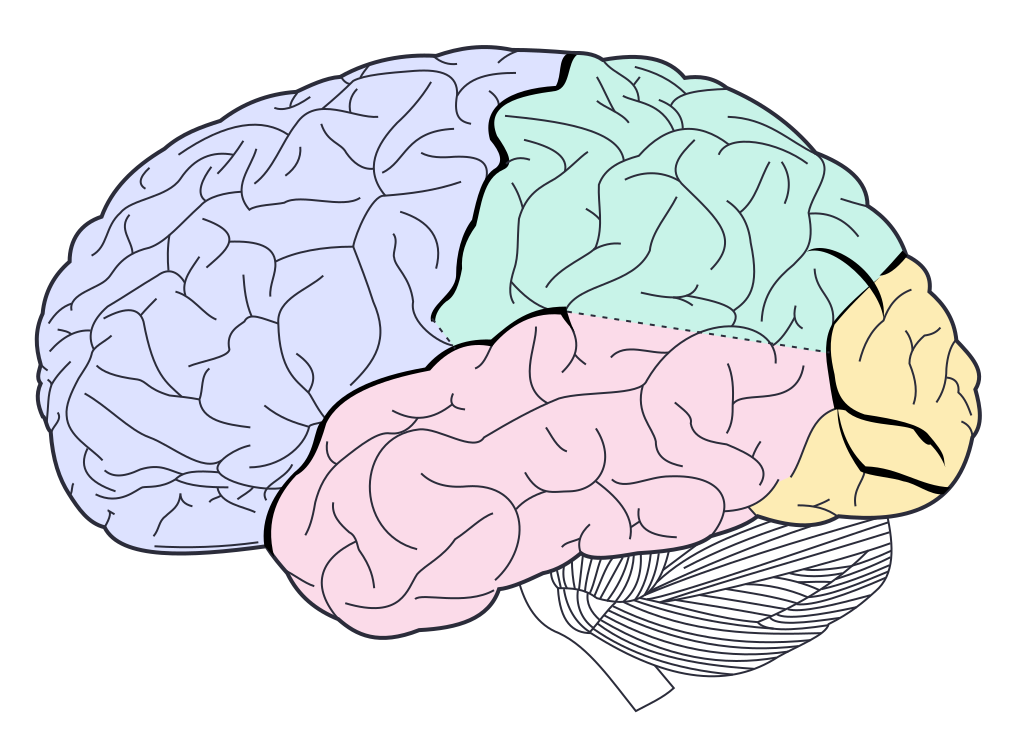
Naming links the visual system to the language network. Pick a region.
Naming familiar things at speed
Name a grid of colours, letters or objects as fast as you can. Rapid automatised naming is one of the strongest predictors of reading fluency.
Pick a moment to see what's going on
Tap a situation to see which part of the skill it relies on.
More speed games
All 40 games →Is the target symbol in the group?
Name the ink colour, not the word.
Copy symbols using a key, fast.
Learn a list, recall as many as you can.