Look at the gaps, not the tiles
The trick is to describe what happens between tiles. Here's your current sequence with every step written out.
The arrow never turns. The dots stay the same. The colour repeats every 2 tiles.
Two rules, two clocks
Hard sequences hide rules that repeat at different speeds — the colour might flip every 2 steps while the dots cycle every 3. Each rule is simple. Together they look random.
Set two rhythms and see how long it takes for the pattern as a whole to repeat.
The three wrong answers you'll be offered
Every wrong option is built from a specific mistake. Know them, and you'll recognise the trap before you fall in.
Almost the right turn
The arrow is one step off. It’s the most common trap — check the angle against the last two tiles, not just the last one.
The forgotten rule
The turn and dots are right, but the colour rule was missed. When one feature fits, check the others anyway.
The broken rhythm
Dots were treated as counting up when they actually alternate. Look at the whole run, not just the last step.
Finding the rule is induction
Going from examples to a general rule is called inductive reasoning — one of the core abilities IQ tests measure. Pick a region.
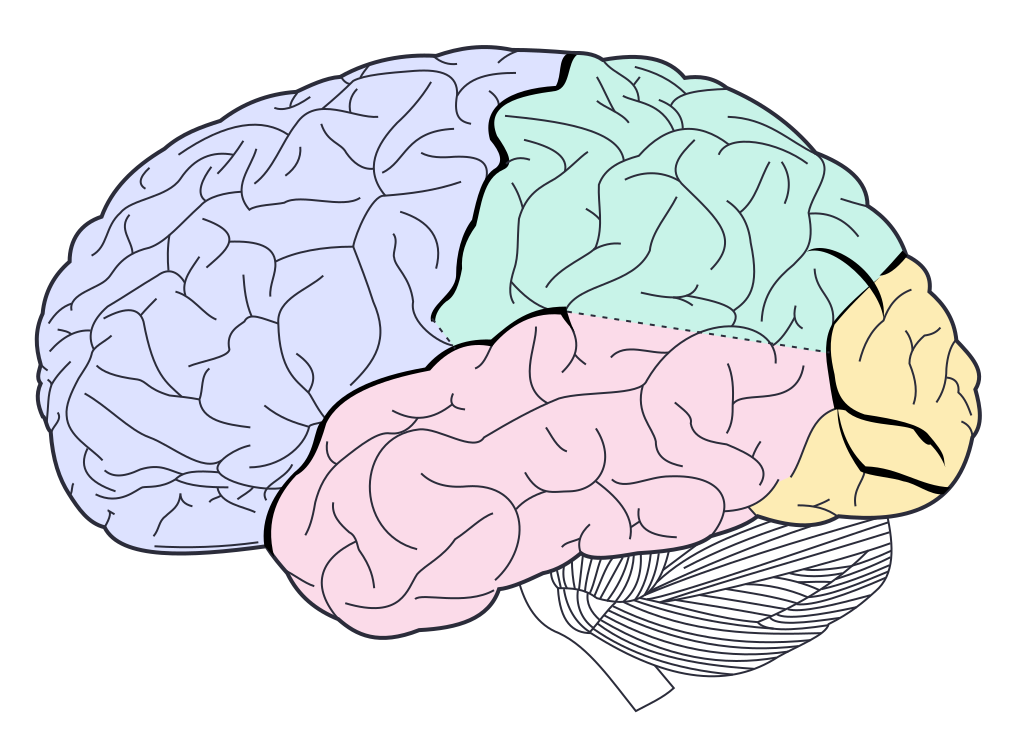
Louis Thurstone listed induction — finding the rule behind examples — as one of the seven primary mental abilities.
Thurstone, 1938Kotovsky and Simon found series get harder mainly with how much you must hold in mind at once — the length of the repeating cycle.
Kotovsky & Simon, 1973Finding the next step
Work out the rule behind a series of shapes or numbers and predict what comes next. It's inductive reasoning in its purest form.
Where it matters most day to day
More pattern games
All 40 games →Complete the 3×3 grid of shapes.
Which figure breaks the rule?
Are the two shapes the same, rotated?
Alternate rules without losing speed.