Training/Reading speed/Speed Reader

Speed
Reader

Choose a pace and read a short passage, word by word, or with a guide sweeping the line. Then answer four questions. Your real speed is how fast you read and understood.

Pick a pace, then read
About 100 words at 300 words per minute, roughly 20 seconds. Four questions follow. Choose "Word by word" or "Guided line" above.
Passage: The octopus · 101 words0 passages read
WHERE YOU READ

Three speeds, three jobs

Good readers don't have one speed, they shift gears. The typical adult reads non-fiction silently at around 240 words per minute.

Study100–200 wpm
Reading200–300 wpm
Skimming300–700 wpm
100200300500700 wpm
Study

For material you need to learn and remember: textbooks, contracts, instructions.

Reading

Normal pace for articles and books. Full understanding, comfortable speed.

Skimming

For getting the gist or finding a fact. Faster, but you’ll miss details, use it on purpose.

Find your sweet spot

Each dot is one passage you've read. Push the speed up and understanding usually drops. The sweet spot is the fastest pace where you still get at least three of four questions right.

Read at two or three different speeds to find your sweet spot.
SWEET SPOT ZONE
01234
200300450600
Read a passage above to plot your first dot
↑ questions rightwords per minute →

Your eyes jump, they don't glide

Reading feels smooth, but your eyes hop from word to word, stopping for about a quarter of a second each time. Skilled readers make fewer stops and fewer backward jumps. Compare the two.

1
The
2
committee
3
finally
4
approved
57
the
6
unusual
8
proposal
9
after
10
a
1113
surprisingly
12
long
14
discussion
15
about
16
the
17
budget.
17
stops for 15 words
2
backward jumps
~180
words per minute (illustrative)
Numbered circles are stops, in order. Red ones jump backwards to re-read. An illustration based on typical eye-tracking patterns.
INSIDE YOUR BRAIN

Eyes, letters, meaning

Reading is recent in human history, so the brain repurposes older systems to do it. Pick a region.
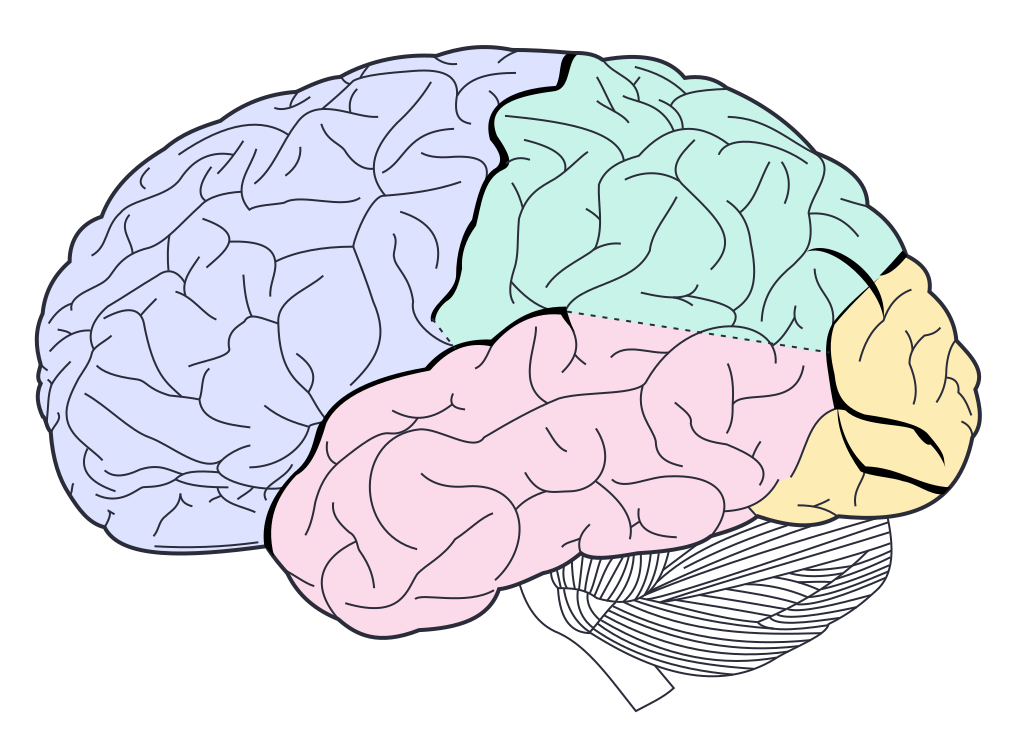
Side view of the brain with the four lobes shaded in different coloursFRONTALPARIETALTEMPORALOCCIPITALCEREBELLUM
1
Based on Gray's Anatomy, fig. 728 (public domain)
238words per minute

The average silent reading rate for adults reading non-fiction in English, pooled across nearly 200 studies.

Brysbaert, 2019
~250 msper stop

A typical eye fixation during reading, with jumps of about seven to nine letters between stops.

Rayner, 1998
SourcesBrysbaert (2019), J. Memory and LanguageRayner (1998), Psychological BulletinRayner et al. (2016), Psychological Science in the Public InterestDehaene & Cohen (2011), Trends in Cognitive Sciences
WHAT THIS GAME TRAINS

Reading one word at a time

Words flash in the centre of the screen at a set pace (RSVP). It removes eye movements, so you can find how fast you can read and still understand.

corestrongsomelight
coreReading speedTaking in words at a fast pace.
strongComprehensionKeeping track of meaning as words fly by.
strongSustained attentionStaying locked on the stream.
strongWorking memoryHolding the sentence as it builds.
OUTSIDE THE GAME

Where you'll notice it in everyday life

01Reading on small screensSkimming notifications and short texts quickly.
02Getting through readingMoving faster through easy articles and emails.
03Reading focusNoticing when your attention drifts off the page.

More word games

All 40 games →
Reading is one piece of the picture
The full IQ test measures four domains of thinking in about 30 minutes.
Take the IQ test →