EXAMPLE ROUND · PLAY TO SEE YOURS
Where the seconds went
Most people are quick on addition and stall on one operation. Find yours, then drill it with the shortcuts below.
AVERAGE TIME PER ANSWER, BY OPERATIONMultiply is your slowest at 3.4 s an answer. Times tables to 12 are worth memorising outright; the shortcuts below help beyond that.
+1.7 s100% right
−2.1 s80% right
×3.4 s80% right
÷3.3 s100% right
YOUR PACE ACROSS THE MINUTE
first answerbar height = seconds takenlast
23correct
88%accuracy
−23%2nd half vs 1st
HOW FAST CALCULATORS THINK
Six shortcuts, step by step
Speed in mental arithmetic rarely comes from calculating faster. It comes from turning a hard sum into an easy one. Pick a trick, then press "new example" to see it work on fresh numbers.
THE PROBLEM17 × 11= 187Works for any two-digit number.
- 1Split the number into its digits.1 _ 7
- 2Add the two digits and put the sum in the middle.1 + 7 = 8
- 3Read the result.1 8 7 → 187
WHAT THIS GAME TRAINS
Number fluency under time pressure
Mental arithmetic mixes fact retrieval (knowing 7 × 8 instantly) with working memory (carrying digits while you calculate). Speed comes from moving more sums into the first category.
corestrongsomelight
coreArithmetic fluencyRecalling number facts and procedures automatically.
strongWorking memoryHolding partial results, like a carried 1, while you continue.
strongProcessing speedReading each problem and typing an answer fast.
someNumber senseEstimating whether an answer is roughly right.
OUTSIDE THE GAME
Where you'll notice it in everyday life
INSIDE YOUR BRAIN
The brain areas doing the work
Step through each area, or tap one below. The matching marker grows on the brain; dashed markers sit deep inside.
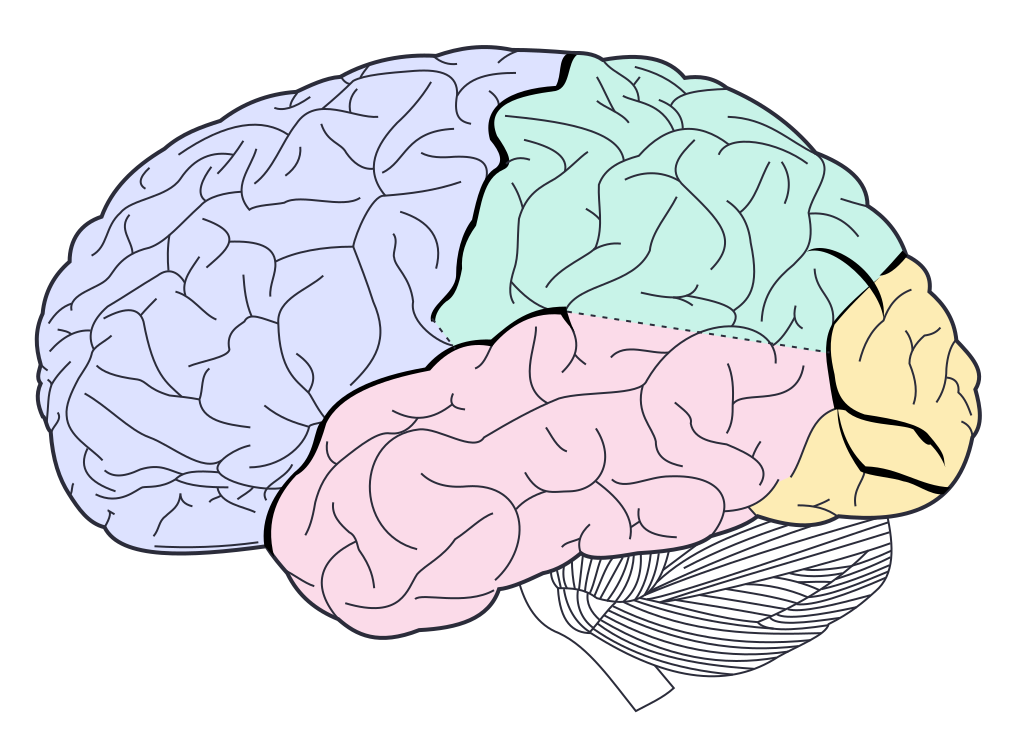
1
Based on Gray's Anatomy, fig. 728 (public domain)
AREA 1 OF 4
1Parietal lobe
Combines what you see, hear and touch into a map of where things are. It also handles numbers and directing your attention through space.ALL AREAS
WHERE TO GO FROM HERE
All processing-speed games →Speed up, or go deeper
Two games sharpen raw speed, two take your number sense into reasoning. Each card shows a sample of what you'll face.
PURE SPEED2 minDigit-Symbol Coding
3→◇7→△
Swap numbers for symbols using a key, as fast as you can.Play Digit-Symbol Coding◐|◑◒◐
Is the target symbol in the row? Yes or no, quickly.Play Symbol Search261220?
Spot the rule and find the next number in the series.Play Sequence Completion£%▤?
Charts, tables and word problems, as in job aptitude tests.Play Numerical Reasoning test