TRY IT SLOWLY FIRST
Hear a sample stream, then spot the matches
Press play to hear eight letters. Then pick a level: the matching turns light up. Saying the last n letters under your breath ("K, T… T, Q…") is the trick most people discover on their own.
turn 1
K
too earlyturn 2
T
too earlyturn 3
K
MATCHturn 4
Q
noturn 5
T
noturn 6
Q
MATCHturn 7
Q
noturn 8
C
noWHY SOUND IS DIFFERENT
Your memory has separate stores for sight and sound
In Baddeley and Hitch's model, working memory isn't one box. Click each part to see what it does and which games load it.
Phonological loopHolds about two seconds of speech, refreshed by silently repeating it. It's why phone numbers survive if you keep saying them. This game loads it heavily.GAMES THAT LOAD IT
WHAT THIS GAME TRAINS
Working memory, by ear
Audio n-back uses the phonological loop: the inner voice that rehearses sounds. Because you can't glance back at a sound, it's often harder than the visual version.
corestrongsomelight
coreAuditory working memoryHolding a stream of spoken letters in mind.
coreWorking memory updatingSwapping in each new letter and dropping the oldest.
strongListening attentionCatching every sound without drifting.
strongInterference controlIgnoring near-match lures.
OUTSIDE THE GAME
Where you'll notice it in everyday life
INSIDE YOUR BRAIN
The brain areas doing the work
Step through each area, or tap one below. The matching marker grows on the brain; dashed markers sit deep inside.
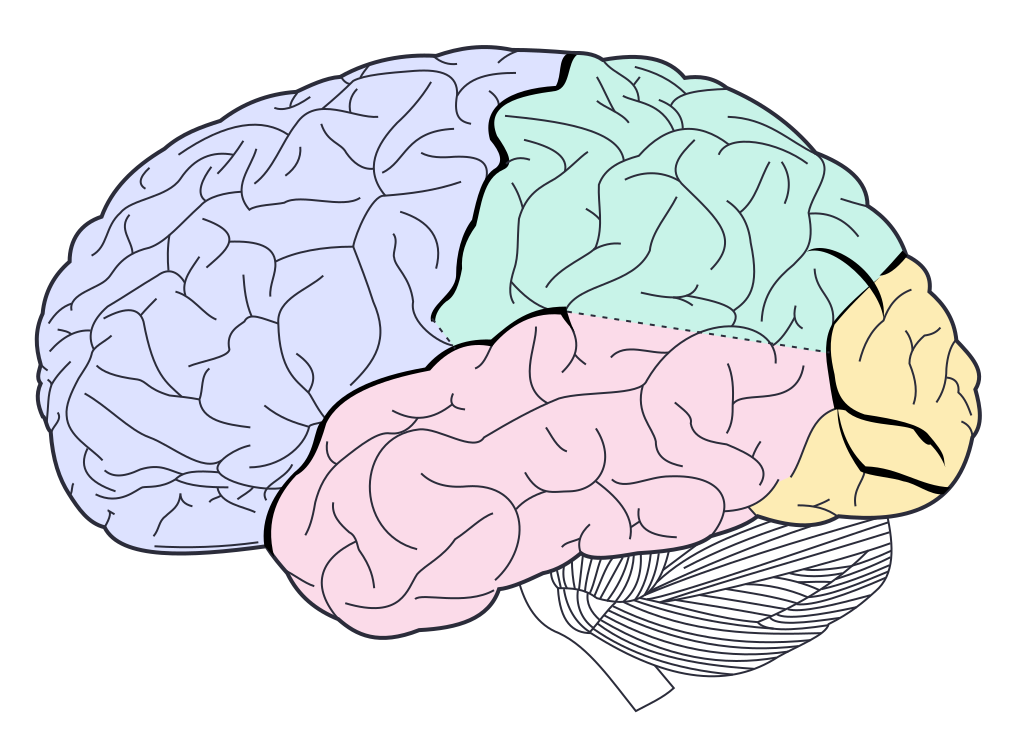
1
Based on Gray's Anatomy, fig. 728 (public domain)
AREA 1 OF 3
1Temporal lobe
Handles sound, language and recognising objects and faces. Its inner part links to the hippocampus to store new memories.ALL AREAS
WHERE TO GO FROM HERE
All working-memory games →The n-back family, by sense and load
ONE STREAMTWO STREAMS