Why Your Brain Slows Down: The Neuroscience of Mental Fatigue
You have been working for four hours straight. The words on your screen start to blur. A problem that would have taken you ten minutes this morning now feels insurmountable. You re-read the same paragraph three times without absorbing it. This is mental fatigue - and it is not a sign of weakness. It is a predictable, measurable neurobiological event with specific causes, identifiable stages, and evidence-based solutions.
Mental fatigue affects everyone: students preparing for exams, professionals navigating complex decisions, and anyone taking a cognitively demanding test such as an IQ assessment. Understanding the mechanisms behind it transforms mental fatigue from a mysterious "brain fog" into a manageable phenomenon that you can anticipate, mitigate, and recover from.
"Fatigue is the brain's way of telling you that the cost of continued cognitive effort is beginning to outweigh the benefits."
- Dr. Samuele Marcora, professor of exercise science and pioneer of the psychobiological model of fatigue
This article examines what happens inside the brain when mental fatigue sets in, why certain cognitive functions are more vulnerable than others, and what the research says about effective recovery strategies.
The Biological Machinery of Mental Fatigue
Adenosine: The Brain's Fatigue Signal
The single most important molecule in understanding mental fatigue is adenosine. Every time a neuron fires, it consumes ATP (adenosine triphosphate) for energy. As ATP is broken down, adenosine accumulates as a byproduct. This adenosine binds to specific receptors (A1 and A2A) throughout the brain, and its effect is consistently inhibitory: it slows neural firing, reduces arousal, and promotes the subjective experience of tiredness.
This is the same mechanism that drives sleepiness at the end of the day. During sustained cognitive work, adenosine accumulates at an accelerated rate in regions of the brain that are most active - particularly the prefrontal cortex. The result: the longer and harder you think, the more adenosine builds up, and the harder it becomes to maintain focus.
Caffeine works precisely by blocking adenosine receptors, temporarily preventing adenosine from exerting its inhibitory effects. However, the adenosine does not disappear - it continues to accumulate. When caffeine wears off, the accumulated adenosine floods the receptors, producing the familiar "crash."
| Adenosine Level | Subjective Experience | Cognitive Impact |
|---|---|---|
| Low (after sleep/rest) | Alert, energized | Optimal attention, fast processing |
| Moderate (2-4 hrs of work) | Normal functioning | Slight reduction in sustained attention |
| High (4-6 hrs of intense work) | Tired, difficulty concentrating | Impaired working memory, slower reaction times |
| Very high (prolonged work, sleep deprivation) | Brain fog, irritability | Severe impairment in complex reasoning, increased errors |
"Adenosine is not your enemy. It is a protective signal telling your brain that metabolic resources need replenishment."
- Dr. Robert Greene, Harvard Medical School neuroscientist and adenosine researcher
Glucose Depletion and the Metabolic Cost of Thinking
The brain consumes roughly 5.6 mg of glucose per 100 grams of brain tissue per minute. During demanding cognitive tasks, glucose consumption in active brain regions can increase by 12-15% above baseline (Raichle & Gusnard, 2002). While the body can maintain blood glucose through glycogenolysis and gluconeogenesis, the local glucose supply in heavily active neural circuits can become temporarily depleted faster than it is replenished.
This metabolic depletion has measurable consequences:
- Decision quality deteriorates - the famous "ego depletion" studies by Baumeister and colleagues showed that judges making parole decisions granted favorable outcomes in 65% of cases heard right after a meal break but in nearly 0% of cases heard just before the next break (Danziger et al., 2011)
- Self-control weakens - glucose-depleted individuals show reduced willpower and greater susceptibility to impulsive choices
- Error rates increase - a 2010 study in PNAS found that cognitive errors on sustained attention tasks increased by 20-30% after 90 minutes of continuous demanding work
| Brain Region | Glucose Use at Rest | Glucose Use Under Cognitive Load | Primary Function |
|---|---|---|---|
| Prefrontal cortex | Moderate | Very high (+15-20%) | Planning, decision-making, working memory |
| Hippocampus | Moderate | High (+10-15%) | Memory encoding, spatial navigation |
| Visual cortex | Moderate | High (+12%) | Visual processing |
| Anterior cingulate | Moderate | Very high (+18%) | Error detection, conflict monitoring |
Neurotransmitter Depletion
Sustained cognitive work depletes more than glucose. The neurotransmitters that drive attention and motivation - dopamine and norepinephrine - are synthesized from dietary amino acids (tyrosine and phenylalanine) and require specific cofactors (iron, vitamin B6, vitamin C). During prolonged mental effort:
- Dopamine levels decline in the prefrontal cortex, reducing motivation and the ability to sustain goal-directed behavior
- Norepinephrine depletion impairs alertness and the ability to filter relevant from irrelevant information
- Serotonin fluctuations affect mood and patience, contributing to the irritability commonly experienced during mental fatigue
This neurotransmitter depletion explains why mental fatigue feels different from physical tiredness: it manifests as reduced motivation, difficulty concentrating, and emotional dysregulation rather than muscle soreness.
The Prefrontal Cortex: Ground Zero for Mental Fatigue
The prefrontal cortex (PFC) is the brain region most vulnerable to mental fatigue, and this vulnerability has profound implications for cognitive performance. The PFC is responsible for what neuroscientists call executive functions:
- Working memory - holding and manipulating information
- Cognitive flexibility - switching between tasks or perspectives
- Inhibitory control - suppressing distracting thoughts or impulses
- Abstract reasoning - the capacity most heavily tested in IQ assessments
- Planning and sequencing - organizing steps toward a goal
A 2015 fMRI study published in NeuroImage (Lim et al.) demonstrated that after 3 hours of demanding cognitive work, prefrontal cortex activation decreased by approximately 20% compared to a rested baseline, even as participants tried to maintain performance. The brain was literally investing less metabolic resources into executive function.
"When the prefrontal cortex fatigues, we do not become stupid - we become cognitively lazy. The brain shifts from careful, analytical processing to faster, less accurate heuristic processing."
- Dr. Amy Arnsten, Yale neuroscience professor and PFC researcher
This shift explains common experiences during mental fatigue:
- Making decisions based on "gut feeling" rather than analysis
- Difficulty holding multiple pieces of information in mind simultaneously
- Increased susceptibility to cognitive biases
- Reduced ability to detect errors in your own work
Fluid vs. Crystallized Intelligence Under Fatigue
Mental fatigue does not impair all cognitive abilities equally. Research consistently shows that fluid intelligence - the ability to solve novel problems, recognize patterns, and reason abstractly - is far more sensitive to fatigue than crystallized intelligence - accumulated knowledge and vocabulary.
| Intelligence Type | Sensitivity to Fatigue | Why | Example Tasks |
|---|---|---|---|
| Fluid intelligence | Very high | Depends heavily on PFC and working memory | Abstract reasoning, pattern recognition, IQ test matrix problems |
| Crystallized intelligence | Low | Relies on distributed, well-consolidated long-term memory | Vocabulary, general knowledge, reading comprehension |
| Processing speed | High | Requires sustained attentional resources | Timed tasks, reaction time tests |
| Short-term memory | Moderate-High | Depends on active PFC maintenance | Digit span, sequence recall |
This asymmetry has practical implications for IQ testing: if you take a timed IQ test while mentally fatigued, your scores on fluid reasoning tasks may drop significantly while your vocabulary-based scores remain stable.
The Five Stages of Mental Fatigue
Mental fatigue does not arrive all at once. It progresses through identifiable stages, and recognizing where you are in this progression allows for timely intervention.
Stage 1: Optimal Performance (0-60 minutes)
During the first hour of focused work, the brain operates near peak efficiency. Attention is sharp, working memory is fully available, and problem-solving feels fluid. Adenosine levels are low, glucose supply is adequate, and neurotransmitter levels are high.
Stage 2: Compensatory Effort (60-120 minutes)
Performance remains adequate, but the brain must work harder to maintain it. Subjectively, you may notice that tasks require more effort. Neuroimaging studies show that during this phase, the brain recruits additional neural networks to compensate for declining efficiency in primary task regions - a phenomenon called compensatory recruitment.
Stage 3: Performance Degradation (120-180 minutes)
Compensatory mechanisms begin to fail. Working memory capacity shrinks, attention lapses increase, and error rates rise. Decision-making shifts from analytical to heuristic processing. This is the stage where "brain fog" becomes noticeable.
Stage 4: Active Disengagement (180-240+ minutes)
The brain begins to actively resist continued cognitive effort. Motivation drops sharply, mind-wandering increases, and the urge to switch to easier tasks becomes overwhelming. The default mode network (associated with daydreaming) becomes increasingly active, competing with task-relevant networks.
Stage 5: Cognitive Shutdown
If forced to continue without breaks, cognitive performance degrades to the point of minimal productivity. Error rates spike, emotional regulation fails, and the subjective experience becomes deeply unpleasant. Continued work during this stage produces negligible output relative to time invested.
Differentiating Mental Fatigue, Brain Fog, and Burnout
These terms are often used interchangeably but represent distinct conditions with different causes and interventions.
| Condition | Duration | Primary Cause | Key Symptoms | Recovery Time |
|---|---|---|---|---|
| Mental fatigue | Hours | Sustained cognitive effort, adenosine buildup | Difficulty concentrating, slower processing, increased errors | 15-60 minutes (breaks); overnight (sleep) |
| Brain fog | Days to weeks | Inflammation, illness, hormonal changes, medication | Confusion, forgetfulness, difficulty finding words | Days to weeks (address underlying cause) |
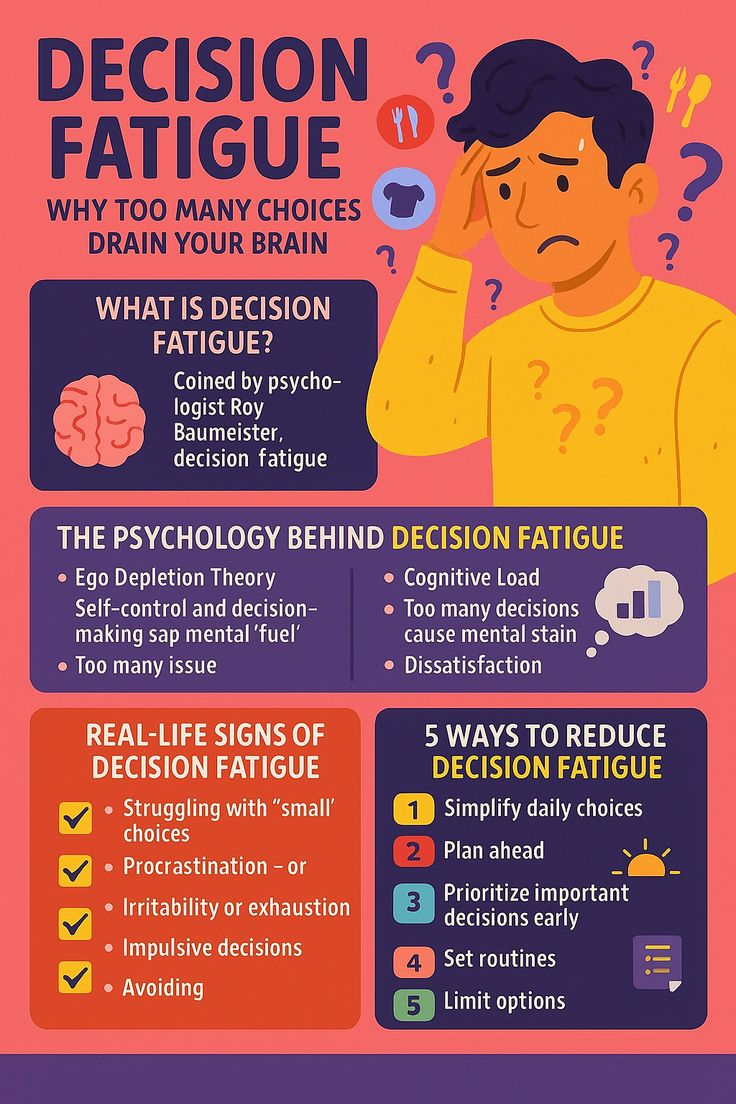
| Decision fatigue | Hours | Repeated decision-making depleting self-control resources | Poor decisions, impulsivity, avoidance of choices | Hours (rest from decisions) |
| Burnout | Weeks to months | Chronic stress, overwork, lack of autonomy | Emotional exhaustion, cynicism, reduced efficacy | Weeks to months (lifestyle restructuring) |
| Chronic fatigue syndrome | Months to years | Complex; possibly immune, neurological, metabolic | Persistent exhaustion unrelieved by rest, post-exertional malaise | Varies; requires medical management |
"Brain fog is a symptom, not a diagnosis. When it persists beyond normal mental fatigue recovery, it warrants medical investigation."
- Dr. Sabina Brennan, neuroscientist and author of 100 Days to a Younger Brain
How Mental Fatigue Affects IQ Test Performance
Mental fatigue creates a measurable gap between your actual cognitive capacity and your expressed performance on cognitive tests. This distinction is critical for interpreting IQ scores.
A 2014 study in Intelligence (Ackerman & Kanfer) found that participants who completed IQ-style tests after 4 hours of demanding cognitive work scored an average of 5-8 points lower on fluid reasoning tasks compared to when they were rested. Critically, their crystallized intelligence scores remained unchanged - the fatigue selectively impaired the abilities most dependent on the prefrontal cortex.
Practical implications for test-takers:
- Schedule tests during peak alertness - for most people, this is mid-morning (9:00-11:00 AM)
- Sleep well the night before - one night of poor sleep can reduce cognitive performance by 10-15%
- Take breaks during long assessments - even 5-minute breaks between sections can partially restore attentional resources
- Eat before testing - avoid both fasting and heavy meals; a moderate, balanced meal 2-3 hours before is optimal
- Stay hydrated - dehydration compounds the effects of mental fatigue
To understand how fatigue affects your specific cognitive profile, try taking our practice IQ test at different times of day and under different rest conditions. Compare your scores on our full IQ test taken while rested versus fatigued to see the difference.
Evidence-Based Recovery Strategies
Tier 1: Immediate Recovery (During Work)
Strategic breaks are the most effective tool for managing mental fatigue during sustained cognitive work. The research is clear on timing and structure:
- The Pomodoro Technique (25 minutes work / 5 minutes break) is effective for moderate-demand tasks
- For high-demand cognitive work, 52 minutes of work followed by 17 minutes of break was identified as the optimal ratio by a DeskTime productivity study analyzing high-performer behavior
- Nature exposure during breaks is significantly more restorative than screen time. A 2019 study in Frontiers in Psychology found that even 40 seconds of viewing a nature scene partially restored attentional capacity
| Break Activity | Restoration Effect | Evidence |
|---|---|---|
| Walking outdoors (10-15 min) | High | Berman et al. (2008): nature walks restored directed attention by 20% |
| Napping (10-20 min) | Very high | Brooks & Lack (2006): 10-min naps improved alertness for 2.5 hours |
| Social conversation | Moderate | Ybarra et al. (2008): brief social interaction improved cognitive performance |
| Stretching/light movement | Moderate | Increases cerebral blood flow |
| Scrolling social media | Low to negative | Reinforces attentional fragmentation |
| Caffeine (100-200 mg) | Moderate (temporary) | Blocks adenosine receptors; does not clear adenosine |
Tier 2: Daily Recovery
Sleep is the brain's primary recovery mechanism. During sleep, adenosine is cleared through the glymphatic system - a waste-clearance pathway discovered in 2012 that is 10x more active during sleep than during wakefulness (Xie et al., 2013). This system also removes beta-amyloid and tau proteins associated with Alzheimer's disease.
- 7-9 hours of sleep allows near-complete adenosine clearance
- Deep slow-wave sleep (stages 3-4) is particularly important for cognitive restoration
- Sleep consistency - maintaining the same bedtime and wake time - predicts cognitive performance more reliably than total sleep duration
Nutrition for recovery:
- Complex carbohydrates replenish brain glycogen stores
- Omega-3 fatty acids support neuronal membrane repair
- Magnesium (found in nuts, spinach, dark chocolate) supports GABA receptor function, promoting relaxation and sleep quality
- Tart cherry juice has been shown to increase sleep duration by an average of 84 minutes and improve sleep quality (Howatson et al., 2012) due to its natural melatonin content
Tier 3: Long-Term Resilience
Building cognitive endurance - the ability to sustain high-level thinking for longer periods before fatigue sets in - is possible through consistent practice:
- Regular aerobic exercise (30 minutes, 3-5 times per week) increases cerebral blood flow, promotes neurogenesis, and enhances mitochondrial function in neurons
- Mindfulness meditation (8 weeks of regular practice) has been shown to increase gray matter density in the prefrontal cortex and anterior cingulate cortex (Holzel et al., 2011), the regions most vulnerable to fatigue
- Progressive cognitive challenge - gradually increasing the duration and difficulty of cognitive work sessions - trains the brain's compensatory mechanisms, much like progressive overload in physical training
- Cognitive testing practice - regularly engaging with assessments like our practice IQ test builds familiarity with sustained cognitive demands
"The brain, like a muscle, can be trained to sustain effort longer. But also like a muscle, it requires recovery to grow stronger."
- Dr. Adam Gazzaley, UCSF neuroscientist and author of The Distracted Mind
Mental Fatigue in the Modern World: Unique Challenges
Digital Overload and Attention Fragmentation
The modern information environment presents an unprecedented challenge to cognitive endurance. A 2023 study by Microsoft Research found that the average knowledge worker switches tasks every 3 minutes and 5 seconds and checks email or messaging apps approximately 77 times per day. Each switch imposes a cognitive cost: it takes an average of 23 minutes and 15 seconds to fully re-engage with a complex task after an interruption (Mark et al., 2008).
This pattern of constant interruption means that many people experience mental fatigue not because they are thinking too hard, but because they are switching too often. The prefrontal cortex expends resources on each task switch - resources that would otherwise be available for deep, sustained thinking.
Multitasking: The Fatigue Accelerator
True multitasking - performing two cognitively demanding tasks simultaneously - is a neuroscientific impossibility. What people call "multitasking" is actually rapid task switching, which:
- Increases error rates by 50% (Monsell, 2003)
- Reduces productivity by up to 40% (American Psychological Association)
- Accelerates adenosine accumulation by increasing total cognitive load
- Depletes dopamine faster, reducing motivation
Open-Plan Offices and Cognitive Environments
Environmental factors significantly influence the rate of mental fatigue onset. A 2018 study in Philosophical Transactions of the Royal Society B found that workers in open-plan offices showed:
- 73% fewer face-to-face interactions (contrary to the spaces' intended purpose)
- 56% more email to compensate
- Significantly higher cortisol levels and faster cognitive fatigue onset
Measuring Your Mental Fatigue Vulnerability
Understanding your personal susceptibility to mental fatigue helps you design more effective work schedules and recovery strategies. Key indicators include:
Self-assessment questions:
- How long can you sustain focused reading before your mind wanders?
- At what point in the day do you start making more errors?
- How many hours of sleep do you need to feel cognitively sharp?
- Do you notice performance differences between morning and afternoon?
Objective measurement:
- Take our quick IQ assessment in the morning when rested, then again in the late afternoon after a full workday
- Compare scores on fluid reasoning tasks versus crystallized knowledge tasks
- Track your performance on our timed IQ test across different days and conditions
This data provides a personal fatigue profile that can guide practical decisions about when to schedule demanding cognitive work, how long to work before taking breaks, and how much sleep you genuinely need.
Conclusion: Working With Your Brain, Not Against It
Mental fatigue is not a character flaw or a sign of insufficient willpower. It is a predictable neurobiological response to sustained cognitive demand, driven by adenosine accumulation, glucose depletion, neurotransmitter decline, and prefrontal cortex overload. The brain, like every biological system, has finite resources that must be replenished through rest, nutrition, and sleep.
The practical takeaway is straightforward: design your cognitive work around your biology rather than fighting against it. Protect your peak hours for your most demanding tasks. Take strategic breaks before fatigue degrades your performance. Prioritize sleep as the single most powerful cognitive recovery tool available.
And when you do assess your cognitive abilities - through our full IQ test or quick IQ assessment - do so under conditions that allow your brain to perform at its genuine capacity.
Your brain is the most sophisticated information-processing system known to science. Treat it accordingly.
References
- Marcora, S.M., Staiano, W., & Manning, V. (2009). Mental fatigue impairs physical performance in humans. Journal of Applied Physiology, 106(3), 857-864.
- Raichle, M.E. & Gusnard, D.A. (2002). Appraising the brain's energy budget. PNAS, 99(16), 10237-10239.
- Danziger, S., Levav, J., & Avnaim-Pesso, L. (2011). Extraneous factors in judicial decisions. PNAS, 108(17), 6889-6892.
- Lim, J., Wu, W., Wang, J., Detre, J.A., Dinges, D.F., & Rao, H. (2010). Imaging brain fatigue from sustained mental workload. NeuroImage, 49(4), 3426-3435.
- Xie, L., Kang, H., Xu, Q., et al. (2013). Sleep drives metabolite clearance from the adult brain. Science, 342(6156), 373-377.
- Berman, M.G., Jonides, J., & Kaplan, S. (2008). The cognitive benefits of interacting with nature. Psychological Science, 19(12), 1207-1212.
- Mark, G., Gudith, D., & Klocke, U. (2008). The cost of interrupted work: more speed and stress. Proceedings of the SIGCHI Conference on Human Factors in Computing Systems, 107-110.
- Holzel, B.K., Carmody, J., Vangel, M., et al. (2011). Mindfulness practice leads to increases in regional brain gray matter density. Psychiatry Research: Neuroimaging, 191(1), 36-43.
- Ackerman, P.L. & Kanfer, R. (2009). Test length and cognitive fatigue: An empirical examination of effects on performance and test-taker reactions. Journal of Experimental Psychology: Applied, 15(2), 163-181.
- Howatson, G., Bell, P.G., Tallent, J., et al. (2012). Effect of tart cherry juice on melatonin levels and enhanced sleep quality. European Journal of Nutrition, 51(8), 909-916.
- Monsell, S. (2003). Task switching. Trends in Cognitive Sciences, 7(3), 134-140.
Frequently Asked Questions
How long does mental fatigue typically last after intense cognitive work?
Recovery time depends on fatigue severity and recovery method:
- *Mild fatigue* (after 1-2 hours of focused work) recovers in 15-20 minutes with a proper break.
- *Moderate fatigue* (3-4 hours) may require 30-60 minutes or a short 10-20 minute nap - research by Brooks & Lack (2006) showed that 10-minute naps improved alertness for up to 2.5 hours.
- *Severe fatigue* (a full day of intense cognitive work) requires a full night of quality sleep (7-9 hours) for complete adenosine clearance through the glymphatic system.
If fatigue persists for days despite adequate rest, it may indicate brain fog from other causes and warrants investigation.
Can mental fatigue affect creativity and problem-solving differently than routine tasks?
Yes, and the difference is substantial. *Creative and complex problem-solving* tasks depend heavily on the prefrontal cortex and working memory - the systems most vulnerable to mental fatigue. A fatigued brain shows approximately 20% reduced prefrontal activation (Lim et al., 2010), directly impairing novel reasoning.
Routine tasks, by contrast, rely on well-established neural pathways in more fatigue-resistant brain regions and are relatively preserved. Interestingly, some research (Wieth & Zacks, 2011) suggests that *mild* fatigue can paradoxically benefit creative *insight* problems by reducing the prefrontal cortex's inhibitory control, allowing more remote associations. Deep analytical creativity, however, always suffers.
Are there specific foods or supplements proven to reduce mental fatigue?
Several interventions have research support:
- *Caffeine* (100-200 mg) temporarily blocks adenosine receptors, improving alertness for 3-5 hours.
- *Creatine* (3-5 g/day) may support brain ATP production - a 2018 meta-analysis in *Experimental Gerontology* found modest cognitive benefits, particularly under sleep deprivation.
- *Omega-3 fatty acids* support neuronal membrane health and reduce neuroinflammation.
- *Complex carbohydrates* provide sustained glucose delivery.
- *Dark chocolate* (flavanols) increases cerebral blood flow.
However, no supplement can substitute for adequate sleep and strategic breaks - these remain the most powerful anti-fatigue interventions.
How does chronic mental fatigue differ from temporary brain fog caused by stress?
*Temporary brain fog* from acute stress or sleep deprivation typically resolves within hours to days once the trigger is removed. *Chronic mental fatigue* persists for weeks or months and may indicate underlying conditions such as chronic fatigue syndrome (ME/CFS), depression, thyroid dysfunction, anemia, or autoimmune disorders.
Key distinguishing features: chronic fatigue does not improve with normal rest, often worsens after even moderate cognitive effort (post-exertional malaise), and may be accompanied by other systemic symptoms. If mental fatigue persists beyond 2-3 weeks despite adequate sleep and stress management, medical evaluation is recommended.
Can practicing mindfulness meditation help reduce mental fatigue during work?
The evidence is strong. An 8-week mindfulness meditation program increased *gray matter density* in the prefrontal cortex and anterior cingulate cortex - the regions most vulnerable to fatigue (Holzel et al., 2011).
Regular meditators show improved *attentional control* and greater ability to sustain focus under demanding conditions. Even brief mindfulness breaks (3-5 minutes of focused breathing) during work can partially restore attentional resources. A 2016 study in *Consciousness and Cognition* found that just *10 minutes of mindfulness practice* reduced mind-wandering and improved sustained attention on subsequent tasks.
Is it possible to train the brain to resist mental fatigue over time?
Yes, within biological limits. *Cognitive endurance* can be improved through progressive training, similar to building physical endurance. Regular practice with sustained cognitive tasks gradually improves the brain's compensatory mechanisms.
Aerobic exercise is particularly effective: a 2019 meta-analysis found that regular exercisers showed 15-20% greater resistance to cognitive fatigue compared to sedentary individuals, likely due to improved cerebral blood flow and mitochondrial efficiency.
Regular engagement with cognitively demanding tasks - such as our timed IQ test or complex problem-solving exercises - progressively builds mental stamina. However, the fundamental metabolic limits of the brain (adenosine accumulation, glucose depletion) cannot be eliminated, only managed more effectively.
Related Articles



Curious about your IQ?
You can take a free online IQ test and get instant results.
Take IQ Test