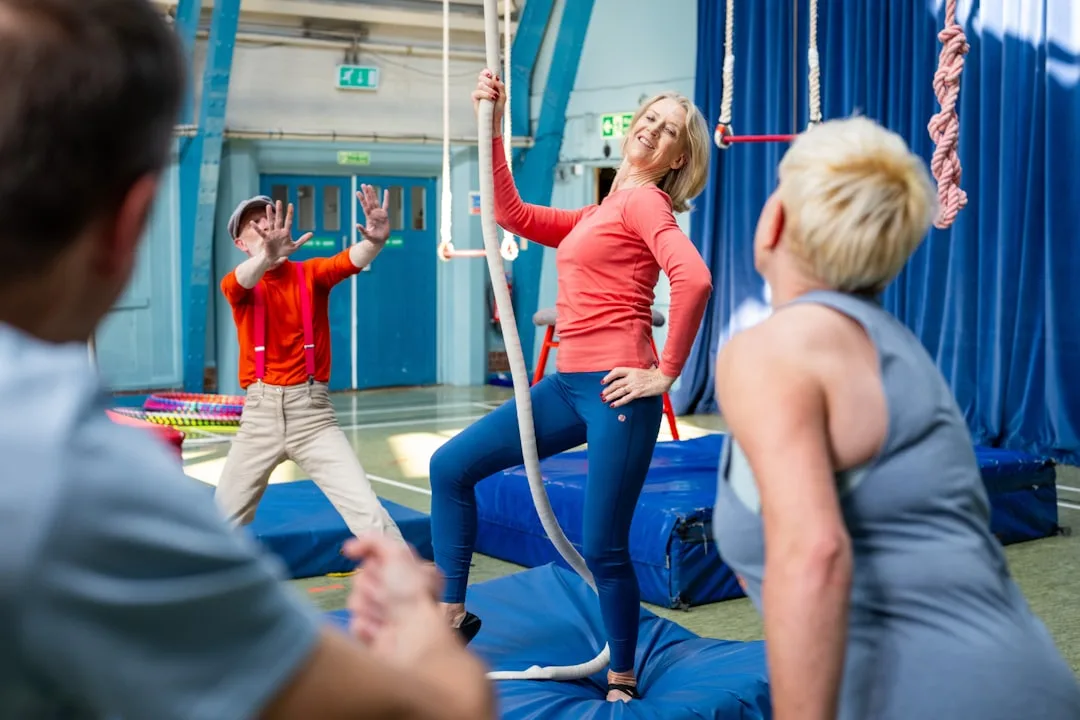
Introduction: Exercise Is Miracle-Gro for the Brain
The relationship between physical fitness and cognitive ability is one of the most well-documented findings in modern neuroscience. What was once an intuitive belief - that a healthy body supports a healthy mind - now rests on decades of rigorous research spanning molecular biology, neuroimaging, and large-scale epidemiological studies.
"Exercise is the single best thing you can do for your brain in terms of mood, memory, and learning."
- Dr. John Ratey, Harvard Medical School, author of Spark: The Revolutionary New Science of Exercise and the Brain
The central discovery driving this field is brain-derived neurotrophic factor (BDNF) - a protein that Dr. Ratey famously calls "Miracle-Gro for the brain." When you exercise, your body floods the brain with BDNF, stimulating the growth of new neurons and strengthening existing synaptic connections, particularly in the hippocampus, the brain's memory and learning center.
This article examines the specific biological mechanisms linking exercise to IQ-related cognitive improvements, compares aerobic and resistance training for brain benefits, and provides evidence-based strategies for using fitness to sharpen your mind. If you are curious about your current cognitive baseline, you can take our full IQ test before beginning a new fitness routine and then retest after several months of consistent training.
The Biology of Exercise and Brain Function: BDNF and Neurogenesis
At the molecular level, the brain fitness connection operates through several interconnected pathways. Understanding these mechanisms reveals why exercise is not merely "good for you" but is essential for optimal cognitive performance.
BDNF: The Master Molecule
Brain-derived neurotrophic factor is a protein that promotes the survival, growth, and differentiation of neurons. Exercise - particularly sustained aerobic activity - triggers a dramatic increase in BDNF levels in the bloodstream and brain tissue.
A landmark 2011 study by Erickson et al., published in the Proceedings of the National Academy of Sciences, demonstrated that one year of moderate aerobic exercise increased hippocampal volume by 2%, effectively reversing age-related shrinkage by one to two years. This volumetric increase correlated directly with elevated serum BDNF levels and improved spatial memory performance.
"BDNF is the key biological link between exercise and cognitive function. It acts like fertilizer for brain cells, helping them grow and resist damage."
- Dr. Carl Cotman, University of California, Irvine, pioneer in exercise neuroscience research
The Neurochemical Cascade
Beyond BDNF, exercise triggers a cascade of neurochemical changes:
- Dopamine and norepinephrine - improve attention, motivation, and executive function
- Serotonin - regulates mood, sleep, and impulse control
- Endorphins - reduce perception of pain and stress
- IGF-1 (Insulin-like Growth Factor 1) - works synergistically with BDNF to promote neuronal growth
- VEGF (Vascular Endothelial Growth Factor) - stimulates new blood vessel formation in the brain
| Neurochemical | Primary Cognitive Effect | Exercise Type That Elevates It |
|---|---|---|
| BDNF | Memory consolidation, neurogenesis | Aerobic exercise (running, cycling) |
| Dopamine | Attention, motivation, reward processing | Both aerobic and resistance training |
| Serotonin | Mood regulation, impulse control | Sustained moderate aerobic exercise |
| IGF-1 | Neuronal growth and survival | Resistance training, high-intensity exercise |
| VEGF | Cerebral blood flow, angiogenesis | Aerobic exercise |
| Endorphins | Stress reduction, pain modulation | Vigorous exercise of any type |
Neurogenesis and Synaptic Plasticity
Until the late 1990s, scientists believed that the adult brain could not produce new neurons. Research by Dr. Fred Gage at the Salk Institute overturned this dogma, demonstrating that the dentate gyrus of the hippocampus generates new neurons throughout life - and that exercise is one of the most potent stimulators of this process.
"We found that voluntary running doubled the number of new neurons in the hippocampus of adult mice. This was one of the first demonstrations that the adult brain retains remarkable plasticity."
- Dr. Fred "Rusty" Gage, Salk Institute for Biological Studies
These new neurons are not merely ornamental. They integrate into existing neural circuits, enhancing pattern separation (the ability to distinguish between similar memories) and spatial navigation - both critical components of the fluid intelligence measured by IQ tests.
Aerobic vs. Resistance Training: Which Is Better for Your Brain?
Not all exercise affects the brain equally. Understanding the distinct cognitive benefits of different training modalities allows you to design a fitness routine optimized for mental performance.
Aerobic Exercise: The Gold Standard for Brain Health
Aerobic exercise - running, swimming, cycling, brisk walking - has the most extensive evidence base for cognitive enhancement. The Naperville Central High School experiment, featured prominently in Ratey's Spark, demonstrated that students who participated in a vigorous morning exercise program before classes achieved dramatic improvements in reading and math scores, with some classes ranking first in the world on the TIMSS international science assessment.
Key findings from aerobic exercise research:
- Processing speed improves by 10-20% after 6 months of regular aerobic training (Colcombe & Kramer, 2003)
- Working memory capacity increases significantly, particularly in older adults
- Attention and executive function show robust improvements across all age groups
- Risk of Alzheimer's disease decreases by up to 45% in physically active individuals (Larson et al., 2006)
Resistance Training: Building Executive Function
While aerobic exercise dominates the research literature, resistance training has emerged as a powerful complement for cognitive health, particularly in the domain of executive function.
A 2010 study by Liu-Ambrose et al. in the Archives of Internal Medicine found that women aged 65-75 who engaged in resistance training once or twice per week for 12 months showed significant improvements in:
- Selective attention and conflict resolution
- Associative memory
- Response inhibition (the ability to suppress inappropriate responses)
Head-to-Head Comparison
| Factor | Aerobic Exercise | Resistance Training | Mind-Body (Yoga/Tai Chi) |
|---|---|---|---|
| BDNF Production | Very High | Moderate | Low to Moderate |
| Hippocampal Volume | Increases (2% in 1 year) | Modest effect | Minimal direct effect |
| Executive Function | Strong improvement | Strong improvement | Moderate improvement |
| Processing Speed | Significant gains | Modest gains | Minimal gains |
| Stress Reduction | High | Moderate | Very High |
| Emotional Regulation | Moderate | Moderate | Very High |
| Best Evidence For | Memory, learning, fluid IQ | Planning, inhibitory control | Stress, cognitive flexibility |
| Recommended Frequency | 150+ min/week moderate | 2-3 sessions/week | 2-3 sessions/week |
"The most effective exercise program for the brain combines aerobic training with resistance work. Aerobic exercise grows the infrastructure, while strength training fine-tunes the control systems."
- Dr. Wendy Suzuki, New York University, author of Healthy Brain, Happy Life
Can Exercise Actually Raise Your IQ Score?
This is the question that draws the most interest - and the most debate. The answer is nuanced but encouraging.
What the Evidence Shows
IQ tests measure several cognitive domains, and exercise has been shown to improve the specific domains that contribute to overall IQ scores:
| Cognitive Domain | Measured by IQ Tests? | Effect of Regular Exercise | Strength of Evidence |
|---|---|---|---|
| Fluid reasoning | Yes (core component) | Moderate improvement | Strong |
| Working memory | Yes | Significant improvement | Very strong |
| Processing speed | Yes | 10-20% improvement | Very strong |
| Verbal comprehension | Partially | Minimal direct effect | Weak |
| Visual-spatial processing | Yes | Moderate improvement | Moderate |
| Long-term memory | Indirectly | Significant improvement | Strong |
The Naperville Effect and Real-World Examples
The results from Naperville Central High School in Illinois remain among the most compelling real-world demonstrations. After implementing a "Zero Hour PE" program requiring students to exercise at 80-90% of their maximum heart rate before first period:
- Reading scores improved by 17% compared to non-exercising peers
- Math scores improved by 20.4%
- On the TIMSS international exam, Naperville students placed 1st in the world in science and 6th in math - competing against elite Asian school systems
The Honest Assessment
Exercise will not transform an average IQ into a genius-level score. However, research consistently shows that regular physical activity can:
- Improve fluid intelligence test performance by 4-7 points over sustained training periods
- Prevent age-related cognitive decline equivalent to 1-3 IQ points per decade that would otherwise be lost
- Optimize cognitive functioning so that your measured IQ better reflects your true potential
To see where you stand now, try our quick IQ assessment to establish a baseline, then retest after adopting a consistent exercise routine.
Exercise Across the Lifespan: Age-Specific Benefits
The cognitive effects of exercise vary by age, but benefits exist at every stage of life.
Children and Adolescents
The Hillman Lab at the University of Illinois conducted extensive research showing that physically fit children demonstrate:
- Larger hippocampal volumes and greater basal ganglia development
- Superior attention and reduced impulsivity
- Better academic performance, particularly in math and reading
- Enhanced executive function, including task switching and working memory
A 2014 meta-analysis in Pediatrics involving over 10,000 children found that each additional hour of physical activity per week was associated with measurably improved academic performance.
Adults (25-64)
For working-age adults, exercise serves as both a cognitive enhancer and a protective factor:
- Stress reduction via cortisol regulation improves decision-making under pressure
- Enhanced creativity - a Stanford study found that walking increased creative output by an average of 60%
- Improved sleep quality, which is essential for memory consolidation
Older Adults (65+)
The stakes are highest for older adults, where exercise acts as the most effective known intervention against cognitive decline:
- The Erickson et al. (2011) study showed hippocampal growth even in adults aged 55-80
- Regular exercisers have a 38% lower risk of cognitive decline (Sofi et al., 2011 meta-analysis)
- Even beginning an exercise program in one's 70s produces measurable cognitive benefits within 6 months
| Age Group | Primary Cognitive Benefit | Recommended Exercise | Key Research |
|---|---|---|---|
| Children (6-12) | Academic performance, attention | 60+ min daily vigorous play | Hillman et al., 2014 |
| Adolescents (13-18) | Executive function, emotional regulation | Team sports + aerobic training | Ratey, Spark (2008) |
| Young Adults (18-35) | Creativity, stress management | 150 min/week moderate aerobic | Oppezzo & Schwartz, 2014 |
| Middle Adults (35-64) | Memory preservation, processing speed | Mixed aerobic + resistance | Colcombe & Kramer, 2003 |
| Older Adults (65+) | Dementia prevention, hippocampal growth | Walking, swimming, tai chi | Erickson et al., 2011 |
Practical Strategies: The Brain-Optimized Exercise Program
Based on the accumulated research, here is an evidence-based framework for maximizing the cognitive benefits of exercise:
The Weekly Blueprint
- Aerobic sessions (3-4x per week, 30-45 minutes): Running, cycling, swimming, or brisk walking at 60-80% of maximum heart rate. This is the primary driver of BDNF production and neurogenesis.
- Resistance training (2x per week, 30-40 minutes): Compound movements like squats, deadlifts, and pressing exercises. Focus on progressive overload to stimulate IGF-1 and growth hormone release.
- Mind-body practice (1-2x per week, 20-30 minutes): Yoga, tai chi, or meditation-based movement. Targets stress reduction and cognitive flexibility.
- Movement snacks throughout the day: Brief 5-10 minute walks or bodyweight exercises during work breaks. A 2018 study in the British Journal of Sports Medicine found that even 10 minutes of mild exertion improved attention and memory for the subsequent hour.
Timing Matters
Research from Ratey's work suggests that exercising before cognitively demanding tasks produces the greatest benefit. The post-exercise window of 60-90 minutes features elevated BDNF, dopamine, and norepinephrine levels - an optimal state for learning, problem-solving, and test-taking.
"Think of exercise as a way to prepare your brain for learning. The data is clear: students who exercise before class learn faster and retain more."
- Dr. John Ratey, Harvard Medical School
Monitor Your Progress
Pair your fitness routine with regular cognitive self-assessment. Use our timed IQ test to track processing speed and accuracy under pressure, or start with our practice IQ test to identify your cognitive strengths and growth areas.
Conclusion: Your Brain on Exercise
The evidence is unambiguous: physical fitness is one of the most powerful, accessible, and well-documented interventions for enhancing cognitive ability. Through BDNF-driven neurogenesis, improved cerebral blood flow, neurotransmitter optimization, and stress reduction, exercise creates the biological conditions for sharper thinking, better memory, and improved performance on the cognitive tasks measured by IQ tests.
The practical takeaway is straightforward. Consistent moderate exercise - particularly aerobic training combined with resistance work - can meaningfully improve the cognitive domains that underlie IQ scores, protect against age-related decline, and optimize your brain's functioning at every stage of life.
To understand your current cognitive profile and track improvements over time, take our full IQ test or begin with a practice test to build familiarity with the types of reasoning challenges that exercise helps you master.
References
- Ratey, J.J., & Hagerman, E. (2008). Spark: The Revolutionary New Science of Exercise and the Brain. Little, Brown and Company.
- Erickson, K.I., Voss, M.W., Prakash, R.S., et al. (2011). Exercise training increases size of hippocampus and improves memory. Proceedings of the National Academy of Sciences, 108(7), 3017-3022.
- Colcombe, S., & Kramer, A.F. (2003). Fitness effects on the cognitive function of older adults: A meta-analytic study. Psychological Science, 14(2), 125-130.
- Liu-Ambrose, T., Nagamatsu, L.S., Graf, P., et al. (2010). Resistance training and executive functions: A 12-month randomized controlled trial. Archives of Internal Medicine, 170(2), 170-178.
- Hillman, C.H., Pontifex, M.B., Castelli, D.M., et al. (2014). Effects of the FITKids randomized controlled trial on executive control and brain function. Pediatrics, 134(4), e1063-e1071.
- Oppezzo, M., & Schwartz, D.L. (2014). Give your ideas some legs: The positive effect of walking on creative thinking. Journal of Experimental Psychology: Learning, Memory, and Cognition, 40(4), 1142-1152.
- Cotman, C.W., & Berchtold, N.C. (2002). Exercise: A behavioral intervention to enhance brain health and plasticity. Trends in Neurosciences, 25(6), 295-301.
- Sofi, F., Valecchi, D., Bacci, D., et al. (2011). Physical activity and risk of cognitive decline: A meta-analysis of prospective studies. Journal of Internal Medicine, 269(1), 107-117.
- Larson, E.B., Wang, L., Bowen, J.D., et al. (2006). Exercise is associated with reduced risk for incident dementia among persons 65 years of age and older. Annals of Internal Medicine, 144(2), 73-81.
- Suzuki, W. (2015). Healthy Brain, Happy Life: A Personal Program to Activate Your Brain and Do Everything Better. Dey Street Books.
Frequently Asked Questions
How soon can I expect cognitive improvements after starting an exercise routine?
Some benefits appear almost immediately. A single bout of moderate aerobic exercise elevates BDNF, dopamine, and norepinephrine for 60-90 minutes afterward, improving attention and mood within that window. A 2019 study in *Translational Psychiatry* found measurable improvements in executive function after just one week of daily exercise.
However, structural brain changes - such as hippocampal growth and new neural circuit formation - typically require 3-6 months of consistent training. The Erickson et al. (2011) study documented significant hippocampal volume increases after 12 months of moderate walking.
Is high-intensity interval training (HIIT) better for brain fitness than moderate aerobic exercise?
HIIT produces higher acute spikes in BDNF compared to moderate exercise, which may benefit short-term cognitive performance. However, a 2017 study in the *Journal of Cognitive Neuroscience* found that sustained moderate aerobic exercise produced greater long-term improvements in memory and hippocampal function.
The practical recommendation from researchers like Ratey is to use HIIT sparingly (1-2 sessions per week) within a program built primarily around moderate aerobic activity. Consistency over months matters far more than intensity on any single day.
Can sedentary individuals improve their IQ-related cognitive abilities by starting exercise later in life?
Absolutely. The Erickson et al. (2011) study specifically recruited previously sedentary adults aged 55-80 and demonstrated significant hippocampal growth and memory improvement after just one year of moderate walking (40 minutes, three times per week).
A 2018 meta-analysis in *Neurology* found that even individuals who began exercising in their 70s showed measurable cognitive benefits within 6 months. While earlier adoption provides more years of neuroprotective benefit, the brain retains its capacity for exercise-induced plasticity throughout the lifespan.
How do stress and exercise interact to affect cognitive performance?
Chronic stress elevates cortisol, which at sustained high levels damages hippocampal neurons and impairs memory consolidation.
Exercise counteracts this through multiple pathways: it reduces baseline cortisol levels, increases BDNF (which protects neurons from cortisol-induced damage), and promotes the release of endocannabinoids that reduce anxiety. Dr. Ratey describes exercise as *"the body's natural stress inoculation."* Research from the University of Georgia found that individuals who exercised regularly showed 33% better stress resilience on cognitive tasks compared to sedentary controls.
Are there specific cognitive domains that do not benefit from physical fitness?
Crystallized intelligence - accumulated knowledge, vocabulary, and factual information - is minimally affected by exercise because it depends primarily on education and life experience rather than neural plasticity.
Exercise predominantly enhances fluid intelligence (reasoning with novel information), working memory, and processing speed - all of which are heavily dependent on hippocampal function, prefrontal cortex efficiency, and neurotransmitter balance. However, by improving attention, motivation, and sleep quality, exercise indirectly supports the *acquisition* of crystallized knowledge through more effective learning.
Related Articles



Curious about your IQ?
You can take a free online IQ test and get instant results.
Take IQ Test