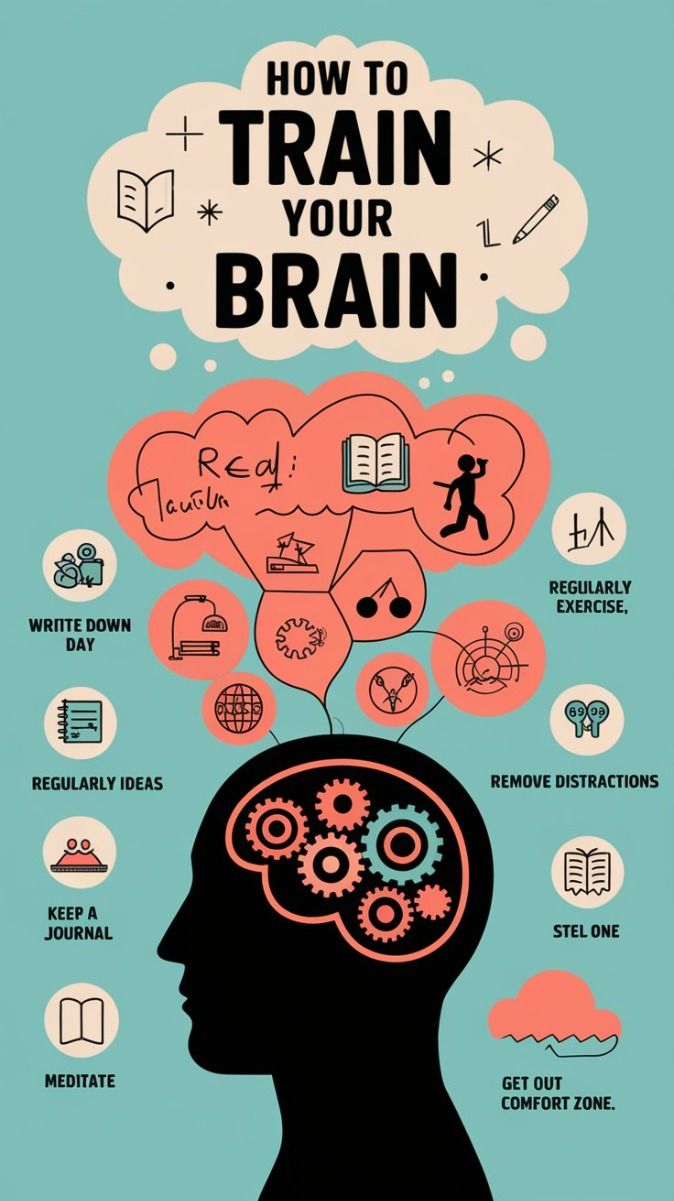
The Brain Training Promise: Can You Really Train Your Way to a Higher IQ?
The brain training industry generates over $8 billion annually worldwide, fueled by a compelling promise: play these games, complete these exercises, and you will become smarter. From Lumosity to BrainHQ to Elevate, millions of users invest time and money in apps that claim to sharpen memory, boost processing speed, and - most ambitiously - raise IQ.
But does the science support these claims? The answer is more nuanced than either the marketing brochures or the skeptics suggest. Two decades of research have produced genuine breakthroughs, spectacular failures, and a federal lawsuit that reshaped the industry. Understanding what brain training can and cannot do requires examining the evidence honestly.
"The brain is wider than the sky."
- Emily Dickinson
This article examines the landmark studies, the controversies, and the practical implications of cognitive training research - so you can make informed decisions about how to invest your mental energy. If you want to establish a baseline before exploring any training approach, start with our full IQ test.
What Is Brain Training and How Does It Claim to Work?
Brain training encompasses structured cognitive exercises designed to improve specific mental functions - memory, attention, processing speed, and executive function. The core hypothesis rests on neuroplasticity: the brain's demonstrated ability to reorganize itself by forming new neural connections in response to experience and practice.
The Theoretical Framework
The argument for brain training raising IQ follows a logical chain:
- IQ tests measure cognitive abilities like working memory, processing speed, and reasoning
- These abilities depend on specific neural circuits
- Neural circuits can be strengthened through targeted practice (neuroplasticity)
- Therefore, training these circuits should raise IQ scores
The logic is sound in principle. The question is whether it holds up under rigorous experimental testing.
Types of Brain Training Programs
| Program Type | Examples | Primary Target | Typical Duration |
|---|---|---|---|
| Working memory training | N-back tasks, CogMed | Working memory capacity | 20-40 sessions over 5-8 weeks |
| Processing speed training | Useful Field of View, BrainHQ | Visual processing speed | 10-20 hours total |
| Multi-domain apps | Lumosity, Elevate, Peak | Attention, memory, flexibility | Ongoing daily use |
| Strategy-based training | Chess, music instruction | Executive function, planning | Months to years |
| Mindfulness/meditation | Headspace, structured MBSR | Attention, emotional regulation | 8+ weeks |
"Neurons that fire together wire together."
- Donald Hebb, neuropsychologist, summarizing the principle of Hebbian learning
The critical distinction in evaluating all these programs is between near transfer and far transfer:
- Near transfer: Improvement on tasks similar to those practiced (e.g., getting better at the specific memory game you play)
- Far transfer: Improvement on different, untrained tasks (e.g., scoring higher on an IQ test you have never practiced)
Near transfer is well-established and relatively uncontroversial. Far transfer - the kind that would actually raise IQ - is where the debate rages.
The Landmark Studies: Jaeggi vs. Owen
Two studies stand as the defining bookends of the brain training debate. Understanding both is essential for anyone evaluating the field.
The Jaeggi Study (2008): The Case FOR Brain Training
In 2008, Susanne Jaeggi and colleagues published a study in the Proceedings of the National Academy of Sciences (PNAS) that sent shockwaves through cognitive science. The study reported that training on a demanding dual n-back task - which requires simultaneously tracking auditory and visual sequences - produced significant gains in fluid intelligence (Gf), the component of IQ most associated with novel problem-solving.
Key findings from Jaeggi et al. (2008):
- Participants trained for 8, 12, 17, or 19 days on the dual n-back task
- Training groups showed significant improvement on Raven's Progressive Matrices, a standard measure of fluid intelligence
- Gains were dose-dependent: more training sessions produced larger improvements
- The effect persisted even when controlling for practice effects and motivation
This was groundbreaking because fluid intelligence was long considered largely immutable - determined primarily by genetics and resistant to environmental intervention.
"Our results provide evidence that training on demanding working memory tasks can improve fluid intelligence."
- Susanne Jaeggi, University of California, Irvine
The Owen Study (2010): The Case AGAINST Brain Training
Two years later, Adrian Owen and colleagues published a massive counter-study in Nature - one of the world's most prestigious scientific journals. Their study involved over 11,430 participants (compared to Jaeggi's 70), making it the largest brain training trial ever conducted at the time.
Key findings from Owen et al. (2010):
- Participants completed six weeks of online cognitive training (10 minutes, 3 times per week)
- Training improved performance on the specific trained tasks
- However, there was no evidence of transfer to untrained tasks, including measures of general intelligence
- The study concluded that brain training does not produce broad cognitive improvement
| Study | Sample Size | Training Type | Duration | Far Transfer Found? |
|---|---|---|---|---|
| Jaeggi et al. (2008) | 70 | Dual n-back | 8-19 days | Yes (fluid intelligence) |
| Owen et al. (2010) | 11,430 | Various cognitive tasks | 6 weeks | No |
| Redick et al. (2013) | 73 | Dual n-back (replication) | 20 sessions | No |
| Au et al. (2015) meta-analysis | 20 studies pooled | N-back variants | Varied | Small effect (d = 0.24) |
| Simons et al. (2016) review | 130+ studies | All types | Varied | Insufficient evidence |
"The brain training industry is built on a very shaky scientific foundation."
- Adrian Owen, Western University, lead author of the 2010 Nature study
Why Do the Studies Disagree?
The contradictory findings stem from several methodological differences:
- Sample size: Jaeggi's study was small, increasing the risk of false positives; Owen's was massive
- Training intensity: Jaeggi used a highly demanding, adaptive task; Owen used lighter, more varied exercises
- Active vs. passive controls: Some studies compared trainees to people who did nothing (passive control), inflating apparent gains. Studies with active controls (who did a different engaging task) tend to show smaller or no effects
- Motivation and expectation effects: When participants know they are in the "brain training" group, placebo-like expectancy effects can inflate scores by 5-10 points (Boot et al., 2013)
The Lumosity Lawsuit: When Marketing Outran the Science
In January 2016, the Federal Trade Commission (FTC) charged Lumos Labs - maker of Lumosity, the world's most popular brain training app with over 70 million subscribers - with deceptive advertising. The company had claimed its games could help users perform better at work, in school, and in athletics, and even reduce cognitive decline associated with aging and conditions like Alzheimer's disease.
The FTC's Findings
The FTC concluded that Lumosity's claims were not supported by scientific evidence. The settlement included:
- A $50 million judgment (reduced to $2 million based on the company's financial condition)
- A requirement to notify subscribers about the FTC action and provide easy cancellation
- A prohibition against making claims about cognitive improvement without competent and reliable scientific evidence
| Lumosity Claim | FTC Assessment |
|---|---|
| "Improve memory and attention" | Evidence limited to near transfer only |
| "Enhance performance at work and school" | No adequate evidence of real-world transfer |
| "Reduce cognitive decline" | No clinical evidence supporting this claim |
| "Help with PTSD, ADHD, and brain injury" | Claims not supported by the cited research |
The Open Letter: 70 Scientists Weigh In
In October 2014, a group of 70 prominent neuroscientists and cognitive psychologists signed an open letter published by the Stanford Center on Longevity stating:
"The strong consensus of this group is that the scientific literature does not support claims that the use of software-based 'brain games' alters neural functioning in ways that improve general cognitive performance in everyday life, or that prevent cognitive slowing and brain disease."
Shortly after, a competing letter signed by 133 scientists argued that the initial letter overstated the case against brain training and that certain programs do have evidence of benefit. This dueling letter episode illustrates just how divided the scientific community remains.
"We object to the claim that brain training is useless. But we equally object to the claim that it is a proven method to raise intelligence."
- Jerri Edwards, University of South Florida, signatory of the pro-evidence letter
What the Meta-Analyses Actually Show
When individual studies disagree, scientists turn to meta-analyses - statistical syntheses of multiple studies - to find the overall signal in the noise. Here is what the major meta-analyses conclude:
Summary of Key Meta-Analyses
| Meta-Analysis | Studies Included | Main Finding | Effect Size |
|---|---|---|---|
| Au et al. (2015) | 20 n-back studies | Small positive effect on fluid intelligence | d = 0.24 (small) |
| Melby-Lervag et al. (2016) | 87 working memory studies | Near transfer confirmed; no far transfer to IQ | d = 0.00 for far transfer |
| Sala & Gobet (2019) | 90+ studies | No evidence for far transfer from cognitive training | d = 0.03 (negligible) |
| Nguyen et al. (2019) | 30 older adult studies | Small benefits for memory and processing speed | d = 0.15-0.25 |
Interpreting Effect Sizes
To put these numbers in perspective:
| Effect Size (Cohen's d) | Interpretation | IQ Point Equivalent |
|---|---|---|
| 0.00-0.10 | Negligible | 0-1.5 points |
| 0.10-0.30 | Small | 1.5-4.5 points |
| 0.30-0.50 | Medium | 4.5-7.5 points |
| 0.50-0.80 | Large | 7.5-12 points |
| 0.80+ | Very large | 12+ points |
The most optimistic meta-analysis (Au et al., 2015) found an effect of d = 0.24, which translates to roughly 3-4 IQ points - a real but modest gain. However, even this finding has been challenged: when Melby-Lervag and colleagues reanalyzed the data using stricter criteria for study quality (particularly requiring active control groups), the effect disappeared entirely.
"When we limited our analysis to studies with active control groups, there was no reliable evidence of improvement on any measure of intelligence."
- Monica Melby-Lervag, University of Oslo
What Actually Works for Cognitive Enhancement
If commercial brain training has limited evidence for raising IQ, what does the science support? Several interventions have stronger evidence for genuine cognitive improvement:
Evidence-Based Approaches Ranked by Strength of Evidence
| Intervention | Evidence for IQ/Cognitive Gains | Key Study | Magnitude of Effect |
|---|---|---|---|
| Formal education | Very strong | Ritchie & Tucker-Drob, 2018 | 1-5 IQ points per year of education |
| Aerobic exercise | Strong | Hillman et al., 2008 | d = 0.25-0.50 on executive function |
| Musical instrument training | Moderate-strong | Schellenberg, 2004 | 2-3 IQ points after 1 year of lessons |
| Quality sleep | Strong | Lim & Dinges, 2010 | 5-15 point deficit from sleep deprivation |
| Learning a second language | Moderate | Bialystok, 2009 | Enhanced executive function |
| Strategy-based cognitive training | Moderate | Ball et al., 2002 (ACTIVE trial) | d = 0.26-0.48 for specific domains |
| Commercial brain training apps | Weak-mixed | Simons et al., 2016 | d = 0.00-0.24 (contested) |
The ACTIVE Trial: Brain Training That Held Up
The Advanced Cognitive Training for Independent and Vital Elderly (ACTIVE) trial is the gold standard in cognitive training research. This NIH-funded study followed 2,832 older adults for over 10 years and found:
- Speed of processing training produced durable improvements lasting 10+ years
- Trained participants showed a 48% reduction in risk of at-risk driving (Edwards et al., 2009)
- Reasoning training improved reasoning ability for up to 5 years
- However, no group showed improvement on standard IQ measures
The ACTIVE trial demonstrates that well-designed, targeted training can produce meaningful real-world benefits - but "meaningful real-world benefits" and "higher IQ" are not the same thing.
"Physical fitness is not only one of the most important keys to a healthy body, it is the basis of dynamic and creative intellectual activity."
- John F. Kennedy
The Exercise-Cognition Connection
Perhaps the most robust finding in cognitive enhancement research is the benefit of aerobic exercise. A meta-analysis by Colcombe and Kramer (2003) found that aerobic fitness training improved cognition in older adults with an effect size of d = 0.50 for executive function - more than double the most optimistic brain training effect. The mechanism involves increased blood flow to the prefrontal cortex, elevated BDNF (brain-derived neurotrophic factor), and hippocampal neurogenesis.
Working Memory Training: The Most Debated Question
Working memory - the ability to hold and manipulate information in mind - sits at the intersection of the brain training debate because it is strongly correlated with fluid intelligence (r = 0.60-0.70). If you could permanently expand working memory capacity, you might genuinely raise IQ. This is what makes the n-back training paradigm so tantalizing.
How the Dual N-Back Task Works
The dual n-back task asks you to simultaneously track two streams of information:
- Visual: A square appears in one of 8 positions on a grid
- Auditory: A letter is spoken aloud
- Task: Press one button if the visual position matches the position from n trials ago, and another button if the letter matches the letter from n trials ago
As you improve, n increases (2-back, 3-back, 4-back...), making the task progressively more demanding. This adaptive difficulty is what Jaeggi argued was essential for producing far transfer.
The Replication Problem
Multiple labs attempted to replicate Jaeggi's 2008 findings. The results were mixed:
| Replication Study | N-Back Training Duration | Far Transfer to Gf? | Notes |
|---|---|---|---|
| Jaeggi et al. (2010) | 20 sessions | Yes | Same lab, small sample |
| Redick et al. (2013) | 20 sessions | No | Active control; well-designed |
| Thompson et al. (2013) | 20 sessions | No | Active control included |
| Colom et al. (2013) | 24 sessions | No | Largest replication attempt |
| Soveri et al. (2017) meta-analysis | Pooled | Minimal | Small effects disappeared with active controls |
The pattern is striking: when studies include active control groups (where the comparison group does an equally engaging but non-cognitive task), the far transfer effect largely vanishes. This suggests that much of the apparent IQ gain in earlier studies was driven by placebo and expectancy effects rather than genuine cognitive enhancement.
"We are still far from understanding whether working memory can be trained to produce lasting, meaningful improvements in intelligence."
- Randall Engle, Georgia Institute of Technology, a leading working memory researcher
Practical Guidelines: A Science-Based Approach
Given the evidence, here is an honest, research-informed approach to cognitive enhancement:
What to Do
- Prioritize education and continuous learning - the single best-supported intervention for raising IQ (Ritchie & Tucker-Drob, 2018)
- Exercise aerobically 150+ minutes per week - produces robust cognitive benefits with effect sizes exceeding most brain training (Colcombe & Kramer, 2003)
- Protect your sleep - sleep deprivation can reduce effective IQ by 5-15 points; consistent 7-9 hours is non-negotiable (Lim & Dinges, 2010)
- Learn a musical instrument or second language - both show moderate evidence for cognitive transfer (Schellenberg, 2004; Bialystok, 2009)
- Engage in varied cognitive challenges - reading, puzzles, strategic games, and new skill acquisition keep your brain adaptable
What to Approach with Caution
- Commercial brain training apps: May improve specific skills but expect near transfer only; do not pay premium prices expecting IQ gains
- Single-task training: Practicing one cognitive task repeatedly is the least likely to produce broad cognitive benefits
- Unsubstantiated claims: Any program claiming to raise IQ by 10+ points through games alone is not supported by current evidence
A Balanced Weekly Plan for Cognitive Health
| Day | Activity | Duration | Primary Benefit |
|---|---|---|---|
| Monday | Aerobic exercise (running, cycling, swimming) | 30-45 min | BDNF release, executive function |
| Tuesday | Read challenging non-fiction | 30-60 min | Crystallized intelligence, vocabulary |
| Wednesday | Aerobic exercise + puzzle/strategy game | 30 min + 20 min | Combined physical-cognitive benefit |
| Thursday | Learn new skill (language, instrument, coding) | 30-45 min | Cognitive flexibility, transfer |
| Friday | Aerobic exercise | 30-45 min | Cardiovascular and cognitive health |
| Saturday | Social engagement + varied reading | Flexible | Social cognition, verbal reasoning |
| Sunday | Rest, quality sleep, reflection | Full day | Memory consolidation, recovery |
To track whether any of these interventions are making a difference, periodically assess your cognitive abilities with our full IQ test or our timed IQ test.
How to Measure Your IQ and Track Changes Over Time
If you decide to pursue any cognitive enhancement approach, having a reliable baseline and periodic follow-up measurements is essential. Without measurement, you cannot distinguish genuine improvement from wishful thinking.
Best Practices for Self-Assessment
- Test under consistent conditions: Same time of day, similar sleep quality, similar stress levels
- Wait at least 3 months between retests: This minimizes practice effects from test familiarity
- Use multiple test formats: A full IQ test provides comprehensive data, while a timed IQ test captures processing speed specifically
- Track domain-specific changes: Note whether improvements appear in verbal reasoning, pattern recognition, working memory, or processing speed
Understanding Test-Retest Variability
IQ scores are not perfectly stable from one sitting to the next. Normal test-retest variability on well-designed tests is approximately:
| Retest Interval | Expected Variability (Standard Error of Measurement) |
|---|---|
| Same day | +/- 3 points |
| 1 month | +/- 4-5 points |
| 6 months | +/- 5-7 points |
| 1+ year | +/- 5-8 points |
This means a change of fewer than 5-7 points may simply reflect normal measurement variability rather than a genuine cognitive shift. Only consistent changes across multiple retests should be interpreted as real improvement.
For a quick snapshot of your current cognitive performance, try our quick IQ assessment. For a more thorough evaluation, our practice test offers a range of tasks that mirror those used in clinical assessments.
Conclusion: The Honest Answer
Does brain training raise IQ? The honest, evidence-based answer is: probably not by much, and almost certainly not as much as the marketing claims.
Here is what we can say with reasonable confidence:
- Brain training reliably improves performance on trained tasks (near transfer is real)
- Far transfer to general IQ is either absent or very small (d = 0.00-0.24), and the most rigorous studies tend to find the smallest effects
- The Jaeggi n-back findings have not been robustly replicated with proper active controls
- The Lumosity FTC settlement confirmed that major industry claims were not supported by adequate evidence
- Education, exercise, sleep, and varied intellectual engagement have stronger evidence bases than any commercial brain training program
This does not mean brain training is worthless. It can be enjoyable, it may sharpen specific skills, and it is certainly better than passive screen time. But if your goal is genuinely raising your IQ, the evidence points elsewhere - toward sustained education, physical fitness, quality sleep, and diverse cognitive engagement.
"Intelligence is not a matter of having a big brain. It is what you do with the connections you have."
- Michael Gazzaniga, cognitive neuroscientist and pioneer of split-brain research
Begin by understanding where you stand today. Take our full IQ test, or start with a quick IQ assessment, and use that baseline to make informed decisions about where to invest your cognitive development efforts.
References
- Au, J., Sheehan, E., Tsai, N., Duncan, G. J., Buschkuehl, M., & Jaeggi, S. M. (2015). Improving fluid intelligence with training on working memory: A meta-analysis. Psychonomic Bulletin & Review, 22(2), 366-377.
- Ball, K., Berch, D. B., Helmers, K. F., Jobe, J. B., Leveck, M. D., Marsiske, M., ... & Willis, S. L. (2002). Effects of cognitive training interventions with older adults: A randomized controlled trial. JAMA, 288(18), 2271-2281.
- Bialystok, E. (2009). Bilingualism: The good, the bad, and the indifferent. Bilingualism: Language and Cognition, 12(1), 3-11.
- Boot, W. R., Simons, D. J., Stothart, C., & Stutts, C. (2013). The pervasive problem with placebos in psychology: Why active control groups are not sufficient to rule out placebo effects. Perspectives on Psychological Science, 8(4), 445-454.
- Colcombe, S., & Kramer, A. F. (2003). Fitness effects on the cognitive function of older adults: A meta-analytic study. Psychological Science, 14(2), 125-130.
- Edwards, J. D., Myers, C., Ross, L. A., Roenker, D. L., Cissell, G. M., McLaughlin, A. M., & Ball, K. K. (2009). The longitudinal impact of cognitive speed of processing training on driving mobility. The Gerontologist, 49(4), 485-494.
- Jaeggi, S. M., Buschkuehl, M., Jonides, J., & Perrig, W. J. (2008). Improving fluid intelligence with training on working memory. Proceedings of the National Academy of Sciences, 105(19), 6829-6833.
- Lim, J., & Dinges, D. F. (2010). A meta-analysis of the impact of short-term sleep deprivation on cognitive variables. Psychological Bulletin, 136(3), 375-389.
- Melby-Lervag, M., Redick, T. S., & Hulme, C. (2016). Working memory training does not improve performance on measures of intelligence or other measures of "far transfer." Perspectives on Psychological Science, 11(4), 512-534.
- Owen, A. M., Hampshire, A., Grahn, J. A., Stenton, R., Dajani, S., Burns, A. S., ... & Ballard, C. G. (2010). Putting brain training to the test. Nature, 465(7299), 775-778.
- Redick, T. S., Shipstead, Z., Harrison, T. L., Hicks, K. L., Ber, D. E., Engle, R. W., & Randall, W. (2013). No evidence of intelligence improvement after working memory training: A randomized, placebo-controlled study. Journal of Experimental Psychology: General, 142(2), 359-379.
- Ritchie, S. J., & Tucker-Drob, E. M. (2018). How much does education improve intelligence? A meta-analysis. Psychological Science, 29(8), 1358-1369.
- Sala, G., & Gobet, F. (2019). Cognitive training does not enhance general cognition. Trends in Cognitive Sciences, 23(1), 9-20.
- Schellenberg, E. G. (2004). Music lessons enhance IQ. Psychological Science, 15(8), 511-514.
- Simons, D. J., Boot, W. R., Charness, N., Gathercole, S. E., Chabris, C. F., Hambrick, D. Z., & Stine-Morrow, E. A. (2016). Do "brain-training" programs work? Psychological Science in the Public Interest, 17(3), 103-186.
Frequently Asked Questions
Can brain training improve IQ permanently or are the effects temporary?
The evidence strongly suggests that brain training effects are *temporary and task-specific*. The most comprehensive meta-analysis on this topic (Melby-Lervag et al., 2016, reviewing 87 studies) found that while working memory training produces reliable near-transfer gains, these improvements *diminish within months* without continued practice, and there is no reliable evidence of far transfer to IQ.
Even the most optimistic meta-analysis (Au et al., 2015) found only a small effect (d = 0.24, roughly 3-4 IQ points) that has been contested on methodological grounds. The ACTIVE trial did find durable benefits for processing speed lasting 10+ years, but these did not translate to higher IQ scores. For lasting cognitive improvement, education, exercise, and varied intellectual engagement have far stronger evidence bases.
Which types of brain training exercises are most effective for cognitive improvement?
The research distinguishes between programs with meaningful evidence and those with minimal support. Processing speed training (like the Useful Field of View task used in the ACTIVE trial) has the strongest evidence for producing durable, real-world benefits, including a 48% reduction in at-risk driving in older adults (Edwards et al., 2009).
Adaptive working memory training (particularly the dual n-back) shows the most controversial evidence for fluid intelligence gains, with some studies finding small effects (d = 0.24) and others finding none. Multi-domain training programs that combine memory, attention, and reasoning exercises show slightly better outcomes than single-task training.
The key features of effective programs are:
- *adaptive difficulty* (the task gets harder as you improve),
- *sufficient duration* (at least 15-20 sessions), and
- *variety* (engaging multiple cognitive systems rather than just one).
How reliable are online IQ tests for measuring true intelligence?
Online IQ tests provide *reasonable estimates* but are not equivalent to professionally administered assessments like the WAIS-IV or Stanford-Binet. The standard error of measurement on well-designed online tests is typically 5-7 points, compared to 3-5 points for clinical instruments.
The main limitations are: lack of a controlled testing environment, no examiner to ensure proper engagement, potential for distraction, and absence of normative validation on the same scale as clinical tests. However, online tests are useful for *tracking relative changes over time*: if you score consistently higher across multiple retests separated by 3+ months, that likely reflects genuine improvement.
For the most accurate online assessment, use tests that include multiple question types (verbal, spatial, numerical) and have reasonable time limits. Our full IQ test is designed to balance accessibility with assessment rigor.
Is it possible to increase IQ through education and lifestyle changes aside from brain training?
Yes, and the evidence is substantially stronger than for brain training alone.
- A meta-analysis by Ritchie and Tucker-Drob (2018) found that each year of formal education raises IQ by approximately *1-5 points*, making education the single best-documented IQ intervention.
- Aerobic exercise shows a medium effect size (d = 0.25-0.50) on executive function and cognitive performance (Colcombe & Kramer, 2003).
- Sleep deprivation can reduce effective cognitive performance by the equivalent of 5-15 IQ points (Lim & Dinges, 2010), meaning simply improving sleep hygiene can produce meaningful gains.
- Music lessons for children produced a 2-3 point IQ advantage after one year (Schellenberg, 2004).
- Bilingualism enhances executive function and may provide cognitive reserve against age-related decline (Bialystok, 2009).
The most effective approach combines multiple interventions: *regular exercise, continuous learning, adequate sleep, and diverse cognitive engagement*.
Why do some people show more improvement from brain training than others?
Individual variability in brain training response is substantial and determined by multiple factors.
- Baseline cognitive ability plays a counterintuitive role: some studies find that people with *lower* initial scores benefit more (a "compensation" effect), while others find the opposite (a "magnification" effect where stronger brains benefit more).
- Age matters significantly: older adults (65+) tend to show more measurable improvement, possibly because they have more room for optimization and benefit from re-engaging underused cognitive circuits.
- Motivation and engagement are critical confounds: participants who believe brain training works show larger gains regardless of the training content (Boot et al., 2013), suggesting placebo effects account for a meaningful portion of observed improvement.
- Genetics influence neuroplasticity itself: variations in the COMT and BDNF genes affect dopamine metabolism and neural growth factor production, creating genuine biological differences in training responsiveness.
- Finally, training compliance (actually completing sessions at full effort) varies dramatically and directly impacts outcomes.
Can brain training help individuals with cognitive impairments or brain injuries?
This is where brain training evidence is actually most encouraging. *Targeted cognitive rehabilitation* following traumatic brain injury or stroke is a well-established clinical practice with stronger evidence than general-population brain training. The ACTIVE trial demonstrated durable benefits for older adults at risk of cognitive decline.
CogMed working memory training has shown meaningful improvements for children with ADHD, though the durability and generalizability of these gains remain debated (Melby-Lervag & Hulme, 2013). For individuals with mild cognitive impairment (MCI), multi-domain cognitive training combined with physical exercise shows promise for slowing progression (Ngandu et al., 2015, the FINGER trial).
The key distinction is that *clinical populations with specific deficits* often respond better to targeted training than the general healthy population, likely because they have more room for improvement in identifiable neural circuits. Any brain training for clinical conditions should be conducted under professional supervision as part of a comprehensive treatment plan.
Related Articles


Curious about your IQ?
You can take a free online IQ test and get instant results.
Take IQ Test