Introduction: Music and the Brain - Separating Hype from Science
Few claims about cognitive enhancement have captured public imagination like the idea that music makes you smarter. Parents play Mozart to infants. Schools justify music programs by citing IQ benefits. Students curate study playlists for maximum brain power. But what does the science actually show?
The relationship between music and intelligence is real - but far more nuanced than headlines suggest. Passive listening to music produces, at best, temporary and modest cognitive effects. Active music training, however, appears to produce lasting changes in brain structure, processing speed, and measured IQ. And the mechanisms behind these effects - from rhythmic entrainment to enhanced interhemispheric connectivity - reveal fundamental truths about how the brain processes information.
"Music is the only activity that engages the entire brain simultaneously. No other human activity activates as many brain regions at once as playing a musical instrument." - John Ratey, Harvard Medical School, Spark: The Revolutionary New Science of Exercise and the Brain (2008)
This article examines three central questions: Does the Mozart effect hold up under scrutiny? What does long-term music training actually do to the brain and IQ? And how does rhythmic processing connect to the processing speed component of intelligence? Whether you are a musician, a parent, or simply curious about cognitive enhancement, the answers may reshape how you think about music and the mind.
The Mozart Effect: What It Is and Why It Was Mostly Wrong
The Original Study
In 1993, psychologists Frances Rauscher, Gordon Shaw, and Katherine Ky published a brief paper in Nature reporting that college students who listened to 10 minutes of Mozart's Sonata for Two Pianos in D Major (K. 448) showed improved spatial-temporal reasoning compared to students who sat in silence or listened to relaxation instructions. The improvement was approximately 8-9 IQ points on one specific subtest - but it lasted only 10-15 minutes.
The media transformed this modest, temporary finding into "Mozart makes you smarter." The state of Georgia began distributing classical music CDs to newborns. A cottage industry of "Baby Einstein" products followed. The gap between the actual research and the public narrative became one of the most famous examples of science miscommunication in modern psychology.
"The effect was real but small, specific, and temporary. It was never about Mozart making anyone permanently smarter. It was about arousal and mood." - Frances Rauscher, University of Wisconsin, reflecting on the Mozart effect (2006)
The Replication Debate
| Study | Year | Finding | Notes |
|---|---|---|---|
| Rauscher, Shaw, & Ky | 1993 | +8-9 points on spatial reasoning after Mozart | Original study; effect lasted 10-15 minutes |
| Steele, Bass, & Crook | 1999 | No significant effect found | Failed to replicate with similar methods |
| Chabris (meta-analysis) | 1999 | Effect size d = 0.09 (trivial) | Pooled 16 studies; concluded effect is minimal |
| Pietschnig, Voracek, & Formann | 2010 | Small effect d = 0.15, not Mozart-specific | Meta-analysis of 40 studies; any preferred music works equally |
| Thompson, Schellenberg, & Husain | 2001 | Arousal and mood explain the effect | Schubert and pop music produced identical benefits |
What Actually Explains the "Mozart Effect"
The current scientific consensus is that the Mozart effect is best explained by the arousal-mood hypothesis (Thompson, Schellenberg, & Husain, 2001):
- Listening to enjoyable music of any kind improves mood and increases arousal
- Improved mood and arousal temporarily enhance performance on spatial-temporal tasks
- Mozart's music happens to be upbeat and complex enough to produce this arousal - but it is not unique
- Sitting in silence or listening to a boring relaxation tape is suboptimal for cognitive performance - creating the illusion that Mozart is special
Real-world implication: If you enjoy heavy metal, hip-hop, or Bollywood soundtracks, listening to those genres before a cognitive task will likely produce the same temporary boost as Mozart. The key variable is enjoyment and arousal, not the composer.
"There is nothing special about Mozart. What matters is that the music is stimulating, enjoyable, and puts the listener in an optimal arousal state for the task at hand." - E. Glenn Schellenberg, University of Toronto, Psychological Science (2005)
Music Training and IQ: Where the Real Evidence Lives
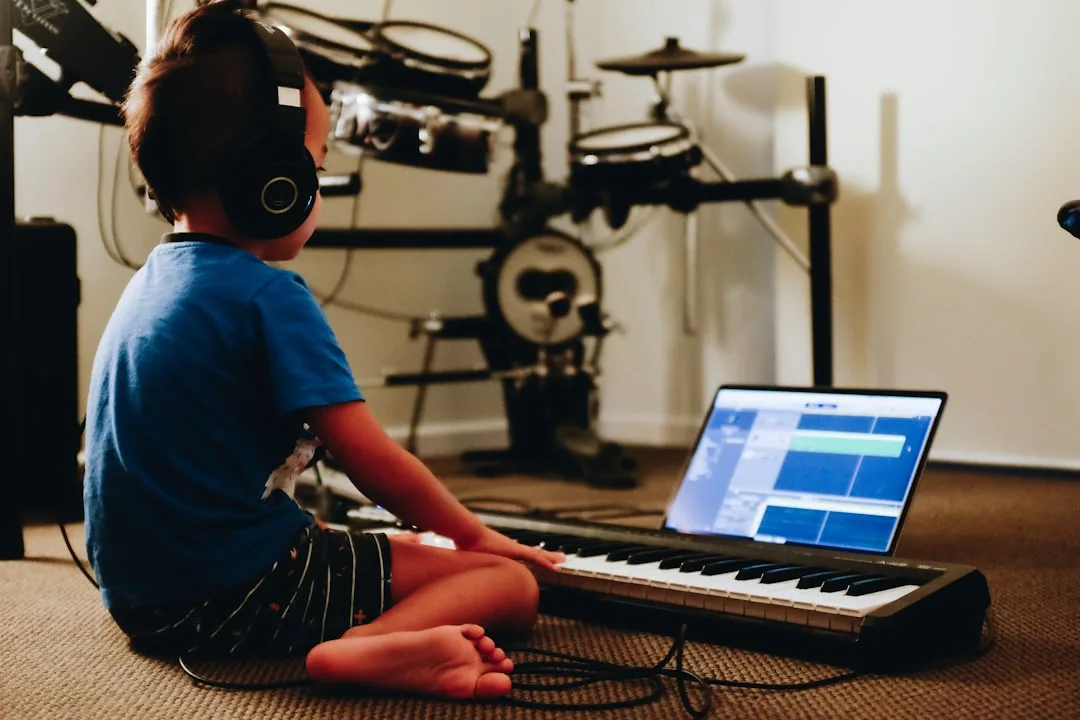
While passive listening produces only temporary mood effects, active music training tells a very different story. Learning to play an instrument requires sustained engagement of attention, memory, motor coordination, auditory discrimination, and executive function - all of which are core components of intelligence.
Schellenberg's Landmark Study (2004)
The most rigorous study of music training and IQ was conducted by E. Glenn Schellenberg at the University of Toronto. He randomly assigned 144 six-year-olds to one of four groups for 36 weeks:
- Keyboard lessons
- Voice (singing) lessons
- Drama lessons (active control)
- No lessons (passive control)
Results: Both music groups (keyboard and voice) showed IQ increases of approximately 3 points compared to the control groups. The drama group showed no IQ advantage but did improve in social behavior. Crucially, because this was a randomized controlled trial, the IQ gains can be attributed to the music training itself, not to pre-existing differences.
Longitudinal Evidence
| Study | Duration | Sample | IQ Effect |
|---|---|---|---|
| Schellenberg, 2004 | 36 weeks | 144 children, age 6 | +3 points (music vs. control) |
| Schellenberg, 2006 | Correlational | 150 children, ages 6-11 | +7 points for each year of music training (after controlling for confounds) |
| Moreno et al., 2011 | 20 days | 48 children, ages 4-6 | Improved verbal intelligence and executive function |
| Jaschke et al., 2018 | 2.5 years | 147 children | Improved planning, inhibition, and verbal IQ |
| Sala & Gobet (meta-analysis), 2017 | Various | 38 studies pooled | Small but significant effect (g = 0.16); strongest for music vs. no-activity controls |
Which Cognitive Abilities Does Music Training Improve?
Music training does not improve all cognitive abilities equally. The strongest evidence exists for:
- Verbal intelligence: Musicians consistently outperform non-musicians on vocabulary and verbal comprehension tasks. Musical pitch processing and language share overlapping neural circuits (Patel, 2011).
- Executive function: Playing an instrument requires sustained attention, inhibitory control (waiting for your turn in an ensemble), and cognitive flexibility (switching between reading notation, listening, and motor execution). These are the same executive functions measured by IQ test working memory subtests.
- Processing speed: Musicians show faster auditory and visual processing compared to non-musicians. This advantage extends to non-musical tasks, suggesting genuine transfer rather than just music-specific skill (Strait & Kraus, 2014).
- Spatial reasoning: Moderate evidence suggests music training enhances spatial-temporal reasoning, possibly through the shared neural processing of musical patterns and spatial relationships.
"Music training is the only activity that has been shown to enhance general cognitive abilities through transfer. No other extracurricular activity - sports, drama, chess - has produced the same breadth of cognitive effects in controlled studies." - E. Glenn Schellenberg, Current Directions in Psychological Science (2005)
Rhythm, Timing, and Processing Speed: The Deep Connection
Why Rhythm Matters for IQ
Processing speed is one of the four Index Scores on the WAIS-IV (alongside Verbal Comprehension, Perceptual Reasoning, and Working Memory). It measures how quickly the brain can perform simple cognitive operations - and rhythm training appears to enhance it directly.
The connection makes neurological sense. Processing musical rhythm requires:
- Precise temporal encoding: The brain must represent time intervals with millisecond accuracy
- Prediction and anticipation: Musical beats create expectations; the brain continuously predicts the next event
- Motor-auditory integration: Tapping, clapping, or playing in time requires the motor system and auditory system to synchronize
- Sustained attention: Maintaining rhythmic timing over minutes requires continuous focus
These are the same cognitive demands underlying processing speed tasks on IQ tests: rapid symbol matching, quick pattern identification, and sustained attention under time pressure.
Research Evidence: Rhythm Training and Processing Speed
| Study | Finding | Mechanism |
|---|---|---|
| Strait & Kraus, 2014 | Musicians process auditory information 20-50ms faster than non-musicians | Enhanced subcortical auditory processing |
| Tierney & Kraus, 2013 | Rhythmic ability in adolescents predicts reading and language skills | Shared neural timing mechanisms |
| Slater et al., 2015 | 2 years of music training improved neural processing of speech in noise | Strengthened auditory brainstem responses |
| Flaugnacco et al., 2015 | Rhythm perception predicts phonological awareness and reading skill | Temporal sampling framework |
| Colling et al., 2017 | Beat synchronization correlates with non-verbal IQ in children | Shared executive function demands |
Neural Entrainment: How Rhythm Synchronizes the Brain
Neural entrainment is the process by which brain oscillations synchronize with external rhythmic stimuli. When you listen to music with a strong beat, your neural oscillations literally align with the rhythm - a process called auditory-motor coupling.
This synchronization has measurable cognitive benefits:
- Improved attention: Entrained brain oscillations create predictable "windows" of heightened neural excitability, making it easier to process information at regular intervals
- Enhanced temporal resolution: Regular practice with rhythmic stimuli improves the brain's ability to distinguish rapid sequences of events
- Better reaction times: Studies show that people exposed to rhythmic priming respond faster on subsequent cognitive tasks (Bolger et al., 2013)
Real-world example: Elite athletes often train with rhythmic music not just for motivation but because the neural entrainment improves their timing and reaction speed. Sprinter Usain Bolt famously listened to music before races, and research on sports performance consistently shows that rhythmic music improves both motor timing and sustained effort.
Practical Applications: Using Music to Optimize Cognitive Performance
For Studying and Focused Work
The optimal use of music for cognitive performance depends on the task:
| Task Type | Recommended Music | Why | What to Avoid |
|---|---|---|---|
| Reading comprehension | Silence or very soft ambient | Lyrics compete with verbal processing | Vocal music, podcasts |
| Mathematical problem-solving | Instrumental classical or electronic | Moderate arousal without verbal interference | Complex lyrics, unpredictable tempo |
| Creative brainstorming | Moderately happy, familiar music | Elevated mood enhances divergent thinking | Sad or unfamiliar music |
| Repetitive or routine tasks | Upbeat, preferred music | Increased arousal combats boredom | Silence (leads to mind-wandering) |
| IQ test preparation | Varies by subtest focus | Match arousal to task demands | Anything distracting or unfamiliar |
For Long-Term Cognitive Development
If you are interested in the lasting cognitive benefits of music training, research suggests the following principles:
- Start early, but it is never too late: The strongest effects are found when training begins in childhood, but studies show cognitive benefits from music training initiated in adulthood as well (Bugos et al., 2007, found IQ improvements in adults aged 60-85 after 6 months of piano lessons)
- Consistency matters more than intensity: Regular practice of 30-45 minutes, 4-5 times per week, produces greater benefits than sporadic long sessions
- Instrumental training outperforms listening: The cognitive benefits come from the active engagement of playing, not from passive consumption
- Rhythm-focused training is especially beneficial for processing speed: Percussion, drumming, and rhythmic exercises produce the strongest effects on temporal processing and reaction time
- Ensemble playing adds social cognition benefits: Playing in a group requires real-time social coordination, theory of mind (predicting what other musicians will do), and attentional flexibility
For IQ Test Performance Specifically
While long-term music training produces lasting cognitive gains, you can also use music strategically around test-taking:
- Before the test: Listen to 10-15 minutes of music you enjoy to elevate mood and arousal (the legitimate "Mozart effect")
- During preparation: Practice IQ-style problems while listening to low-arousal instrumental music to build association between focused states and cognitive performance
- Between test sections: A brief musical break can restore attentional resources and reduce test fatigue
To evaluate your current processing speed and cognitive abilities, try our timed IQ test or take the full IQ test for a comprehensive assessment across multiple cognitive domains.
The Developing Brain: Why Music Training Has Stronger Effects in Children
Music training produces structural brain changes that are more pronounced when begun in childhood, during periods of heightened neuroplasticity:
Documented Brain Changes in Musicians
| Brain Structure | Change in Musicians | Cognitive Implication |
|---|---|---|
| Corpus Callosum | 10-15% larger, especially in those who started before age 7 | Enhanced interhemispheric communication |
| Auditory Cortex | Increased gray matter volume | Faster, more precise auditory processing |
| Motor Cortex | Expanded representation of hands/fingers | Fine motor control and motor-cognitive integration |
| Prefrontal Cortex | Enhanced activation during cognitive tasks | Better executive function and working memory |
| Cerebellum | Increased volume | Improved timing, coordination, and cognitive sequencing |
| Hippocampus | Larger volume in musicians | Enhanced memory formation and retrieval |
"The musician's brain is a model system for studying neuroplasticity. No other training regimen produces such widespread structural and functional brain changes." - Gottfried Schlaug, Harvard Medical School, Annals of the New York Academy of Sciences (2009)
A critical finding is the sensitive period effect: musicians who began training before age 7 show significantly larger corpus callosum size than those who started later (Schlaug et al., 1995). This structural difference persists even if training is discontinued, suggesting that early music training creates lasting neural architecture.
Common Misconceptions About Music and Intelligence
Myth 1: "Listening to Classical Music Makes Babies Smarter"
No controlled study has demonstrated that passive music exposure produces lasting IQ gains in infants. The "Baby Mozart" industry was built on a misinterpretation of adult data (the original Mozart effect study used college students, not babies). However, singing to infants and interactive musical play do support language development and social bonding.
Myth 2: "Only Classical Music Has Cognitive Benefits"
The arousal-mood hypothesis shows that cognitive benefits from listening come from enjoyment and optimal arousal - not from any specific genre. For active training, studies have found benefits from learning any instrument, not just classical instruments. Learning guitar, drums, or electronic music production engages the same core cognitive processes.
Myth 3: "Music Training Is a Shortcut to Higher IQ"
The IQ gains from music training (approximately 3-7 points in the best studies) are real but modest. Music training is not a shortcut to genius; it is one of several cognitively enriching activities that can optimize brain development. The gains are comparable to those from other forms of sustained, demanding cognitive engagement.
Myth 4: "If You Did Not Learn Music as a Child, It Is Too Late"
Bugos et al. (2007) demonstrated measurable cognitive improvements in adults aged 60-85 after just 6 months of piano lessons, including enhanced processing speed and working memory. While childhood training produces the most dramatic structural brain changes, adult music learning still produces meaningful cognitive benefits - and it is never too late to start.
Conclusion: Music as a Cognitive Enhancement Tool
The relationship between music and intelligence is genuine but requires careful interpretation:
- Passive listening provides temporary mood and arousal benefits that can optimize performance on cognitive tasks - but does not permanently change IQ
- Active music training produces measurable, lasting improvements in IQ (approximately 3-7 points), processing speed, verbal intelligence, and executive function - supported by randomized controlled trials
- Rhythm-specific training has a particularly strong connection to processing speed through neural entrainment and temporal processing mechanisms
- Structural brain changes from music training are real, widespread, and most pronounced when training begins in childhood - but benefits occur at any age
The most honest summary: music training is among the best-supported cognitive enrichment activities available, but it is not magic. Its effects are moderate, require sustained effort, and complement rather than replace other forms of cognitive development.
To assess your current cognitive speed and reasoning abilities, explore our full IQ test, quick IQ test, or practice IQ test. The timed IQ test is particularly relevant for evaluating processing speed - the cognitive domain most directly enhanced by rhythmic musical training.
"Music is a moral law. It gives soul to the universe, wings to the mind, flight to the imagination, and charm and gaiety to life and to everything." - Plato, attributed
References
- Bolger, D., Trost, W., & Schon, D. (2013). Rhythm implicitly affects temporal orienting of attention across modalities. Acta Psychologica, 142(2), 238-244.
- Bugos, J. A., Perlstein, W. M., McCrae, C. S., Brophy, T. S., & Bedenbaugh, P. H. (2007). Individualized piano instruction enhances executive functioning and working memory in older adults. Aging and Mental Health, 11(4), 464-471.
- Chabris, C. F. (1999). Prelude or requiem for the "Mozart effect"? Nature, 400(6747), 826-827.
- Flaugnacco, E., Lopez, L., Terribili, C., Montico, M., Zoia, S., & Schon, D. (2015). Music training increases phonological awareness and reading skills in developmental dyslexia. PLoS ONE, 10(9), e0138715.
- Jaschke, A. C., Honing, H., & Scherder, E. J. (2018). Longitudinal analysis of music education on executive functions in primary school children. Frontiers in Neuroscience, 12, 103.
- Moreno, S., Bialystok, E., Barac, R., Schellenberg, E. G., Cepeda, N. J., & Chau, T. (2011). Short-term music training enhances verbal intelligence and executive function. Psychological Science, 22(11), 1425-1433.
- Patel, A. D. (2011). Why would musical training benefit the neural encoding of speech? The OPERA hypothesis. Frontiers in Psychology, 2, 142.
- Pietschnig, J., Voracek, M., & Formann, A. K. (2010). Mozart effect-Schmozart effect: A meta-analysis. Intelligence, 38(3), 314-323.
- Rauscher, F. H., Shaw, G. L., & Ky, K. N. (1993). Music and spatial task performance. Nature, 365, 611.
- Sala, G., & Gobet, F. (2017). When the music's over. Does music skill transfer to children's and young adolescents' cognitive and academic skills? A meta-analysis. Educational Research Review, 20, 55-67.
- Schellenberg, E. G. (2004). Music lessons enhance IQ. Psychological Science, 15(8), 511-514.
- Schellenberg, E. G. (2006). Long-term positive associations between music lessons and IQ. Journal of Educational Psychology, 98(2), 457-468.
- Schlaug, G., Jancke, L., Huang, Y., Staiger, J. F., & Steinmetz, H. (1995). Increased corpus callosum size in musicians. Neuropsychologia, 33(8), 1047-1055.
- Strait, D. L., & Kraus, N. (2014). Biological impact of auditory expertise across the life span: Musicians as a model of auditory learning. Hearing Research, 308, 109-121.
- Thompson, W. F., Schellenberg, E. G., & Husain, G. (2001). Arousal, mood, and the Mozart effect. Psychological Science, 12(3), 248-251.
Frequently Asked Questions
Does listening to Mozart actually raise IQ scores?
The original 1993 study by Rauscher et al. found an 8-9 point improvement on one specific spatial reasoning subtest, but the effect lasted only 10-15 minutes and was not replicated consistently.
A 2010 meta-analysis by Pietschnig et al. across 40 studies found only a trivial effect size (d = 0.15). The current consensus is that the "Mozart effect" is better explained by temporary mood and arousal improvements that come from listening to *any* enjoyable music - not something specific to Mozart or classical music.
Which music genre is best for enhancing cognitive speed?
For *temporary performance benefits* during cognitive tasks, the best genre is whatever music you personally enjoy and find energizing: the arousal-mood hypothesis shows that enjoyment, not genre, drives the effect.
For *long-term cognitive development*, active training on *any* instrument produces benefits, though rhythm-focused instruments (drums, percussion) have the strongest link to processing speed improvement. For studying, instrumental music without lyrics tends to be optimal for verbal tasks, as lyrics compete with language processing areas in the brain.
How long does it take for music training to affect IQ?
Schellenberg's (2004) randomized controlled trial found +3 IQ points after 36 weeks of keyboard or voice lessons. Moreno et al. (2011) found improvements in verbal intelligence and executive function after just 20 days of intensive music training.
However, the largest and most lasting effects come from years of consistent practice. Schellenberg (2006) found approximately 1 point of IQ advantage per year of cumulative music training, even after controlling for family income and parental education.
Can music help improve cognitive speed in older adults?
Yes. Bugos et al. (2007) demonstrated that adults aged 60-85 who received 6 months of individualized piano instruction showed significant improvements in executive functioning and working memory compared to controls. Strait and Kraus (2014) found that older adults with musical training showed faster auditory processing than age-matched non-musicians. Music training in later life appears to support cognitive maintenance and may help offset age-related processing speed decline.
Is playing an instrument better than just listening to music for cognitive benefits?
Substantially, yes. Playing an instrument engages motor coordination, auditory processing, visual reading (of notation), working memory, executive function, and emotional processing simultaneously: an unmatched cognitive workout.
Passive listening primarily affects mood and arousal. Schellenberg's controlled studies showed IQ gains only for active music training groups, not for passive listening. However, strategic use of *listening* before cognitive tasks can produce temporary performance benefits through mood and arousal enhancement.
How can I measure if music has improved my cognitive speed?
Take a standardized processing speed assessment before beginning music training and again after several months of consistent practice. Our timed IQ test measures processing speed under time pressure, and the full IQ test provides a comprehensive cognitive profile including processing speed, reasoning, and memory.
Comparing scores over time - while controlling for practice effects by using different test forms - can reveal genuine cognitive improvements from music training.
Related Articles



Curious about your IQ?
You can take a free online IQ test and get instant results.
Take IQ Test