Is the human attention span really 8 seconds?
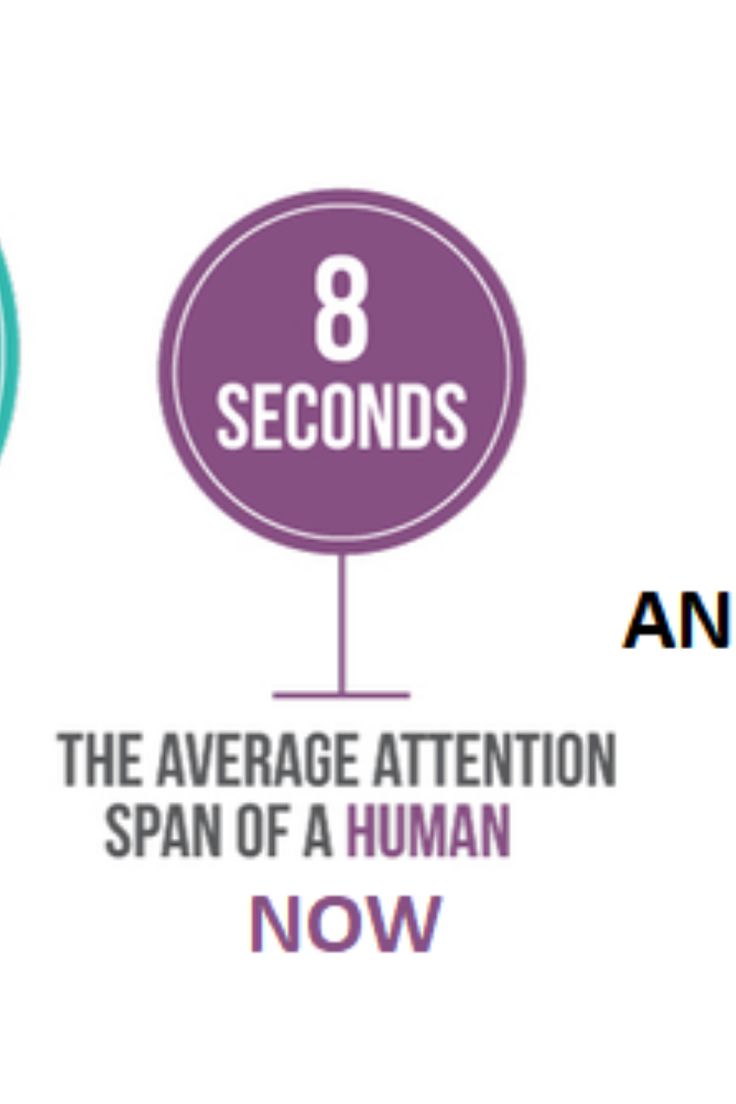
No. The widely cited claim that humans have an attention span of eight seconds, shorter than a goldfish, is not supported by any legitimate research. The 2015 Microsoft report that popularized the figure did not actually conduct original attention span research, and the goldfish comparison appears to have no scientific origin.
In 2015, a Microsoft Canada consumer study produced a claim that went viral. According to the report, humans now have an attention span of just eight seconds, down from twelve seconds in the year 2000, and shorter than the attention span of a goldfish. The story appeared in the New York Times, Time, the BBC, the Telegraph, and hundreds of other outlets. It has been cited in countless articles, corporate training decks, and productivity books ever since.
There is just one problem. The claim is false.
The Microsoft report did not actually measure attention spans. The goldfish comparison traces to a single undocumented figure that appears nowhere in legitimate biology literature. No peer-reviewed study has ever found a generalized "human attention span" of any specific duration, because sustained attention is too task-dependent and individual-variable for a single number to be meaningful.
The eight-second claim is now so entrenched that correcting it has become its own academic cottage industry. This article examines what the research actually shows about human attention, where the myths come from, and what practical conclusions are supported by the evidence.
The Microsoft Study That Did Not Say What Everyone Thinks
The 2015 report from Microsoft Canada's Consumer Insights team was a marketing document about media consumption on mobile devices. It compiled survey data on user behavior, self-reported digital habits, and consumer attention to advertising content. It was never a study of human attention span in the cognitive-science sense.
The famous eight-second figure appeared in a single sentence of the report, sourced to "Statistic Brain," a website that aggregated undocumented figures of varying quality. Statistic Brain in turn provided no primary source for the attention span number, and the site has since removed or modified the page.
The goldfish comparison was even more loosely sourced. The claim that goldfish have a nine-second attention span appears to have no origin in biology literature. Goldfish researchers have actually found the opposite: goldfish demonstrate memory and associative learning across many weeks, not seconds. Studies at the University of Plymouth have shown goldfish can learn to push levers for food and retain the learning across months.
The BBC eventually retracted portions of its coverage after cognitive scientists pointed out the problems. Vanity Fair ran a correction. The original Microsoft report's primary author, Alyson Gausby, told the Policy Options journal that the study was misinterpreted. None of this prevented the eight-second claim from propagating into global public consciousness.
The persistence of the myth reveals something about how attention research is communicated. A single memorable number, dramatically framed, travels farther than careful statements of methodology. Scientists have spent years trying to correct the record, with limited success.
"The eight-second attention span is to cognitive science what the Bermuda Triangle is to navigation. It is a widely believed figure with no foundation that nevertheless refuses to die." - Gemma Briggs, BBC Future (2017)
What Attention Actually Is
To understand what the research does and does not support, it helps to be clear about what attention is. Cognitive psychology distinguishes several distinct constructs that are often conflated in popular writing.
Selective attention is the capacity to focus on relevant information while ignoring irrelevant information. This is what lets you hold a conversation in a crowded restaurant or read a book with background noise. It operates on timescales of seconds to minutes.
Sustained attention is the capacity to maintain focus on a task over extended periods. Vigilance tasks, such as watching a radar screen for rare signals, measure sustained attention in its purest form. This is the construct most closely related to everyday "attention span" discussions.
Divided attention is the capacity to process information from multiple sources simultaneously. True divided attention is limited; most "multitasking" is actually rapid switching between tasks, with costs for each switch.
Executive attention is the capacity to override automatic responses and direct cognitive resources according to goals. The Stroop test, which requires reading color words printed in conflicting colors, measures executive attention.
Each of these can be measured separately and each follows different rules. A person with strong selective attention in one context may have weak sustained attention in another. Collapsing all these constructs into a single "attention span" produces confused discussion and unfalsifiable claims.
What the Research Actually Finds
Laboratory and field studies of attention paint a far more complex picture than popular discussions suggest.
Sustained Attention Varies Enormously by Task
Fighter pilots sustain attention across multi-hour combat missions. Air traffic controllers monitor dynamic displays for entire shifts. Surgeons maintain focus through operations lasting six to twelve hours. These are not exceptional human capabilities; they are what trained professionals do routinely when the stakes and the engagement justify the effort.
Meanwhile, laboratory vigilance tasks, in which participants watch a display for rare signals over extended periods, show reliable performance declines within 20-40 minutes. The vigilance decrement has been known since World War II, when Norman Mackworth studied radar operators watching for enemy contacts.
Both findings are true. Sustained attention depends on task engagement, stakes, training, and individual motivation. There is no general human attention span because there is no general attention task.
Attention in Reading
Reading research provides some of the most detailed attention data. Studies using eye-tracking technology show that skilled readers process text with fixations of 200-250 milliseconds followed by rapid saccades to the next word. Sustained reading attention varies by material, with engaging fiction sustaining attention for hours and dense academic material producing mind-wandering within minutes.
Self-reported attention during reading correlates poorly with actual comprehension. Readers often report attending while their minds have wandered, a phenomenon called "inattentive reading" that was characterized by Jonathan Schooler's research group in the 2000s.
The Mind-Wandering Literature
Mind-wandering is pervasive. Kahneman and Killingsworth's 2010 study, which sampled thousands of adults randomly throughout their days, found that people reported mind-wandering 47% of the time across activities. The prevalence of mind-wandering has little relationship to the "attention span" framing; it reflects the baseline operation of a brain that continuously evaluates goals, plans, and memory.
Attention in Digital Environments
Researchers have studied attention in digital contexts with mixed findings. A 2016 study by Gloria Mark at UC Irvine found that knowledge workers averaged 40 seconds on digital tasks before switching, and experienced 84 interruptions per hour from notifications and self-interruptions. This is often cited as evidence of declining attention span.
However, the same study found that when participants worked without notifications in quiet environments, sustained task engagement extended to 20-30 minutes or more. The 40-second figure reflects environmental conditions rather than cognitive capacity. Change the environment, and attention capacity changes.
The following table summarizes typical sustained attention findings across contexts:
| Context | Typical Sustained Attention | Notes |
|---|---|---|
| Novel reading (engaging) | 2-4 hours | Depends on material |
| Academic reading (dense) | 20-45 minutes | Mind-wandering increases rapidly |
| Watching engaging video | 30-60 minutes | Shorter for passive viewing |
| Laboratory vigilance task | 20-40 minutes | Decrement begins after 15-20 min |
| Digital task with notifications | 40 seconds | Reflects interruption environment |
| Digital task without notifications | 20-30 minutes | Comparable to dense reading |
| Flow state (skilled activity) | Hours | Depends on skill and task fit |
| Meditation practice (beginner) | 1-5 minutes before drift | Improves with training |
| Meditation practice (experienced) | 30-60 minutes or more | Developed over years |
The Attention Decline Hypothesis
If the eight-second claim is false, is there any evidence that attention has declined over time? The answer is mostly no, with some interesting qualifications.
No Direct Evidence of Decline
No longitudinal study has demonstrated a decline in sustained attention capacity across recent generations. Cross-sectional comparisons of young adults now and in prior decades do not show attention-performance declines on standardized tasks. If anything, the Flynn effect and related trends suggest cognitive performance has risen on measures tapping working memory and processing speed.
Evidence of Changed Media Consumption
What has changed is media consumption patterns. Average video viewing durations have shortened as content formats have adapted to mobile viewing. Attention span to specific commercial content, as measured by click-through and engagement metrics, has declined as alternatives have proliferated.
This is not the same as declining attention capacity. It reflects a more competitive attention environment in which content must be more engaging to hold attention that was always selective.
The Distraction Hypothesis
Some researchers argue that chronic exposure to rapidly changing digital stimulation may produce durable changes in attention regulation, even if the underlying capacity remains intact. Clifford Nass's research at Stanford suggested that heavy media multitaskers performed worse on tests of selective attention and task switching than light multitaskers. Whether this reflects cause or selection (people with weaker attention are drawn to multitasking) remains debated.
The Smartphone Presence Effect
One consistent finding is that the mere presence of a smartphone, even silenced and face-down, reduces cognitive performance. A 2017 study by Ward and colleagues at the University of Texas found that participants performed worse on working memory tasks when their smartphones were in the same room than when they were in another room. The effect was larger for heavy smartphone users.
This is not an attention-span problem in the classical sense; it is a cognitive-resources problem. Monitoring for a phone, even unconsciously, consumes attention that could otherwise go to the primary task. Removing the phone from the environment removes the drain.
What Actually Supports Sustained Attention
Given the confused popular discussion, what does the evidence support for practical attention improvement?
Environmental Design
The single largest gains come from environmental changes. Removing smartphones, closing notification-generating applications, working in quiet spaces, and using visual barriers to reduce peripheral distraction all produce measurable attention improvements. The effect is often substantially larger than any cognitive training intervention.
Focused work environments, including the intentional cafe settings described at Down Under Cafe, support sustained attention through structural design rather than individual effort.
Sleep
Sleep deprivation is a major cause of reduced attention. A single night of sleep restriction to four hours reduces sustained attention performance by roughly one standard deviation, and chronic restriction produces cumulative deficits. Seven to nine hours of sleep is the evidence-based target for most adults.
Meditation and Mindfulness
Meditation has substantial research support for improving attention. A meta-analysis by Sedlmeier and colleagues (2012) found medium effect sizes for attention improvements in meditation training across multiple studies. The mechanism appears to involve strengthened attentional control networks through repeated practice of returning attention to a chosen focus.
Aerobic Exercise
Aerobic exercise supports attention through effects on prefrontal function and cerebral blood flow. A single bout of moderate aerobic exercise produces acute attention improvements lasting 30-60 minutes. Regular aerobic training produces durable improvements, particularly in sustained attention and attentional control.
Structured Work Blocks
Research on ultradian rhythms suggests that natural attention cycles produce peak focus blocks of 60-90 minutes followed by 10-20 minute recovery periods. The Pomodoro Technique's 25-minute blocks are a simplified version. Working in defined blocks with protected focus time outperforms attempts at continuous vigilance.
Strategic Use of External Tools
Offloading routine cognitive work to external tools reduces the attention demand of complex tasks. Free utilities like those at File Converter Free and qr-bar-code.com replace mental work with external operations. Note-taking systems documented at When Notes Fly externalize memory, reducing the load on sustained attention.
Attention in Learning and Professional Contexts
The practical implications of attention research are different for different domains.
Learning
For students, sustained attention during study periods is a strong predictor of learning outcomes. The interventions that support attention (sleep, environmental design, planned breaks) also support learning. Certification test preparation, including the programs documented at Pass4Sure, benefits from structured study schedules that protect focused work time rather than relying on marathon cramming sessions.
Writing
Writing requires sustained attention that many digital environments actively erode. Dedicated writing environments, minimal tool surfaces, and commitment to uninterrupted writing blocks produce more and better output than equivalent time with notifications and context switching. Template-based writing systems like those at Evolang reduce cognitive load during composition, allowing attention to concentrate on substance rather than structure.
Entrepreneurial Work
Founders and operators face attention demands that span multiple domains in rapid succession. The cognitive context-switching between legal, operational, financial, and marketing domains is expensive. Business formation resources like those at Corpy that consolidate complex multi-domain information reduce the attention cost of navigating business formation by pre-organizing what would otherwise require extensive information integration.
Professional Expertise
Experts in cognitively demanding professions (surgeons, pilots, trial lawyers, designers) develop sustained attention capacities that novices cannot match. This is not raw attention capacity in the laboratory sense; it is expertise-supported attention in which accumulated knowledge and practiced routines reduce the cognitive cost of each operation. Deep expertise in a domain produces apparent effortless sustained focus that novices experience only with great effort.
Attention Across Species
Cross-species research has illuminated what is and is not distinctive about human attention. Work on animal cognition, including the comparative studies documented at Strange Animals, has shown that sustained attention is not uniquely human and not necessarily correlated with overall intelligence.
Predator species like wolves and large cats sustain attention during hunts lasting hours, with selective focus on prey movement and environmental features that reveal prey location. Cephalopods show sophisticated attentional control that engages different neural systems than vertebrate attention. Corvids maintain sustained attention on problem-solving tasks that exceeds that of many primates.
What appears distinctive about human attention is the scope of voluntary control. Humans can direct attention toward abstract goals, internal representations, and arbitrary tasks in ways that few other species can match. This voluntary control is the capacity that meditation training strengthens and that modern digital environments stress most heavily.
What the Research Does Not Support
Several widely repeated attention claims have weak or no empirical foundation.
The eight-second attention span is false. No legitimate study has established this figure.
Attention spans have declined across generations. No longitudinal evidence supports this claim.
Humans have attention spans shorter than goldfish. Goldfish have demonstrated memory and attention across weeks in peer-reviewed studies.
Attention training apps meaningfully improve real-world attention. The 2014 Stanford Center on Longevity consensus statement, signed by over seventy researchers, found no reliable evidence that commercial brain-training products produce real-world attentional benefits.
Brain training can reverse digital-age attention decline. The premise (digital-age attention decline) is not established, and even if it were, training apps have not been shown to reverse it.
"The problem with the attention span discourse is not that attention does not matter. It does. The problem is that we have built an entire public conversation around a false number, and in doing so we have distracted ourselves from the real and practical things we could be doing to support attention." - Gloria Mark, Attention Span: A Groundbreaking Way to Restore Balance (2023)
A Practical Summary
Strip away the mythology, and the research supports a clear set of conclusions.
Sustained attention is a real capacity that varies enormously by task, context, and individual. It does not have a single number that applies across situations. Most "attention span" discussions are asking the wrong question.
Human attention capacity has not demonstrably declined in recent decades. The environments in which attention operates have changed substantially, making sustained attention harder to achieve even though the underlying capacity is unchanged.
Attention improvement comes primarily from environmental and behavioral changes rather than cognitive training. Remove distractions. Sleep adequately. Exercise regularly. Meditate or practice mindfulness. Design work in focused blocks. Use tools to offload routine work.
Professional expertise supports sustained attention in ways that transcend raw cognitive capacity. Deep knowledge makes focused work feel effortless where novices struggle. This points to expertise development as a long-term strategy for attention in chosen domains.
The myth of the declining attention span serves commercial interests in selling solutions to a manufactured problem. The research suggests that the solutions most people need are not products. They are choices about environment, schedule, and behavior that are freely available and supported by decades of evidence.
References
Mackworth, N. H. (1948). The breakdown of vigilance during prolonged visual search. Quarterly Journal of Experimental Psychology, 1(1), 6-21. https://doi.org/10.1080/17470214808416738
Killingsworth, M. A., & Gilbert, D. T. (2010). A wandering mind is an unhappy mind. Science, 330(6006), 932. https://doi.org/10.1126/science.1192439
Mark, G., Iqbal, S. T., Czerwinski, M., Johns, P., & Sano, A. (2016). Neurotics can't focus: An in situ study of online multitasking in the workplace. In Proceedings of the CHI Conference on Human Factors in Computing Systems (pp. 1739-1744). https://doi.org/10.1145/2858036.2858202
Ward, A. F., Duke, K., Gneezy, A., & Bos, M. W. (2017). Brain drain: The mere presence of one's own smartphone reduces available cognitive capacity. Journal of the Association for Consumer Research, 2(2), 140-154. https://doi.org/10.1086/691462
Sedlmeier, P., Eberth, J., Schwarz, M., et al. (2012). The psychological effects of meditation: A meta-analysis. Psychological Bulletin, 138(6), 1139-1171. https://doi.org/10.1037/a0028168
Ophir, E., Nass, C., & Wagner, A. D. (2009). Cognitive control in media multitaskers. Proceedings of the National Academy of Sciences, 106(37), 15583-15587. https://doi.org/10.1073/pnas.0903620106
Schooler, J. W., Reichle, E. D., & Halpern, D. V. (2004). Zoning out while reading: Evidence for dissociations between experience and metaconsciousness. In D. Levin (Ed.), Thinking and Seeing: Visual Metacognition in Adults and Children (pp. 203-226). MIT Press.
Hasenkamp, W., & Barsalou, L. W. (2012). Effects of meditation experience on functional connectivity of distributed brain networks. Frontiers in Human Neuroscience, 6, 38. https://doi.org/10.3389/fnhum.2012.00038