
Introduction: The Personality-Intelligence Question
Few questions in psychology provoke as much popular debate as whether introverts are smarter than extroverts - or vice versa. The quiet, reflective introvert is often stereotyped as the intellectual, while the outgoing extrovert is cast as the social achiever. But what does the science actually say about the relationship between personality type and IQ?
"There is no such thing as a pure introvert or pure extrovert. Such a person would be in the lunatic asylum."
- Carl Jung, the psychologist who first proposed the introversion-extroversion dimension (1921)
The answer, as with most questions in psychology, is more nuanced than the stereotypes suggest. Introversion and extroversion do not directly determine intelligence, but they profoundly shape how people think, learn, process information, and perform on cognitive tests. Understanding this relationship requires exploring the neuroscience of arousal, the distinct cognitive styles associated with each temperament, and the groundbreaking work of researchers from Hans Eysenck to Susan Cain.
This article examines the evidence linking personality to intelligence, explores why introverts and extroverts excel in different cognitive domains, and provides practical guidance for leveraging your personality type to maximize intellectual performance.
Defining the Terms: Introversion, Extroversion, and Intelligence
Beyond the Social Stereotype
Introversion and extroversion are far more than descriptions of social behavior. Originally conceptualized by Carl Jung in 1921 and later operationalized within the Big Five personality model (where the trait is called Extraversion), these dimensions describe fundamental differences in how the nervous system processes stimulation.
- Introverts have a lower threshold for stimulation - they reach their optimal arousal level with less external input and tend to prefer quieter, more reflective environments
- Extroverts have a higher threshold for stimulation - they need more external input to reach their optimal arousal level and seek out social interaction, novelty, and activity
This distinction, rooted in biology rather than mere preference, has significant implications for cognitive processing.
Intelligence: A Multi-Dimensional Construct
Intelligence as measured by the intelligence quotient encompasses multiple cognitive domains:
| IQ Test Domain | What It Measures | Introvert Advantage? | Extrovert Advantage? |
|---|---|---|---|
| Verbal Comprehension | Vocabulary, verbal reasoning | Slight advantage | Slight advantage in verbal fluency |
| Perceptual Reasoning | Visual-spatial processing | Neutral | Neutral |
| Working Memory | Holding and manipulating information | Moderate advantage | Disadvantage under low stimulation |
| Processing Speed | Speed of simple cognitive tasks | Disadvantage (tend to be more deliberate) | Moderate advantage |
| Fluid Reasoning | Novel problem-solving | Slight advantage (deeper processing) | Neutral |
"Intelligence is not a single thing. It is a collection of abilities, and personality shapes which abilities get expressed most readily."
- Dr. Robert McCrae, co-developer of the NEO Personality Inventory and Big Five researcher
Eysenck's Arousal Theory: The Biological Foundation
The most influential scientific framework for understanding how personality relates to cognition is Hans Eysenck's Arousal Theory, proposed in the 1960s and supported by decades of subsequent neuroimaging research.
The Core Idea
Eysenck hypothesized that introverts have a higher baseline level of cortical arousal compared to extroverts. This means:
- Introverts are already highly stimulated internally, so they seek less external stimulation and perform best in low-stimulation environments
- Extroverts have lower baseline arousal and actively seek more external stimulation to reach their optimal performance zone
The Yerkes-Dodson Law Connection
This biological difference interacts with the Yerkes-Dodson Law, which states that cognitive performance peaks at a moderate level of arousal and declines at both very low and very high levels. Because introverts and extroverts have different baseline arousal levels, they reach their performance peaks under different conditions:
| Condition | Introvert Performance | Extrovert Performance | Why |
|---|---|---|---|
| Quiet, solitary environment | Optimal | Below optimal | Introverts at ideal arousal; extroverts understimulated |
| Moderate social environment | Good | Optimal | Extroverts reach ideal arousal; introverts approaching overstimulation |
| Noisy, high-stimulation environment | Impaired | Good to optimal | Introverts overstimulated; extroverts in comfort zone |
| Time-pressured test conditions | Variable (may underperform) | Strong | Pressure adds arousal - beneficial for extroverts, excessive for some introverts |
| Self-paced, untimed assessment | Strong | Variable (may lose focus) | Introverts sustain focus; extroverts may seek stimulation |
Modern Neuroimaging Evidence
Brain imaging studies have confirmed Eysenck's theory with remarkable precision:
- A 2005 study by Johnson et al. using PET scans found that introverts showed greater blood flow to the frontal lobes (associated with planning, thought, and memory), while extroverts showed greater blood flow to areas associated with sensory processing
- Research by Kumari et al. (2004) demonstrated that introverts showed higher cortical arousal at rest, consistent with Eysenck's prediction
- A 2012 study by Wei et al. found that introverts had thicker cortices in prefrontal regions associated with abstract thought and planning
"The brains of introverts and extroverts are wired differently. Introverts route information through a longer, more complex pathway associated with memory and planning. Extroverts use a shorter pathway linked to sensory experience."
- Dr. Marti Olsen Laney, neuropsychologist, author of The Introvert Advantage
Susan Cain and the Introvert Revolution
Susan Cain's 2012 book Quiet: The Power of Introverts in a World That Can't Stop Talking brought the science of introversion to a mass audience and challenged the "Extrovert Ideal" - the cultural assumption that the outgoing, gregarious personality type is superior.
Cain's Key Arguments
- Western culture, particularly American culture, systematically undervalues introverts by designing schools, workplaces, and social institutions around the extrovert ideal
- Many of history's greatest intellectual achievements came from introverts working in solitude - including Darwin's theory of evolution, Einstein's theory of relativity, and Chopin's nocturnes
- The "brainstorming" myth: Cain presented research showing that individuals working alone generate more and better ideas than groups brainstorming together, challenging the assumption that collaboration always produces superior thinking
- Introverts' tendency toward deep work - sustained, focused concentration - gives them an advantage in complex cognitive tasks
Famous Introverts and Their Cognitive Achievements
| Individual | Field | Achievement | Introvert Trait That Contributed |
|---|---|---|---|
| Albert Einstein | Physics | Theory of relativity | Deep solitary thought, comfort with years of focused work |
| Charles Darwin | Biology | Theory of evolution | Meticulous observation, decades of private reflection |
| Rosa Parks | Civil Rights | Catalyzed the Montgomery Bus Boycott | Quiet conviction, moral courage without self-promotion |
| Bill Gates | Technology | Founded Microsoft | Intense focus, preference for deep technical work |
| J.K. Rowling | Literature | Harry Potter series | Solitary imagination, years of private writing |
| Warren Buffett | Finance | Most successful investor in history | Independent thinking, resistance to social pressure |
"Solitude matters, and for some people it is the air that they breathe."
- Susan Cain, Quiet: The Power of Introverts in a World That Can't Stop Talking (2012)
The Research: Do Introverts Actually Score Higher on IQ Tests?
This is the question most readers want answered directly. The research findings are mixed but revealing:
What Studies Show
- General IQ scores: Most large-scale studies find no significant difference in overall IQ between introverts and extroverts. A meta-analysis by Wolf and Ackerman (2005) concluded that the correlation between extraversion and general intelligence was essentially zero.
- Specific cognitive domains: The picture changes when examining individual cognitive abilities:
- Introverts tend to score slightly higher on measures requiring sustained concentration, such as working memory tasks and complex reasoning - Extroverts tend to score slightly higher on processing speed and verbal fluency tasks - These differences are small in magnitude (typically 2-5 IQ points in specific subtests) and highly context-dependent
- Academic performance: Introverts tend to achieve higher grades than extroverts at the same IQ level, likely because their preference for focused study aligns well with academic demands. A study by Furnham, Chamorro-Premuzic, and McDougall (2003) found introversion predicted academic performance even after controlling for IQ.
- Test-taking conditions: The environment in which IQ tests are administered significantly affects results. Introverts perform better in quiet, self-paced conditions, while extroverts perform better with moderate time pressure and social interaction.
The Bottom Line
| Question | Answer | Key Nuance |
|---|---|---|
| Are introverts smarter? | No - overall IQ is equal | But they excel at tasks requiring deep focus |
| Are extroverts smarter? | No - overall IQ is equal | But they excel at quick processing and verbal tasks |
| Does personality affect IQ test scores? | Yes, modestly | Testing conditions favor one type or the other |
| Does personality affect real-world cognitive performance? | Yes, significantly | Environment and task type interact with temperament |
"Neither introversion nor extroversion is intrinsically linked to intelligence. What differs is the cognitive style - the preferred pathway through which intelligence expresses itself."
- Dr. Gerald Matthews, personality and cognition researcher, author of Personality Traits
Cognitive Styles: How Introverts and Extroverts Think Differently
Beyond raw IQ scores, personality shapes how people process information, make decisions, and solve problems.
Introvert Cognitive Style
- Reflective processing: Introverts tend to think before speaking, processing information internally before responding
- Deep focus: Excel at sustained attention on a single complex problem
- Sensitivity to detail: More likely to notice subtle patterns and inconsistencies
- Preference for written communication: Often express ideas more effectively in writing than speaking
- Internal locus of evaluation: Rely more on internal standards than external feedback
Extrovert Cognitive Style
- Active processing: Extroverts often think while speaking, using external dialogue to work through ideas
- Broad attention: Excel at monitoring multiple information streams simultaneously
- Quick decision-making: More comfortable making rapid judgments under uncertainty
- Preference for verbal communication: Express ideas more effectively through discussion and debate
- External locus of evaluation: Responsive to social feedback and group dynamics
Implications for IQ Testing
These cognitive style differences mean that standard IQ tests - which are typically administered individually in quiet rooms with time limits - may slightly favor introverts in some subtests (working memory, matrix reasoning) and slightly favor extroverts in others (processing speed, verbal subtests requiring rapid responses).
For the most accurate assessment of your abilities, try multiple test formats. Our full IQ test provides a comprehensive evaluation, while our quick IQ assessment tests performance under briefer conditions. The timed IQ test measures how you perform under time pressure, and our practice test lets you build familiarity with the test format.
Personality Traits and Multiple Intelligences
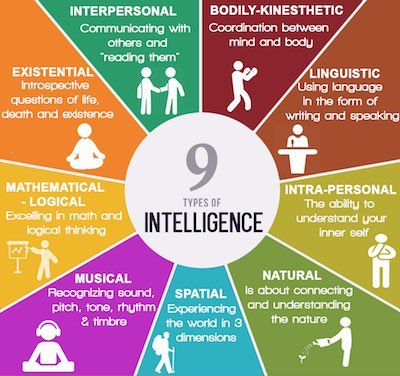
The relationship between personality and intelligence becomes richer when viewed through the lens of Howard Gardner's Multiple Intelligences framework, which recognizes cognitive strengths beyond what traditional IQ tests capture.
| Intelligence Type | Definition | Introvert Tendency | Extrovert Tendency |
|---|---|---|---|
| Linguistic | Skill with language and words | Strong in written expression | Strong in oral expression |
| Logical-Mathematical | Reasoning and calculation | Strong (deep analytical focus) | Moderate |
| Spatial | Mental visualization and mapping | Strong | Moderate |
| Musical | Sensitivity to rhythm and sound | Often strong (solitary practice) | Moderate |
| Bodily-Kinesthetic | Physical coordination and expression | Variable | Often strong |
| Interpersonal | Understanding others | Moderate (deep one-on-one) | Strong (broad social reading) |
| Intrapersonal | Self-understanding and reflection | Very strong | Moderate |
| Naturalistic | Recognizing patterns in nature | Often strong | Variable |
This framework explains why introverts and extroverts can both be highly intelligent while excelling in completely different domains. An extrovert with exceptional interpersonal intelligence may be a brilliant leader, while an introvert with exceptional intrapersonal and logical intelligence may be a groundbreaking researcher - both demonstrating profound cognitive ability in their respective domains.
Practical Implications: Optimizing Cognitive Performance by Personality Type
Understanding the interaction between personality and cognition has directly actionable implications for learning, work, and test-taking.
For Introverts
- Design your environment for deep work: Minimize interruptions, use noise-canceling headphones, and schedule focused work during quiet hours
- Prepare before group discussions: Process ideas independently first, then contribute your refined thoughts
- Take IQ tests in optimal conditions: Choose quiet, self-paced assessment formats when possible
- Leverage written communication: When your ideas are complex, write them down rather than relying on spontaneous verbal expression
- Recharge deliberately: Schedule solitary recovery time after socially demanding activities to restore cognitive resources
For Extroverts
- Use social learning: Study groups, discussion-based classes, and collaborative problem-solving leverage your cognitive strengths
- Add stimulation to solitary tasks: Background music or a change of environment can help maintain optimal arousal during independent work
- Practice sustained focus: Build tolerance for extended solitary concentration through progressive training
- Leverage verbal processing: Talk through complex problems with others or even to yourself - this is how your brain works best
- Channel competitive energy: Use timed challenges and friendly competition to maintain engagement with cognitive tasks
"The secret to life is to put yourself in the right lighting. For some, it is a Broadway spotlight; for others, a lamplit desk."
- Susan Cain, Quiet
Conclusion: Different Paths to Cognitive Excellence
The relationship between introversion, extroversion, and intelligence cannot be reduced to the question "Who is smarter?" The evidence is clear: neither personality type has a monopoly on intelligence. What differs is cognitive style - the specific pathways through which intellectual ability is expressed, developed, and measured.
Introverts bring depth of focus, reflective processing, and sustained concentration to cognitive challenges. Extroverts bring rapid processing, verbal fluency, and adaptive thinking in dynamic environments. Both approaches are valid, powerful, and essential.
The practical implication is straightforward: understand your personality, design your environment accordingly, and play to your cognitive strengths while deliberately developing complementary skills.
To explore your own cognitive profile, take our full IQ test in conditions that suit your personality, or try our practice test to build familiarity. Our quick IQ assessment and timed IQ test provide additional perspectives on how your mind performs under different conditions.
References
- Eysenck, H.J. (1967). The Biological Basis of Personality. Charles C. Thomas.
- Cain, S. (2012). Quiet: The Power of Introverts in a World That Can't Stop Talking. Crown Publishers.
- Laney, M.O. (2002). The Introvert Advantage: How Quiet People Can Thrive in an Extrovert World. Workman Publishing.
- Wolf, M.B., & Ackerman, P.L. (2005). Extraversion and intelligence: A meta-analytic investigation. Personality and Individual Differences, 39(3), 531-542.
- Johnson, D.L., Wiebe, J.S., Gold, S.M., et al. (1999). Cerebral blood flow and personality: A positron emission tomography study. American Journal of Psychiatry, 156(2), 252-257.
- Furnham, A., Chamorro-Premuzic, T., & McDougall, F. (2003). Personality, cognitive ability, and beliefs about intelligence as predictors of academic performance. Learning and Individual Differences, 14(1), 47-64.
- Matthews, G., Deary, I.J., & Whiteman, M.C. (2003). Personality Traits (2nd ed.). Cambridge University Press.
- Kumari, V., ffytche, D.H., Williams, S.C.R., & Gray, J.A. (2004). Personality predicts brain responses to cognitive demands. Journal of Neuroscience, 24(47), 10636-10641.
- Gardner, H. (1983). Frames of Mind: The Theory of Multiple Intelligences. Basic Books.
- Jung, C.G. (1921). Psychological Types. Rascher Verlag. (English translation by H.G. Baynes, 1923).
Frequently Asked Questions
Can introverts improve their cognitive performance through social interaction despite their preference for solitude?
Yes. Research shows that moderate social engagement can enhance cognitive flexibility and expose introverts to diverse perspectives that strengthen reasoning. A 2008 study by Ybarra et al. in *Personality and Social Psychology Bulletin* found that even brief social interactions boosted executive function and working memory performance.
The key for introverts is quality over quantity - deep one-on-one conversations or small group discussions provide cognitive benefits without the overstimulation that large social gatherings produce. Aim for meaningful interactions rather than frequent socializing.
Does extroversion correlate with higher emotional intelligence compared to introversion?
The relationship is domain-specific. Extroverts tend to score higher on interpersonal emotional intelligence - reading social cues, managing group dynamics, and expressing emotions appropriately in social settings. However, introverts often score higher on intrapersonal emotional intelligence - self-awareness, understanding their own emotional patterns, and reflective emotional processing.
A 2007 study by Petrides et al. found that extraversion correlated with overall trait emotional intelligence (r = 0.37), but that introverts scored equivalently or higher on self-regulation and emotional self-awareness subscales.
How can I choose the best IQ test format based on my personality type?
If you are introverted, you will likely perform most accurately on comprehensive, self-paced assessments that allow deep concentration - such as our full IQ test or practice test. If you are extroverted, you may perform well on timed, stimulating formats like our timed IQ test that leverage your quick processing speed.
For the most complete picture, take multiple formats: the differences in your scores across test types can reveal how your personality interacts with your cognitive abilities.
Are there personality traits that consistently predict academic success better than IQ?
Yes. Conscientiousness - the Big Five trait encompassing organization, discipline, and reliability - is the strongest personality predictor of academic performance, with meta-analyses showing it predicts GPA almost as strongly as IQ does (Poropat, 2009). Openness to experience also predicts academic success, particularly in higher education.
Notably, introversion predicts higher academic performance even after controlling for IQ (Furnham et al., 2003), likely because introverts' preference for focused study aligns well with academic demands. The combination of conscientiousness, moderate introversion, and high openness is the personality profile most consistently associated with academic excellence.
Can taking multiple types of IQ tests provide a more accurate picture of intelligence?
Yes, and this is especially important given the personality-cognition interaction. A single test administered under one set of conditions captures your performance in *that specific context*. Taking our full IQ test, quick IQ assessment, and timed IQ test provides three data points under different conditions - comprehensive vs. brief, untimed vs. pressured - giving a more robust estimate of your true cognitive ability.
The *variation* in scores across formats can itself be informative, revealing whether your personality type affects your test performance.
How do personality and intelligence interact in workplace performance?
The interaction is significant and context-dependent. A 2011 study by Judge, Rodell, Klinger, Simon, and Crawford found that extroverts tended to receive higher performance ratings in sales and management roles (where social interaction is constant), while introverts received higher ratings in technical, research, and analytical roles (where sustained focus is valued).
Cognitive ability (IQ) predicted performance across all role types, but its predictive power was *moderated by personality-job fit*. The practical implication: match your personality type to roles that leverage your natural cognitive style, and your intelligence will be expressed most effectively.
Related Articles


Curious about your IQ?
You can take a free online IQ test and get instant results.
Take IQ Test