Spatial Reasoning Questions
Count shapes, mentally rotate objects, and visualise folds. Spatial IQ questions measure the skill behind engineering, architecture, and design.
 ?
?
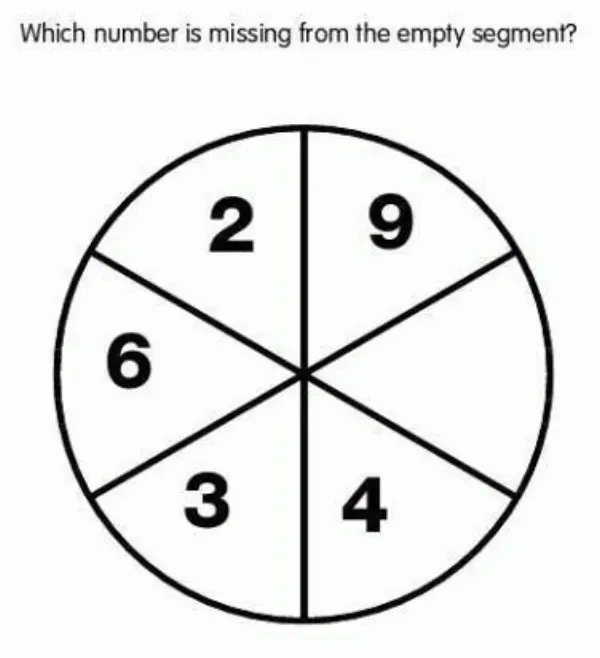
Circular Wheel: What Number Is Missing?
 ?
?
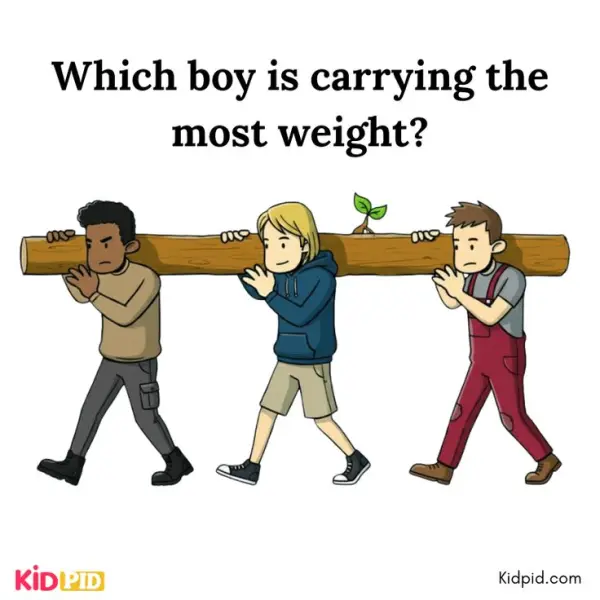
Which Boy Is Carrying the Most Weight?
 ?
?
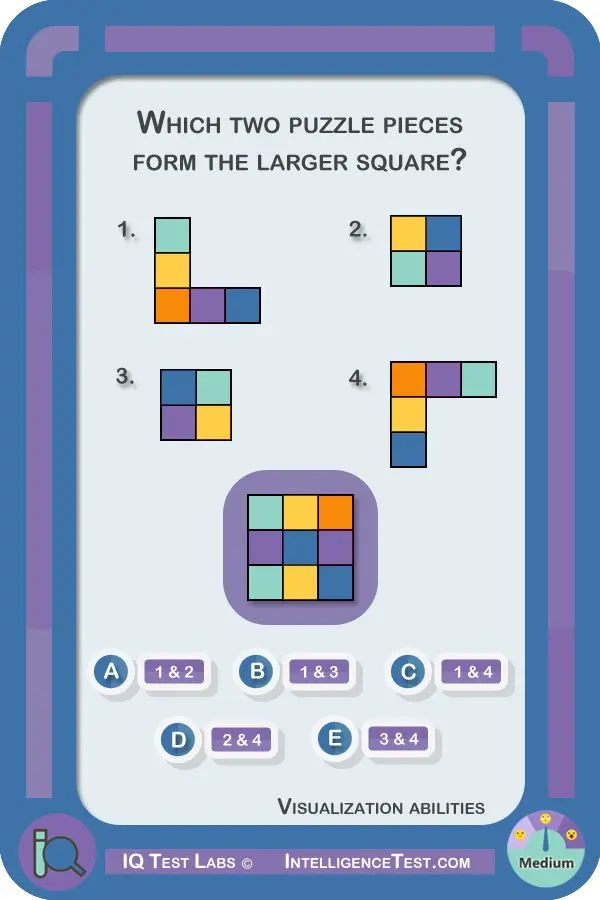
Which Two Puzzle Pieces Form the Large Square?
 ?
?
Which Bottle Fills Up First?
 ?
?
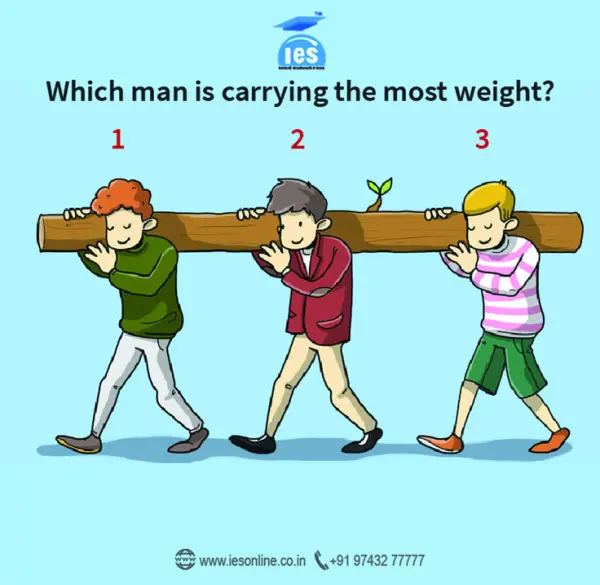
Which Man Is Carrying the Most Weight?
 ?
?
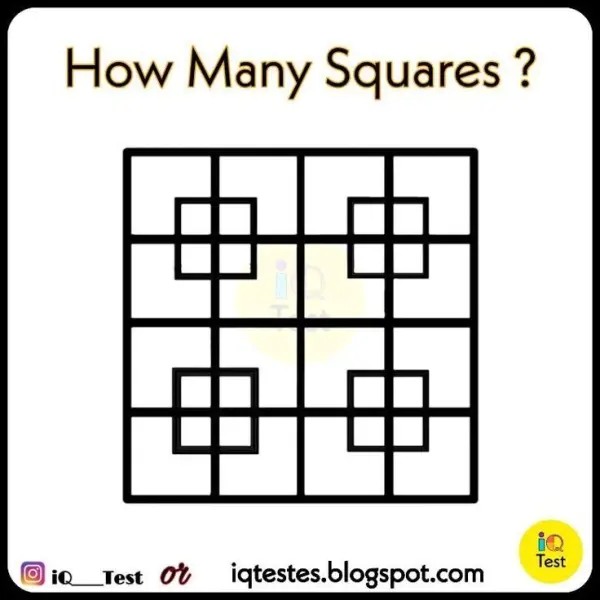
How Many Squares Are in This Square?
 ?
?
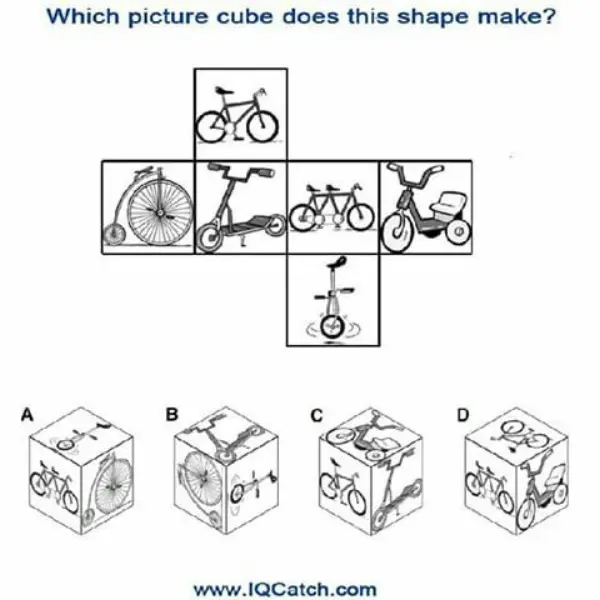
Which Cube Does This Net Make?
 ?
?
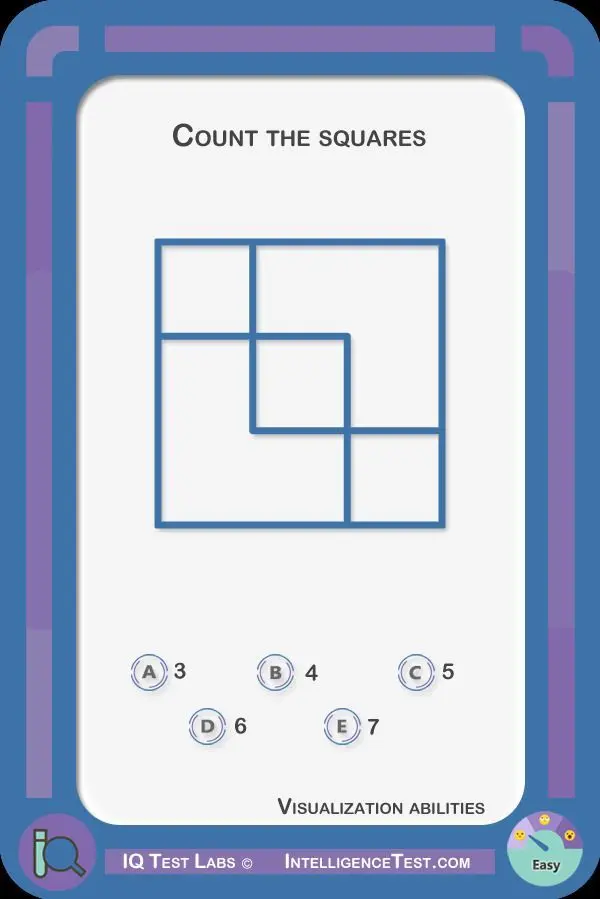
Count All the Squares in This Shape
 ?
?
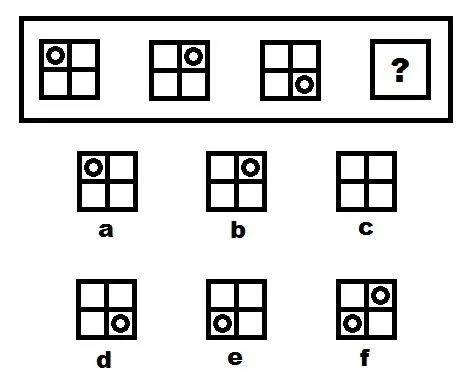
Moving Circle Sequence: What Comes Next?
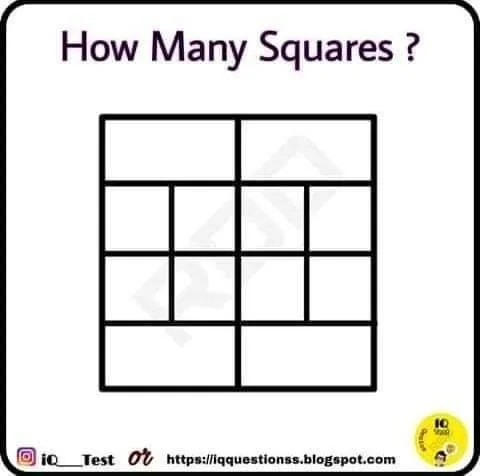 ?
?
How Many Squares? (Rectangle Divided Into Shapes)
 ?
?
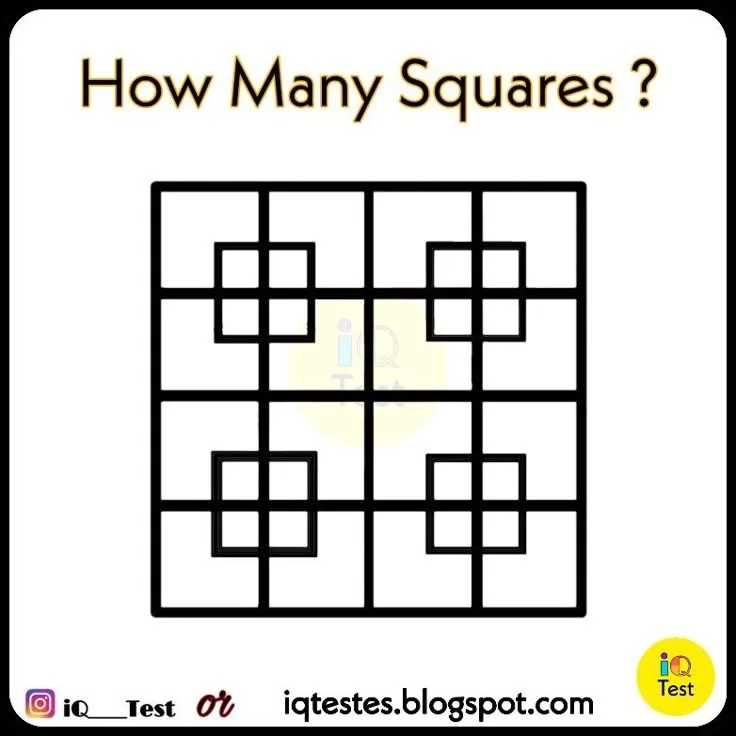
How Many Squares? (Complex Grid)
 ✓
✓
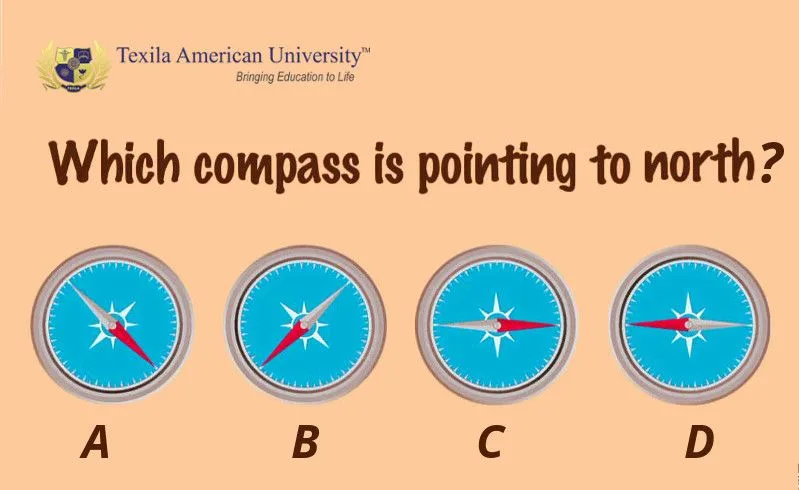
Which Compass is Pointing North?
 ✓
✓
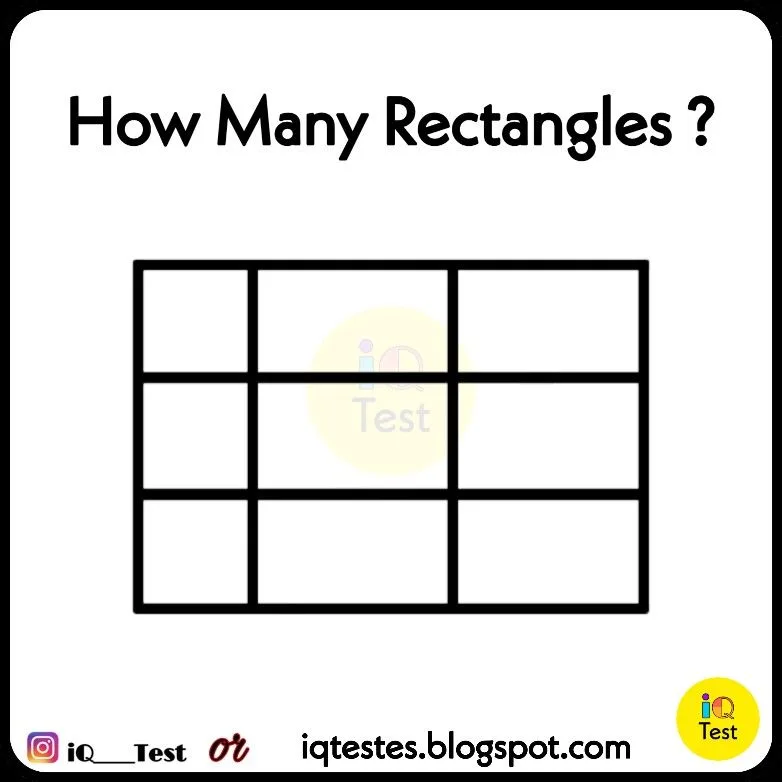
How Many Rectangles in the Grid?
 ?
?
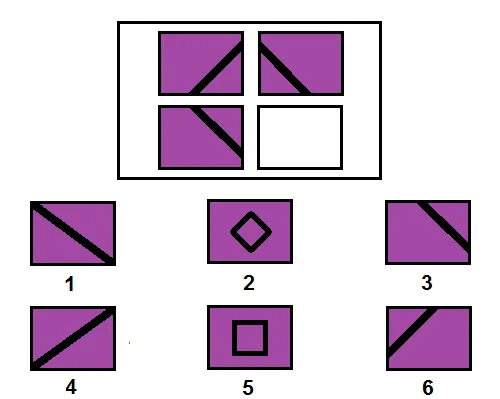
Purple Square Diagonals: What Comes Next?
Spatial Reasoning in IQ Tests
Spatial reasoning questions measure your ability to mentally manipulate shapes, visualise structures from different perspectives, and reason about relationships between objects in two and three dimensions. This cognitive skill is one of the most strongly predictive factors for performance in engineering, architecture, surgery, and mathematics — and it is measured in nearly every comprehensive IQ assessment.
Unlike verbal or numerical questions, spatial tasks bypass language entirely. They tap into a distinct cognitive system that processes shape, orientation, depth, and movement. People with strong spatial reasoning can rotate a three-dimensional object in their mind, count overlapping shapes without losing track, and trace a folded net back to the solid it would form — all without conscious calculation.
Types of Spatial Reasoning Questions
Shape and Square Counting
How many squares (or triangles, rectangles) are in this figure? These questions require systematic enumeration across all sizes: individual unit squares, 2×2 groups, 3×3 groups, and so on. The most common error is counting only the smallest shapes. The strategy: count by size category and sum the totals.
Mental Rotation
Two figures are shown — are they the same shape, or mirror images? Or: which of four options matches this shape after rotation? Mental rotation requires tracking how a feature on one face of an object maps to another face when the object is turned. Practise by mentally anchoring one distinctive feature and rotating around it.
Paper Folding and Net Matching
A flat net is folded into a cube or 3D shape — which of the given options correctly represents the result? Or: a paper is folded and punched — where are the holes when unfolded? These questions test your ability to track transformations across a fold, which requires holding the pre-fold and post-fold states simultaneously in working memory.
Compass and Direction Problems
A person walks north, turns right, walks east, turns left — which direction are they facing? Direction questions build a chain of relative turns. The key is to track absolute direction at each step rather than accumulating relative turns, which causes errors in longer chains.
Frequently Asked Questions
Is spatial reasoning innate or can it be improved?
Spatial reasoning is one of the most trainable cognitive skills. Decades of research show that practice with spatial tasks — including the exact types of questions on this page — produces measurable, lasting improvements in spatial ability. The training effect is larger for spatial tasks than for most other cognitive skill domains.
Why do I lose count when counting shapes?
Losing count is caused by an unsystematic approach. Always count by size: first all 1×1 shapes, then all 2×2, then all 3×3, and so on. Write down the count for each size category, then sum them. Never try to enumerate shapes in the order your eye happens to find them — that approach reliably produces errors.
How is spatial reasoning different from pattern recognition?
Pattern recognition questions find rules in visual sequences. Spatial reasoning questions require mental manipulation of shapes — rotation, folding, counting — without necessarily finding a repeating rule. Both draw on visual processing, but spatial reasoning is specifically about transformation and structure rather than sequence rules.
Which careers benefit most from strong spatial reasoning?
Engineering, architecture, surgery, dentistry, air traffic control, game design, and chemistry all rely heavily on spatial reasoning. Many selection tests for these fields include dedicated spatial subtests. Practicing IQ-style spatial questions builds the same mental rotation and visualisation skills assessed in professional aptitude batteries.