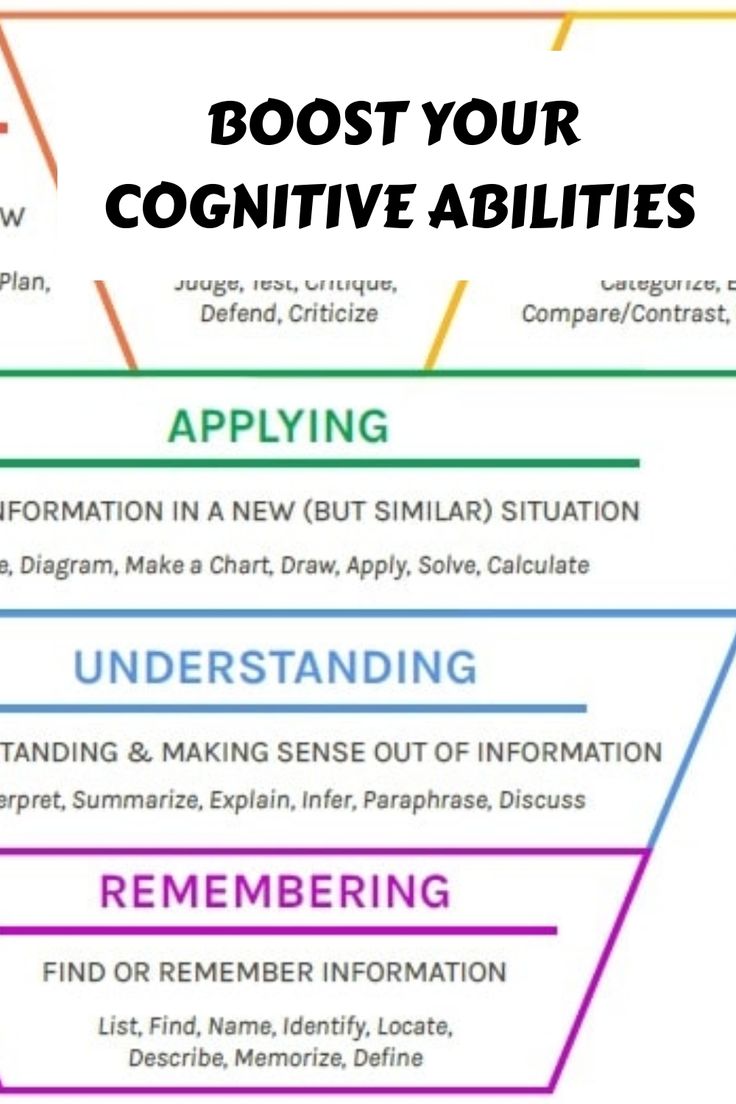
Introduction: Can Education Make You Smarter?
The question of whether educational interventions can genuinely raise intelligence - not just teach test-taking tricks, but enhance the underlying cognitive abilities that IQ tests measure - is one of the most practically important questions in all of psychology.
The answer, supported by decades of rigorous research, is a qualified yes. Certain well-designed programs produce measurable IQ gains, particularly when they target early childhood, provide intensive and sustained engagement, and address multiple developmental domains simultaneously. However, the picture is complicated by fadeout effects - the tendency for early IQ gains to diminish over time - and by the critical distinction between raising IQ scores and improving real-world life outcomes.
"The question is not whether education can raise IQ - it clearly can. The question is how much, for how long, and through what mechanisms." - James Heckman, Nobel laureate in economics, University of Chicago
This article reviews the strongest evidence from landmark programs - Head Start, the Perry Preschool Project, the Abecedarian Project, and others - alongside evidence for music education, bilingual education, and cognitive training interventions. For each, we examine the effect sizes, the fadeout question, and the long-term outcomes.
The Landmark Early Childhood Programs
Three programs form the bedrock of evidence for education-driven IQ gains. Each has been studied for decades, providing unusually strong longitudinal data.
Overview of Major Early Childhood Interventions
| Program | Years Active | Location | Target Population | Sample Size | Design | Follow-up Period |
|---|---|---|---|---|---|---|
| Head Start | 1965-present | Nationwide (US) | Low-income children, ages 3-5 | Millions (RCT subset: ~5,000) | Quasi-experimental + RCT (HSIS) | Up to age 30+ |
| Perry Preschool | 1962-1967 | Ypsilanti, MI | Low-income African American children, ages 3-4 | 123 (58 treatment, 65 control) | Randomized controlled trial | Age 40+ |
| Abecedarian Project | 1972-1985 | Chapel Hill, NC | Low-income, primarily African American infants | 111 (57 treatment, 54 control) | Randomized controlled trial | Age 30+ |
| Milwaukee Project | 1966-1975 | Milwaukee, WI | Children of low-IQ mothers | 40 (20 treatment, 20 control) | Quasi-experimental | Age 14+ |
Head Start: America's Largest Early Education Experiment
Head Start, launched in 1965 as part of President Lyndon Johnson's War on Poverty, is the largest and most widely known early childhood intervention in the United States. It provides preschool education, health screenings, nutrition, and family support to children from low-income families.
IQ Effects
The most rigorous evaluation of Head Start came from the Head Start Impact Study (HSIS), a large-scale randomized controlled trial commissioned by the US Department of Health and Human Services:
- Immediate IQ gains: Children who attended Head Start showed cognitive gains of approximately 4-6 IQ points at the end of the program year
- Fadeout: By the end of first grade, the cognitive advantages had largely disappeared on standardized tests
- Partial persistence: Some benefits in reading and vocabulary persisted through third grade for the 4-year-old cohort
Head Start Effect Sizes Over Time
| Outcome Measure | End of Program | End of 1st Grade | End of 3rd Grade |
|---|---|---|---|
| Cognitive composite (IQ-equivalent) | d = 0.27-0.35 | d = 0.05-0.10 (not significant) | d = 0.05-0.08 (not significant) |
| Vocabulary (PPVT) | d = 0.24 | d = 0.08 | d = 0.10 (4-year-olds only) |
| Early reading | d = 0.22 | d = 0.14 | d = 0.13 (4-year-olds only) |
| Early math | d = 0.19 | d = 0.06 | Not significant |
| Social-emotional | Mixed results | Mixed results | Mixed results |
Note: d = Cohen's d effect size. d = 0.20 is small, 0.50 is medium, 0.80 is large.
"Head Start works. The problem is that the schools children enter after Head Start often do not sustain the gains." - Edward Zigler, co-founder of Head Start, Yale University
The Fadeout Paradox
The Head Start fadeout puzzle is one of the most debated findings in education research. Critics point to the disappearing IQ gains as evidence that the program fails. But defenders note several important counterpoints:
- Control group contamination: Many children in the control group attended other preschool programs, reducing the measured Head Start advantage
- Long-term non-cognitive benefits: Head Start participants show reduced grade retention, lower special education placement, and improved health outcomes even when IQ advantages fade
- Subsequent school quality matters: The gains dissipate partly because disadvantaged children typically enter low-quality elementary schools that fail to maintain momentum
The Perry Preschool Project: Small Program, Massive Impact
The High/Scope Perry Preschool Project (1962-1967) is arguably the most influential early childhood intervention study ever conducted. Despite its tiny sample (123 children), its randomized design and 40+ years of follow-up make it uniquely valuable.
Program Design
- Duration: 2.5 hours/day, 5 days/week, for 1-2 school years
- Curriculum: Active learning with child-initiated activities (High/Scope model)
- Home visits: 1.5-hour weekly home visits by teachers
- Teacher qualifications: All held bachelor's degrees in education
- Child-teacher ratio: 5-6 children per teacher
Perry Preschool Results Across the Lifespan
| Outcome | Age Measured | Treatment Group | Control Group | Effect |
|---|---|---|---|---|
| IQ score | Age 5 | 94.9 | 83.3 | +11.6 points |
| IQ score | Age 10 | 85.0 | 82.2 | +2.8 points (faded) |
| High school graduation | Age 19 | 66% | 45% | +21 percentage points |
| Monthly earnings >$2,000 | Age 27 | 29% | 7% | +22 percentage points |
| Home ownership | Age 27 | 36% | 13% | +23 percentage points |
| Arrested 5+ times | Age 40 | 36% | 55% | -19 percentage points |
| Annual earnings | Age 40 | $20,800 | $15,300 | +$5,500/year |
| Monthly earnings >$2,000 | Age 40 | 42% | 26% | +16 percentage points |
"The Perry Preschool study demonstrates that high-quality preschool programs for disadvantaged children can return $7 to $12 for every $1 invested, through reduced crime, higher earnings, and lower social service costs." - James Heckman, Nobel laureate, University of Chicago
The Perry Paradox: IQ Fades, Life Outcomes Do Not
The Perry Preschool results reveal a critical insight: IQ gains faded by age 10, but life outcomes remained dramatically better through age 40. Heckman's analysis suggests that the program's lasting benefits came not from raising IQ but from developing non-cognitive skills - self-regulation, motivation, social competence, and conscientiousness - that proved more important for life success than the temporary IQ boost.
This finding has profoundly influenced how researchers think about the relationship between IQ and life outcomes, and about what education should aim to develop.
The Abecedarian Project: The Gold Standard
The Carolina Abecedarian Project (1972-1985) is widely considered the strongest evidence that early educational intervention can produce lasting IQ gains. Its design was more intensive than any other major program, and its results were correspondingly more durable.
Program Design
- Start age: Birth (infants enrolled at 6 weeks to 3 months)
- Duration: Full-day, year-round care from infancy through age 5 (5 full years)
- Hours: 6-8 hours per day, 5 days per week, 50 weeks per year
- Curriculum: Individualized activities emphasizing language, cognitive, social, and motor development
- Child-adult ratio: 3:1 for infants, 6:1 for older children
- Additional features: Nutrition, healthcare, family support services
Abecedarian Project IQ Results
| Age | Treatment Group Mean IQ | Control Group Mean IQ | Difference | Cohen's d |
|---|---|---|---|---|
| 12 months | 105 | 104 | +1 | 0.07 |
| 24 months | 101 | 92 | +9 | 0.60 |
| 36 months | 101 | 89 | +12 | 0.80 |
| 48 months | 101 | 89 | +12 | 0.80 |
| Age 5 | 101 | 90 | +11 | 0.75 |
| Age 8 | 97 | 91 | +6 | 0.40 |
| Age 12 | 95 | 90 | +5 | 0.35 |
| Age 15 | 95 | 90 | +5 | 0.35 |
| Age 21 | 90 | 85 | +5 | 0.35 |
"The Abecedarian Project is the closest we have to a definitive demonstration that enriched early experience can raise IQ." - Craig Ramey, founder of the Abecedarian Project, Virginia Tech
What Made Abecedarian Different
The Abecedarian Project achieved more durable IQ gains than Head Start or Perry Preschool for several likely reasons:
- Earlier start: Beginning at birth captured the most sensitive period of brain development
- Greater intensity: Full-day, year-round programming versus 2-3 hours per day
- Longer duration: 5 years versus 1-2 years
- Language emphasis: Heavy focus on language stimulation, the cognitive domain most amenable to environmental enrichment
- Comprehensive services: Nutrition, healthcare, and family support addressed multiple barriers simultaneously
Long-Term Life Outcomes
| Outcome | Treatment Group | Control Group | Significance |
|---|---|---|---|
| College attendance by age 30 | 36% | 14% | p < 0.01 |
| Employed at age 30 | 75% | 53% | p < 0.05 |
| Delay of parenthood (age > 18 at first birth) | 73% | 55% | p < 0.05 |
| Completed high school or GED | 70% | 67% | Not significant |
| Lower risk of cardiovascular disease at age 35 | Significant | - | p < 0.05 (Campbell et al., 2014) |
The Milwaukee Project: Controversial but Informative
The Milwaukee Project (1966-1975) targeted children of mothers with IQ scores below 75 in a high-poverty Milwaukee neighborhood. The intervention was extremely intensive:
- Full-day educational program from 3 months to 6 years
- Job training and education for mothers
- Results: Treatment group IQ averaged 110-120 during the program, vs. ~80 for controls - a stunning 30+ point gap
- After the program ended, treatment group IQ declined to approximately 100-105 by age 10, and further to 90-95 by age 14
The Milwaukee Project produced the largest IQ gains ever documented in an intervention study. However, the study has been controversial due to:
- Principal investigator Rick Heber's conviction for fraud (unrelated to the study data, but damaging to credibility)
- Limited peer review of the original data
- Extremely small sample size (20 per group)
- Questions about long-term outcome measurement
Despite these concerns, the core finding - that extremely intensive early intervention can produce large IQ changes - is consistent with the Abecedarian results.
Comparing Early Childhood Interventions: Effect Sizes
| Intervention | Peak IQ Gain (points) | IQ Gain at Age 10+ | Non-Cognitive Benefits | Cost per Child (2024 dollars) | Estimated ROI |
|---|---|---|---|---|---|
| Head Start | 4-6 points | ~0-2 points | Moderate (health, reduced grade retention) | ~$10,000/year | 2:1 to 9:1 |
| Perry Preschool | 11.6 points | ~3 points | Very strong (earnings, crime reduction) | ~$20,000/year | 7:1 to 12:1 |
| Abecedarian | 12 points | 5 points (persistent) | Strong (education, employment, health) | ~$40,000/year | 2.5:1 to 7:1 |
| Milwaukee | 30+ points | ~10-15 points | Unknown (limited follow-up) | ~$50,000+/year | Unknown |
"The lesson from these programs is clear: earlier, more intensive, and longer-duration interventions produce larger and more lasting effects. There is no shortcut." - Arthur Reynolds, human development researcher, University of Minnesota
Music Education and Intelligence
Does learning a musical instrument make you smarter? This question has generated enormous public interest, fueled by the so-called "Mozart Effect" and the observation that musically trained children tend to score higher on IQ tests.
What the Research Shows
| Study | Design | Finding | Effect Size |
|---|---|---|---|
| Schellenberg (2004) | RCT, 144 children, 36 weeks | Music lessons (keyboard or voice) raised IQ by 2.7 points vs. drama or no-lesson controls | d = 0.35 |
| Mehr et al. (2013) | RCT, preschoolers | No significant IQ effect of parent-child music enrichment vs. visual arts | d = 0.03 |
| Sala & Gobet (2017) meta-analysis | 38 studies | Average effect on cognitive measures: d = 0.16 (small, possibly due to methodological limitations) | d = 0.16 |
| Jaschke et al. (2018) | Quasi-experimental, 147 children, 2.5 years | Structured music education improved planning and inhibition (executive functions) | d = 0.30-0.50 |
The Selection Problem
A major challenge in music-IQ research is self-selection: children who take music lessons differ from those who do not in ways that predict higher IQ (parental education, SES, motivation, conscientiousness). Observational studies that find large IQ advantages for musicians (often 5-10+ points) likely overestimate the causal effect of music training.
The best evidence from randomized experiments suggests a small but real cognitive benefit of music education, concentrated in:
- Executive functions (planning, inhibition, cognitive flexibility)
- Verbal memory and auditory processing
- Possibly fluid intelligence, though results are inconsistent
"Music training does appear to have modest cognitive benefits, but the idea that it dramatically raises IQ is not supported by the strongest evidence." - E. Glenn Schellenberg, psychologist, University of Toronto
Bilingual Education and Cognitive Enhancement
Growing up bilingual or learning a second language has been linked to cognitive advantages, particularly in executive function - the ability to control attention, switch between tasks, and inhibit irrelevant information.
The Bilingual Advantage: Evidence and Debate
| Cognitive Domain | Evidence for Bilingual Advantage | Key Studies | Strength of Evidence |
|---|---|---|---|
| Inhibitory control | Bilinguals outperform monolinguals on tasks requiring suppression of irrelevant information | Bialystok et al. (2004, 2006) | Moderate (debated) |
| Task switching | Bilinguals show smaller switch costs when alternating between tasks | Prior & MacWhinney (2010) | Moderate |
| Working memory | Some studies find better working memory in bilinguals | Morales et al. (2013) | Weak-Moderate |
| Metalinguistic awareness | Bilinguals show superior awareness of language structure | Bialystok (2001) | Strong |
| General IQ | No consistent evidence for overall IQ advantage | Multiple reviews | Weak |
| Cognitive reserve in aging | Bilingualism may delay dementia onset by 4-5 years | Bialystok et al. (2007) | Moderate-Strong |
The Bilingual Advantage Debate
The "bilingual advantage" has become controversial in recent years. A major meta-analysis by Paap, Johnson, and Sawi (2015) found that the bilingual executive function advantage was smaller than originally reported and may be affected by publication bias. However, Bialystok and colleagues have argued that the advantage is real but depends on the degree and type of bilingual experience.
"Managing two languages requires constant monitoring and control - a natural form of cognitive exercise that appears to strengthen executive function." - Ellen Bialystok, psychologist, York University
For bilingual education to produce cognitive benefits, the evidence suggests that:
- Active use of both languages matters more than passive knowledge
- The degree of bilingual proficiency moderates the effect
- Benefits are most consistently found in children and older adults
- Effects on general IQ are minimal; benefits are concentrated in executive function
Cognitive Training Programs: Working Memory and Beyond
Beyond traditional education, targeted cognitive training programs have been studied for their ability to raise IQ-relevant cognitive skills.
N-Back Training and Fluid Intelligence
The most extensively studied cognitive training paradigm is the dual n-back task, which trains working memory by requiring participants to track both visual and auditory stimuli simultaneously.
| Study | Training Duration | IQ/Fluid Intelligence Effect | Persistence |
|---|---|---|---|
| Jaeggi et al. (2008) | 8-19 sessions | Significant gain in fluid intelligence (Raven's matrices) | Not tested long-term |
| Redick et al. (2013) | 20 sessions | No transfer to fluid intelligence | N/A |
| Au et al. (2015) meta-analysis | Variable | Small but significant effect: d = 0.24 | Limited evidence for persistence |
| Melby-Lervas & Hulme (2013) meta-analysis | Variable | No reliable transfer to fluid intelligence | N/A |
The field remains divided. The most balanced conclusion is that working memory training does improve working memory itself but that transfer to general intelligence or fluid reasoning is small and inconsistent.
Other Cognitive Training Approaches
| Intervention | Target Domain | Evidence for IQ Transfer | Practical Value |
|---|---|---|---|
| Speed of processing training (ACTIVE trial) | Processing speed | No direct IQ increase; improved daily functioning in older adults | High for aging populations |
| Chess instruction | Reasoning, planning | Small effects on math (d = 0.25); no reliable IQ transfer (Sala & Gobet, 2016) | Moderate |
| Video game training | Attention, spatial reasoning | Some transfer to untrained spatial tasks; no reliable IQ transfer | Low-Moderate |
| Mindfulness meditation | Executive function, attention | Improved attention and self-regulation; limited IQ evidence | High for well-being, low for IQ |
"The hope that a simple training program can substantially raise IQ remains largely unfulfilled. Cognitive improvement requires the kind of sustained, comprehensive engagement that real education provides." - Robert Sternberg, psychologist, Cornell University
How Much Does Schooling Itself Raise IQ?
Beyond specific programs, the question of how much regular schooling raises IQ is fundamental. A landmark 2018 meta-analysis by Ritchie and Tucker-Drob, analyzing data from over 600,000 participants, provided the clearest answer to date.
Schooling Effects on IQ
| Finding | Estimate | Source |
|---|---|---|
| IQ points gained per additional year of education | 1 to 5 points (average ~3.4) | Ritchie & Tucker-Drob (2018) meta-analysis |
| Effect of delayed school entry (natural experiments) | ~2-4 IQ points per year delayed | Cahan & Cohen (1989), Baltes & Reinert (1969) |
| Effect of extended compulsory schooling laws | ~1-3 IQ points per additional year | Brinch & Galloway (2012) |
| Effect of summer vacation (IQ decline) | -1 to -3 points over summer | Cooper et al. (1996) |
Natural Experiments in Schooling and IQ
Some of the strongest evidence comes from natural experiments - situations where schooling differences occur for reasons unrelated to cognitive ability:
- Norway's extension of compulsory schooling from 7 to 9 years in the 1960s provided a natural experiment. Brinch and Galloway (2012) found that the additional schooling raised adult IQ scores by approximately 3.7 points per year of additional education, as measured by military conscription tests.
- The "summer setback" effect shows that children's cognitive scores decline during summer vacation, with disadvantaged children experiencing larger declines. This provides a natural experiment demonstrating that the absence of schooling causes IQ-relevant cognitive decline.
"Education does not merely fill the mind with knowledge - it reshapes the cognitive machinery itself. Schooling trains abstract thinking, which is precisely what IQ tests measure." - James Flynn, political scientist, University of Otago
The Fadeout Problem: Why Early IQ Gains Often Disappear
One of the most important - and frustrating - findings in intervention research is fadeout: the tendency for early IQ gains to diminish over time, sometimes disappearing entirely within a few years.
Fadeout Patterns Across Interventions
| Intervention | Peak IQ Gain | Gain at Age 8-10 | Gain at Age 15+ | Fadeout Pattern |
|---|---|---|---|---|
| Head Start | 4-6 points | 0-2 points | ~0 points | Near-complete fadeout by end of 1st grade |
| Perry Preschool | 11.6 points | 2-3 points | ~0 points | Gradual fadeout; life outcomes persist |
| Abecedarian | 12 points | 6 points | 5 points | Partial fadeout; significant persistence |
| Adoption from deprived to enriched environments | 10-15 points | 8-12 points | 7-10 points | Substantial persistence |
Theories of Fadeout
Several explanations have been proposed:
- Sustaining environment hypothesis: Gains fade because children return to low-quality environments (schools, neighborhoods) that do not maintain the enrichment. This is supported by evidence that fadeout is most severe when children enter poor-quality elementary schools.
- Compensatory growth: Control group children "catch up" as they gain access to schooling and other stimulation, reducing the measured advantage.
- Ceiling effects on malleable components: The aspects of IQ most amenable to environmental influence (crystallized knowledge, test-familiarity) are also the aspects most easily acquired through subsequent experience, reducing the relative advantage.
- Measurement sensitivity: Different IQ tests at different ages may capture different abilities, obscuring continuity of gains.
"Fadeout tells us something important: cognitive development is not a one-time inoculation. It requires sustained investment." - Greg Duncan, economist, UC Irvine
Beyond IQ: Why Non-Cognitive Benefits May Matter More
The Perry Preschool paradox - IQ gains faded completely, but life outcomes remained dramatically better through age 40 - has shifted attention to non-cognitive skills as the primary mechanism through which early interventions produce lasting benefits.
Cognitive vs. Non-Cognitive Outcomes of Interventions
| Outcome Type | Examples | Persistence After Intervention | Predictive Power for Life Outcomes |
|---|---|---|---|
| IQ/Cognitive scores | Fluid reasoning, working memory, vocabulary | Often fades (except Abecedarian) | Moderate (r = 0.30-0.50 with income) |
| Executive function | Self-regulation, inhibition, planning | More persistent | Strong |
| Non-cognitive/character skills | Conscientiousness, motivation, self-control, grit | Often persistent | Very strong (Heckman, 2006) |
| Health behaviors | Nutrition, exercise, substance avoidance | Persistent | Strong |
| Social competence | Cooperation, communication, conflict resolution | Persistent | Strong |
Heckman's analysis of the Perry Preschool data concluded that non-cognitive skills - particularly self-control and social competence developed during the program - explained 40-60% of the treatment group's improved life outcomes, while IQ gains explained relatively little.
Practical Recommendations: Applying the Evidence
Based on the research reviewed above, several evidence-based recommendations emerge:
For Parents
- Enroll children in high-quality early education beginning as early as possible - the Abecedarian evidence shows that starting at birth produces the most durable gains
- Read to children daily - language stimulation is the single most consistent predictor of cognitive development
- Consider music education - the cognitive benefits are modest but real, and the broader developmental benefits (discipline, emotional expression, social connection) are well-established
- Encourage bilingualism - even if the IQ effect is small, the executive function and cultural benefits are valuable
For Educators and Policymakers
- Invest in early childhood programs - the ROI from programs like Perry Preschool (7:1 to 12:1) and Abecedarian is among the highest in all of social policy
- Ensure continuity - early gains fade when children enter low-quality elementary schools; K-12 quality must sustain early momentum
- Emphasize non-cognitive skills alongside academic content - self-regulation, motivation, and social competence produce the most durable benefits
- Adopt comprehensive approaches - the most effective programs (Abecedarian) combined education with nutrition, healthcare, and family support
For Adults Seeking Cognitive Enhancement
- Pursue formal education - each year of education adds approximately 1-5 IQ points, even in adulthood
- Engage in sustained cognitive challenge - not brief "brain games" but deep learning of new skills (languages, instruments, professional training)
- Maintain physical fitness - aerobic exercise consistently supports cognitive function
- Be skeptical of quick fixes - programs promising rapid IQ gains without scientific backing should be approached with caution
You can assess your current cognitive abilities using our full IQ test, which evaluates the working memory, processing speed, and reasoning skills that these interventions target. For ongoing practice, our practice test offers exercises across multiple cognitive domains, and our timed IQ test challenges your processing speed under realistic conditions.
Conclusion: Education as Cognitive Investment
The evidence is clear: educational interventions can raise IQ scores, with the strongest and most durable effects coming from programs that start early (ideally at birth), provide intensive and sustained enrichment, address multiple developmental domains, and are maintained by high-quality subsequent schooling.
The most important lesson from this research is not about IQ points per se, but about the broader returns on educational investment. Programs like Perry Preschool and Abecedarian demonstrate that investing in disadvantaged children's development produces returns - in reduced crime, higher earnings, better health, and stronger families - that vastly exceed the costs.
"Every dollar invested in quality early childhood programs returns many dollars in reduced social costs and increased productivity. These programs represent some of the best investments a society can make." - James Heckman, Nobel laureate, University of Chicago
For individuals at any age, the message is equally clear: sustained cognitive engagement - through education, skill-building, and intellectual challenge - is the most reliable pathway to cognitive growth. Take our quick IQ test to establish a baseline, then revisit after a period of dedicated learning to see how your cognitive profile evolves.
References
- Heckman, J. J., Moon, S. H., Pinto, R., Savelyev, P. A., & Yavitz, A. (2010). The rate of return to the HighScope Perry Preschool Program. Journal of Public Economics, 94(1-2), 114-128.
- Campbell, F. A., Pungello, E. P., Burchinal, M., Kainz, K., Pan, Y., Wasik, B. H., ... & Ramey, C. T. (2012). Adult outcomes as a function of an early childhood educational program: An Abecedarian Project follow-up. Developmental Psychology, 48(4), 1033-1043.
- Puma, M., Bell, S., Cook, R., Heid, C., Broene, P., Jenkins, F., ... & Downer, J. (2012). Third Grade Follow-up to the Head Start Impact Study: Final Report. OPRE Report 2012-45.
- Ritchie, S. J., & Tucker-Drob, E. M. (2018). How much does education improve intelligence? A meta-analysis. Psychological Science, 29(8), 1358-1369.
- Schellenberg, E. G. (2004). Music lessons enhance IQ. Psychological Science, 15(8), 511-514.
- Bialystok, E., Craik, F. I. M., & Freedman, M. (2007). Bilingualism as a protection against the onset of symptoms of dementia. Neuropsychologia, 45(2), 459-464.
- Jaeggi, S. M., Buschkuehl, M., Jonides, J., & Perrig, W. J. (2008). Improving fluid intelligence with training on working memory. Proceedings of the National Academy of Sciences, 105(19), 6829-6833.
- Au, J., Sheehan, E., Tsai, N., Duncan, G. J., Buschkuehl, M., & Jaeggi, S. M. (2015). Improving fluid intelligence with training on working memory: A meta-analysis. Psychonomic Bulletin & Review, 22(2), 366-377.
- Brinch, C. N., & Galloway, T. A. (2012). Schooling in adolescence raises IQ scores. Proceedings of the National Academy of Sciences, 109(2), 425-430.
- Sala, G., & Gobet, F. (2017). When the music's over. Does music skill transfer to children's and young adolescents' cognitive and academic skills? A meta-analysis. Educational Research Review, 20, 55-67.
- Campbell, F., Conti, G., Heckman, J. J., Moon, S. H., Pinto, R., Pungello, E., & Pan, Y. (2014). Early childhood investments substantially boost adult health. Science, 343(6178), 1478-1485.
- Paap, K. R., Johnson, H. A., & Sawi, O. (2015). Bilingual advantages in executive functioning either do not exist or are restricted to very specific and undetermined circumstances. Cortex, 69, 265-278.
Frequently Asked Questions
Which educational intervention produces the largest and most lasting IQ gains?
The Abecedarian Project produced the most *durable* IQ gains of any rigorously studied intervention, with a *5-point advantage* persisting through age 21, more than 15 years after the program ended. The key factors appear to be its extremely early start (birth), high intensity (full-day, year-round, for 5 years), language-rich curriculum, and comprehensive support services including nutrition and healthcare.
The Milwaukee Project showed even larger peak gains (30+ points) but has methodological concerns. For a comprehensive assessment of your own cognitive abilities, try our full IQ test.
Does music education really raise IQ?
The best evidence, from Schellenberg's 2004 randomized experiment, found that 36 weeks of music lessons raised IQ by approximately *2.7 points* compared to control groups, a statistically significant but small effect (d = 0.35). However, a 2017 meta-analysis by Sala and Gobet found a smaller average effect (d = 0.16), and a 2013 RCT by Mehr et al. found no effect.
The cognitive benefits of music education appear to be *real but modest*, concentrated in executive functions and verbal memory rather than overall IQ. Music education has many other benefits (emotional development, discipline, social connection) that may matter more than the small IQ effect.
What is the "fadeout effect" and why does it happen?
Fadeout refers to the tendency for early IQ gains from educational interventions to *diminish or disappear* within a few years. Head Start gains typically fade by the end of first grade; Perry Preschool gains faded by age 10. The most likely explanation is the *sustaining environment hypothesis*: children return to low-quality schools and neighborhoods that cannot maintain the enrichment provided by the intervention.
The Abecedarian Project showed less fadeout, likely because its 5-year duration provided more sustained enrichment. Importantly, fadeout of IQ scores does *not* mean the intervention failed: Perry Preschool participants showed dramatically better life outcomes at age 40 despite zero IQ advantage.
Can adults raise their IQ through education?
Yes. The meta-analysis by Ritchie and Tucker-Drob (2018) found that each additional year of education raises IQ by approximately *1 to 5 points* across the lifespan. Natural experiments, such as Norway's extension of compulsory schooling, confirm that education causally raises IQ, not merely that smarter people get more education.
For adults, sustained engagement in cognitively demanding activities (learning languages, mastering new professional skills, pursuing formal education) is more effective than brief "brain training" apps. Practice your cognitive skills with our practice test and track your improvement over time.
Does bilingual education improve cognitive abilities?
Learning and actively using two languages has been linked to improved *executive function*, specifically inhibitory control, task switching, and cognitive flexibility, though the "bilingual advantage" has been debated in recent meta-analyses. The evidence is strongest for active, proficient bilinguals and for effects on executive function rather than general IQ.
Perhaps the most compelling long-term finding is from Bialystok et al. (2007), who found that bilingualism may delay the onset of dementia by *4-5 years*. For general IQ, bilingual education shows *little to no consistent effect*, but the executive function benefits and cultural advantages make it valuable for other reasons.
How does Head Start compare to Perry Preschool and Abecedarian?
Head Start is far *larger* (serving millions of children) but far *less intensive* than Perry Preschool or Abecedarian. Head Start typically provides 3-4 hours of preschool per day for 1-2 years, while Abecedarian provided full-day care from birth through age 5. The IQ results reflect this difference: Head Start produces *4-6 point* gains that fade quickly, while Abecedarian produced *12-point* gains with 5 points persisting to age 21.
However, Head Start's cost-effectiveness may be comparable because it costs far less per child (~$10,000/year vs. ~$40,000/year for Abecedarian). All three programs demonstrate significant returns on investment when long-term outcomes (crime reduction, earnings, health) are considered.
Related Articles



Curious about your IQ?
You can take a free online IQ test and get instant results.
Take IQ Test