Is coconut oil good for the brain?
No credible clinical evidence supports coconut oil for brain health or Alzheimer's prevention. The original claims came from small case reports that have not been replicated in controlled trials. MCT oils provide ketones as an alternative fuel, but the brain runs fine on glucose in healthy people. Better-supported options are olive oil, fatty fish, nuts, and avocados for healthy fats.
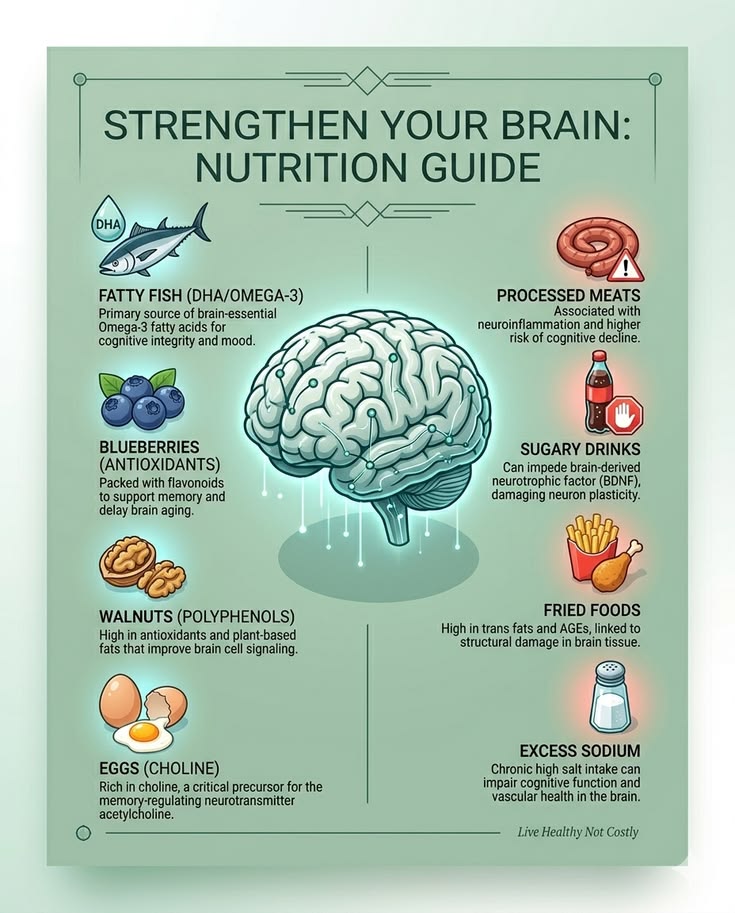
The "superfood" industry is worth over $150 billion globally, and much of its marketing targets brain health. Blueberries, coconut oil, turmeric, MCT oil, fish oil supplements - the claims are endless. But when you strip away the marketing and look at peer-reviewed research, a much smaller set of foods and nutrients actually demonstrate consistent cognitive benefits.
This article separates evidence from hype. It covers what your brain actually needs, which foods deliver it, and which heavily marketed brain foods do not hold up under scientific scrutiny.
How Food Affects the Brain
Your brain is metabolically demanding. It uses roughly 20% of your daily energy despite representing only 2% of body mass. Every thought, memory, and decision runs on glucose (its primary fuel), oxygen (delivered by cerebral blood flow), and micronutrients (vitamins, minerals, fatty acids, and amino acids that build and maintain neurons).
Food affects the brain through four main pathways:
| Pathway | How It Works | Key Nutrients |
|---|---|---|
| Energy metabolism | Stable glucose supply, efficient mitochondrial function | Complex carbs, B vitamins, iron |
| Neuronal structure | Building and maintaining cell membranes and synapses | Omega-3s, phospholipids, protein |
| Neurotransmission | Synthesis of dopamine, serotonin, acetylcholine | Amino acids, choline, folate |
| Neuroprotection | Reducing oxidative stress and inflammation | Polyphenols, antioxidants, vitamin E |
Understanding these pathways explains why no single "superfood" can transform brain function. Cognitive performance requires all four pathways operating well - and most benefits come from consistent patterns of eating, not individual miracle foods.
The Mediterranean Diet: The Strongest Evidence We Have
If you could choose only one dietary pattern for brain health, the Mediterranean diet would win on the strength of evidence. It has been studied in larger populations, over longer timeframes, with more consistent results than any other eating pattern.
What the Research Shows
A 2017 meta-analysis by Singh et al. published in the Journal of Alzheimer's Disease reviewed 19 longitudinal studies covering over 12,000 participants [1]. Higher adherence to the Mediterranean diet was associated with:
- 33% lower risk of cognitive decline
- 35% lower risk of mild cognitive impairment
- 30% lower risk of Alzheimer's disease
The PREDIMED trial, a landmark randomised controlled study of 7,447 participants followed for 6 years, found that people assigned to a Mediterranean diet supplemented with olive oil or nuts performed significantly better on cognitive tests than a control group on a low-fat diet [2].
"The Mediterranean diet remains the only dietary pattern with robust evidence for cognitive protection. It is not a specific food but a comprehensive pattern of eating." - Martha Clare Morris, nutrition epidemiologist, developer of the MIND diet [3]
What the Mediterranean Diet Actually Looks Like
Contrary to Instagram depictions, the Mediterranean diet is not expensive imported olive oil and artisanal bread. It is a pattern emphasising:
- Vegetables (especially leafy greens, tomatoes, peppers): 3+ servings daily
- Fruits (especially berries, apples, oranges): 2-3 servings daily
- Whole grains (oats, brown rice, whole-wheat bread): Several servings daily
- Legumes (beans, lentils, chickpeas): 3-4 servings weekly
- Fish (especially fatty fish like salmon, sardines): 2-3 servings weekly
- Nuts and seeds: Daily small handful
- Olive oil: Primary fat source
- Moderate red wine: 1 glass with dinner (optional; not recommended for non-drinkers)
- Poultry and eggs: Moderate amounts
- Red meat and sweets: Limited (weekly, not daily)
The pattern is simple to follow, culturally adaptable, and does not require expensive ingredients.
The MIND Diet: Mediterranean + DASH for Brain Health
Developed by researchers at Rush University Medical Center, the MIND diet (Mediterranean-DASH Intervention for Neurodegenerative Delay) combines elements of Mediterranean and DASH diets, specifically optimised for cognitive protection.
A 2015 study by Morris et al. in Alzheimer's & Dementia found that participants who closely followed the MIND diet had a 53% lower risk of Alzheimer's disease - even those who followed it moderately still had a 35% lower risk [3].
The 10 Foods to Increase
| Food Group | Recommended Frequency |
|---|---|
| Leafy green vegetables | 6+ servings per week |
| Other vegetables | 1+ serving per day |
| Berries | 2+ servings per week |
| Nuts | 5+ servings per week |
| Olive oil | As primary cooking fat |
| Whole grains | 3+ servings per day |
| Fish | 1+ serving per week |
| Beans | 4+ servings per week |
| Poultry | 2+ servings per week |
| Wine | 1 glass per day (optional) |
The 5 Foods to Limit
| Food Group | Limit To |
|---|---|
| Red meat | Less than 4 servings per week |
| Butter and margarine | Less than 1 tablespoon per day |
| Cheese | Less than 1 serving per week |
| Pastries and sweets | Less than 5 servings per week |
| Fried or fast food | Less than 1 serving per week |
Omega-3 Fatty Acids: The Evidence
Omega-3 fatty acids (EPA and DHA) are essential structural components of neuronal cell membranes. The brain is approximately 60% fat, and a substantial portion is DHA. Low omega-3 intake is associated with faster cognitive decline in observational studies.
What the Research Shows
- Whole-food omega-3 sources (fatty fish, walnuts, flaxseed): Consistent evidence for cognitive benefit in observational studies.
- Fish consumption: People eating 1-2 servings of fatty fish per week have 10-20% lower dementia risk.
- Fish oil supplements: Mixed evidence. Some trials show benefits in people with low baseline omega-3 intake; others show no effect. The large trials (VITAL, OMEGA, AREDS2) have generally been null [4].
The Practical Takeaway
Eat fatty fish (salmon, sardines, mackerel, herring) 1-3 times per week. If you don't eat fish, incorporate walnuts, flaxseed, chia seeds, and hemp seeds daily. Supplement only if you cannot get dietary omega-3s - and choose a quality product with adequate EPA+DHA (at least 1000 mg combined).
Berries and Polyphenols
Berries - blueberries, strawberries, blackberries, raspberries - contain high concentrations of polyphenols, plant compounds with antioxidant and anti-inflammatory effects. Research consistently links berry consumption to cognitive benefits.
What the Research Shows
A 2012 study published in the Annals of Neurology followed 16,000 women for 20 years and found that those who ate the most berries had cognitive ageing delayed by up to 2.5 years compared to those who ate the least [5].
The likely mechanism involves anthocyanins (the compounds that give berries their colour), which cross the blood-brain barrier and accumulate in brain regions involved in memory and learning.
What to Do
Include 1-2 servings of berries per week, especially blueberries and strawberries. Frozen berries retain the polyphenols and are more affordable than fresh.
Leafy Greens and Folate
Leafy green vegetables - spinach, kale, collards, Swiss chard - provide folate, vitamin K, and lutein, all associated with better cognitive performance.
A 2018 study by Morris et al. in Neurology found that older adults who ate at least one serving of leafy greens daily showed cognitive decline equivalent to being 11 years younger than those who rarely ate them [6].
What to Do
Eat at least one serving of leafy greens per day. Salads, smoothies, sautés, and soups are easy vehicles. The effect compounds over years, not weeks.
Coffee and Tea: Cognitive Effects
Both coffee and tea contain caffeine and polyphenols. Evidence for cognitive benefit is substantial but nuanced.
Coffee
- Short-term: Improves alertness, reaction time, and short-term memory in most adults.
- Long-term: 3-5 cups per day is associated with 20-30% lower risk of Parkinson's disease and modestly lower Alzheimer's risk.
- Caveats: Genetic variation (CYP1A2 enzyme) affects caffeine metabolism; some people experience anxiety, sleep disruption, or elevated blood pressure.
Green Tea
- Contains L-theanine, an amino acid that promotes relaxed focus. The combination of caffeine + L-theanine produces more stable alertness than caffeine alone.
- Green tea polyphenols (especially EGCG) have neuroprotective effects in animal studies, though human evidence is still developing.
Practical Approach
If you already drink coffee, 2-4 cups per day is generally safe and may benefit cognition. If you don't, there is no compelling reason to start. Avoid caffeine after 2 PM to protect sleep.
Hydration: The Overlooked Basics
Mild dehydration (losing 1-2% of body weight as water) measurably impairs cognitive performance. A 2012 study in the British Journal of Nutrition found that even mild dehydration reduced short-term memory, attention, and visual-motor tracking [7].
What to Do
- Drink water throughout the day, not just when thirsty. By the time you feel thirsty, you are already mildly dehydrated.
- Target 2-3 litres daily (more in hot weather or with exercise).
- Morning glass of water helps - overnight dehydration is common.
- Caffeinated beverages count toward hydration (contrary to popular belief).
What Doesn't Work (Despite the Hype)
Several heavily marketed brain foods and supplements have weak evidence or none at all:
Coconut Oil
Claim: MCT oil in coconut oil provides ketones as an "alternative brain fuel."
Evidence: No credible clinical evidence that coconut oil prevents or treats cognitive decline. The original claims came from small case reports and have not been replicated in controlled trials.
Turmeric/Curcumin
Claim: Anti-inflammatory; reduces Alzheimer's risk.
Evidence: Mechanistically plausible but clinical evidence is weak. Curcumin has extremely poor bioavailability (less than 1% is absorbed without specialised formulations). Observational correlations from India may reflect other dietary factors.
"Brain Booster" Supplement Stacks
Claim: Nootropic blends enhance memory, focus, and IQ.
Evidence: Individual ingredients (bacopa, ginkgo, phosphatidylserine, etc.) have mixed evidence at best. Combined "stacks" are rarely studied as formulated. Marketing exceeds evidence by orders of magnitude.
High-Dose Vitamin Megadoses
Claim: Vitamin C, E, or B complex "boost" cognition.
Evidence: In people with adequate nutrition, high-dose vitamins do not improve cognition. In some cases (vitamin E megadoses), they may cause harm. Correct deficiencies; don't exceed them.
"Detox" Teas and Juices
Claim: Remove toxins to "clear" brain fog.
Evidence: No scientific basis. Your liver and kidneys handle detoxification. "Brain fog" is more commonly caused by poor sleep, dehydration, stress, or blood sugar fluctuations - none of which detox products address.
"The gap between what supplement marketing claims and what research demonstrates is one of the largest in any health field." - Pieter Cohen, Harvard Medical School, supplement research [8]
Foods That Actively Harm Cognition
While much focus goes to beneficial foods, avoiding cognitively harmful foods may matter more.
Ultra-Processed Foods
A 2022 study in JAMA Neurology of over 10,000 adults found that those with the highest ultra-processed food consumption had 28% faster global cognitive decline and 25% faster executive function decline than those with the lowest consumption [9].
Ultra-processed foods include packaged snacks, frozen meals, sugary drinks, flavoured yogurts, instant noodles, and most fast food. They share common features: high glycaemic load, industrial emulsifiers, artificial flavours, and low micronutrient density.
Added Sugars
Chronic high sugar intake is associated with reduced hippocampal volume and accelerated cognitive ageing. Sugar-sweetened beverages are particularly problematic because liquid sugars bypass the satiety signals of solid food.
Trans Fats
Found in partially hydrogenated oils (increasingly rare but still present in some baked goods and margarines). Linked to inflammation, vascular damage, and impaired cognition.
Excess Alcohol
Moderate alcohol (1 drink/day for women, 1-2 for men) has been associated with cognitive benefit in some observational studies, but recent research has challenged this. Over 14 units per week is consistently associated with brain atrophy and cognitive decline.
A Practical Weekly Plan
Here is an evidence-based eating pattern for brain health. It is not exhaustive but captures the key principles:
Daily
- Breakfast: Oatmeal with berries and nuts, or eggs with whole-grain toast and avocado.
- Lunch: Large salad (leafy greens + colourful vegetables) with olive oil dressing, a whole grain, and protein (beans, chicken, or fish).
- Dinner: Mediterranean-style meal (vegetables, whole grain, legume, or fish + olive oil).
- Snacks: Handful of nuts, Greek yogurt with berries, hummus with vegetables.
Weekly
- Fatty fish: 2-3 times (salmon, sardines, mackerel).
- Beans or legumes: 4+ servings.
- Leafy greens: Daily.
- Red meat: Fewer than 3 servings.
- Processed foods and sweets: Occasional, not daily.
Hydration
- Water throughout the day.
- Coffee or tea as preferred (within tolerance).
- Limit sugar-sweetened beverages.
The Gut-Brain Connection
Recent research has emphasised the bidirectional communication between the gut microbiome and the brain - the "gut-brain axis." Gut bacteria produce neurotransmitters, influence inflammation, and affect the blood-brain barrier.
Foods that support a healthy microbiome:
- Fibre: Vegetables, fruits, legumes, whole grains.
- Fermented foods: Yogurt, kefir, sauerkraut, kimchi.
- Polyphenol-rich foods: Berries, tea, dark chocolate.
- Prebiotic foods: Onions, garlic, leeks, asparagus, bananas.
The research is still developing, but the dietary patterns associated with good cognitive outcomes also happen to support microbiome diversity. This is another reason the Mediterranean diet wins.
Timing Matters: When You Eat
Emerging research suggests when you eat also affects cognition:
- Skipping breakfast after overnight fasting may impair morning cognitive performance in some people, especially children and adolescents.
- Large meals divert blood flow to digestion, causing temporary cognitive dip ("food coma").
- Late-night eating disrupts sleep quality, indirectly harming cognition.
- Time-restricted eating (eating within an 8-12 hour window) shows promise in early research for improving metabolic markers that affect brain health.
The strongest practical advice: eat regular meals at regular times, avoid large late-night meals, and do not skip meals chronically.
Summary
Brain-healthy eating is less about individual "superfoods" and more about consistent patterns. The evidence is strongest for the Mediterranean and MIND diets, which emphasise vegetables, fruits (especially berries), whole grains, legumes, fish, nuts, and olive oil, while limiting ultra-processed foods, added sugars, and excess alcohol.
Key nutrients with solid evidence: omega-3 fatty acids, folate and B vitamins, polyphenols, and adequate hydration. Foods with solid evidence: fatty fish, leafy greens, berries, nuts, whole grains, and legumes.
Most heavily marketed "brain foods" and supplements - coconut oil, turmeric, nootropic stacks, megadose vitamins - have weak or no evidence. The gap between marketing claims and research evidence is substantial.
The practical takeaway: eat whole foods that follow the Mediterranean or MIND pattern, limit processed foods and sugars, stay hydrated, and maintain consistent meal timing. These habits compound over years. The brain you will have at 70 is being built by the food choices you make today.
References
[1] Singh, B., Parsaik, A. K., Mielke, M. M., et al. (2014). Association of Mediterranean diet with mild cognitive impairment and Alzheimer's disease: A systematic review and meta-analysis. Journal of Alzheimer's Disease, 39(2), 271-282. doi:10.3233/JAD-130830
[2] Valls-Pedret, C., Sala-Vila, A., Serra-Mir, M., et al. (2015). Mediterranean diet and age-related cognitive decline: A randomized clinical trial. JAMA Internal Medicine, 175(7), 1094-1103. doi:10.1001/jamainternmed.2015.1668
[3] Morris, M. C., Tangney, C. C., Wang, Y., et al. (2015). MIND diet slows cognitive decline with aging. Alzheimer's & Dementia, 11(9), 1015-1022. doi:10.1016/j.jalz.2015.04.011
[4] Chew, E. Y., Clemons, T. E., Agrón, E., et al. (2015). Effect of omega-3 fatty acids, lutein/zeaxanthin, or other nutrient supplementation on cognitive function: The AREDS2 randomized clinical trial. JAMA, 314(8), 791-801. doi:10.1001/jama.2015.9677
[5] Devore, E. E., Kang, J. H., Breteler, M. M., & Grodstein, F. (2012). Dietary intakes of berries and flavonoids in relation to cognitive decline. Annals of Neurology, 72(1), 135-143. doi:10.1002/ana.23594
[6] Morris, M. C., Wang, Y., Barnes, L. L., et al. (2018). Nutrients and bioactives in green leafy vegetables and cognitive decline. Neurology, 90(3), e214-e222. doi:10.1212/WNL.0000000000004815
[7] Ganio, M. S., Armstrong, L. E., Casa, D. J., et al. (2011). Mild dehydration impairs cognitive performance and mood of men. British Journal of Nutrition, 106(10), 1535-1543. doi:10.1017/S0007114511002005
[8] Cohen, P. A., Maller, G., DeSouza, R., & Neal-Kababick, J. (2015). Presence of banned drugs in dietary supplements following FDA recalls. JAMA, 312(16), 1691-1693. doi:10.1001/jama.2014.10308
[9] Gonçalves, N. G., Ferreira, N. V., Khandpur, N., et al. (2023). Association between consumption of ultraprocessed foods and cognitive decline. JAMA Neurology, 80(2), 142-150. doi:10.1001/jamaneurol.2022.4397