Quick Answer: Emotional intelligence (EQ) in psychology refers to the scientifically validated capacity to perceive, understand, manage, and utilize emotions effectively. Formalized by Peter Salovey and John Mayer in 1990 and popularized by Daniel Goleman in 1995, EQ encompasses skills including emotional awareness, self-regulation, empathy, and social competence.
Research demonstrates that EQ accounts for up to 58% of job performance across industries and is a stronger predictor of leadership success than cognitive intelligence alone.
Emotional intelligence has fundamentally reshaped how psychologists understand human capability. For decades, cognitive intelligence - measured through standardized IQ tests - was considered the primary predictor of life success. That paradigm began shifting in the early 1990s when researchers demonstrated that individuals with similar IQ scores often achieved dramatically different outcomes in careers, relationships, and mental health.
"People with high EQs tend to be better at motivating themselves, regulating their own emotions, and understanding the emotions of others." - Daniel Goleman, author of Emotional Intelligence: Why It Can Matter More Than IQ (1995)
The emergence of EQ as a measurable psychological construct opened entirely new avenues in education, clinical psychology, organizational behavior, and neuroscience. Today, emotional intelligence is not merely a popular self-help concept - it is a rigorous scientific framework supported by thousands of peer-reviewed studies, standardized assessment tools, and brain imaging research.
Understanding EQ requires examining its theoretical foundations, the competing models that define it, and the empirical evidence supporting its validity. This article provides a deep exploration of emotional intelligence as a psychological science - its origins, structure, measurement, and relationship to cognitive intelligence.
The Origins and Evolution of Emotional Intelligence Theory
The roots of emotional intelligence stretch back further than most people realize. While the term was popularized in the 1990s, the underlying ideas emerged decades earlier through the work of several pioneering psychologists.
Early Foundations: From Thorndike to Gardner
In 1920, psychologist Edward Thorndike introduced the concept of "social intelligence" - the ability to understand and manage people and to act wisely in human relations. This idea planted the seed for what would later become emotional intelligence. However, social intelligence proved difficult to measure and distinguish from general cognitive ability, and the concept largely faded from mainstream psychology.
The next major milestone came in 1983 when Howard Gardner published Frames of Mind, introducing the theory of multiple intelligences. Gardner's model included two forms particularly relevant to EQ:
- Intrapersonal intelligence - the capacity to understand oneself, including one's emotions, fears, and motivations
- Interpersonal intelligence - the ability to understand the intentions, motivations, and desires of others
"It is not enough to have a high IQ. You need to be able to understand other people, what motivates them, how they work, how to work cooperatively with them." - Howard Gardner, Harvard psychologist and creator of Multiple Intelligences theory
The Salovey-Mayer Model (1990)
The formal birth of emotional intelligence as a scientific construct came in 1990, when Yale psychologists Peter Salovey and John D. Mayer published their landmark paper "Emotional Intelligence" in the journal Imagination, Cognition and Personality. They defined EQ as:
"The ability to monitor one's own and others' feelings and emotions, to discriminate among them, and to use this information to guide one's thinking and actions."
"We define emotional intelligence as the subset of social intelligence that involves the ability to monitor one's own and others' feelings and emotions, to discriminate among them and to use this information to guide one's thinking and actions." - Peter Salovey & John D. Mayer, Yale University (1990)
Their model evolved over the following decade into the widely recognized four-branch model of emotional intelligence.
The Goleman Revolution (1995)
Daniel Goleman's bestselling book Emotional Intelligence: Why It Can Matter More Than IQ brought the concept to mainstream awareness. Goleman expanded the academic framework into a broader model with five components, emphasizing its practical applications in leadership and personal development. The book sold over 5 million copies worldwide and was translated into 40 languages, making EQ a household term.
| Timeline | Contributor | Key Contribution |
|---|---|---|
| 1920 | Edward Thorndike | Introduced "social intelligence" concept |
| 1983 | Howard Gardner | Multiple intelligences theory (interpersonal/intrapersonal) |
| 1990 | Peter Salovey & John Mayer | Formal scientific definition and first EQ model |
| 1995 | Daniel Goleman | Popularized EQ through bestselling book |
| 1997 | Reuven Bar-On | Developed the Emotional Quotient Inventory (EQ-i) |
| 2002 | Mayer, Salovey & Caruso | Published MSCEIT ability-based assessment |
| 2004 | Petrides & Furnham | Introduced trait emotional intelligence model |
The Four-Branch Model: Scientific Framework for EQ
The Salovey-Mayer four-branch model remains the gold standard in academic EQ research. It conceptualizes emotional intelligence as a set of cognitive abilities arranged hierarchically from basic psychological processes to more complex, psychologically integrated ones.
Branch 1: Perceiving Emotions
The most fundamental ability involves accurately identifying emotions in faces, voices, images, and cultural artifacts. This branch includes:
- Recognizing facial expressions (research shows humans can distinguish at least 21 distinct facial emotions)
- Detecting emotional tone in speech and writing
- Identifying emotions in art, music, and design
- Distinguishing genuine from feigned emotional expressions
Real-world example: In the television series Lie to Me, Dr. Cal Lightman (based on real psychologist Paul Ekman) demonstrates expert-level emotion perception by detecting microexpressions - fleeting facial expressions lasting just 1/25th of a second that reveal concealed emotions.
Branch 2: Using Emotions to Facilitate Thought
This branch addresses how emotions prioritize and direct cognitive processing. Emotions are not obstacles to rational thought - they are integral to it:
- Emotions direct attention toward the most important information
- Different emotional states facilitate different types of thinking (e.g., positive mood enhances creative problem-solving)
- Emotional "what-if" scenarios help in planning and decision-making
Real-world example: Steve Jobs was known for channeling intense emotional states into creative breakthroughs at Apple. His biographer Walter Isaacson documented how Jobs used passionate conviction - sometimes bordering on emotional volatility - to push teams toward revolutionary products.
Branch 3: Understanding Emotions
This higher-order ability involves comprehending emotional vocabulary, transitions, and complexity:
- Understanding that emotions can blend (e.g., awe combines surprise and fear)
- Predicting how emotions evolve over time (e.g., frustration may intensify into anger)
- Recognizing cultural and contextual influences on emotional expression
Branch 4: Managing Emotions
The most complex branch involves strategically regulating emotions in oneself and others to achieve desired outcomes:
- Staying open to pleasant and unpleasant feelings
- Engaging with or detaching from emotions based on their usefulness
- Managing emotions in others to build relationships and achieve goals
| Branch | Core Ability | Complexity Level | Example Task |
|---|---|---|---|
| Perceiving Emotions | Identify emotions in faces, voices, art | Basic | Recognizing sadness in a colleague's expression |
| Using Emotions | Leverage emotions to enhance thinking | Intermediate | Using positive mood to brainstorm creative solutions |
| Understanding Emotions | Comprehend emotional language and transitions | Advanced | Predicting that disappointment may turn to resentment |
| Managing Emotions | Regulate emotions strategically | Expert | Calming an anxious team before a critical deadline |
Goleman's Five-Component Model: The Applied Framework
While Salovey and Mayer built the scientific foundation, Daniel Goleman created the most widely applied framework for emotional intelligence. His model identifies five key components, shifting the emphasis from pure ability to competency-based performance.
"What really matters for success, character, happiness and lifelong achievements is a definite set of emotional skills - your EQ - not just purely cognitive abilities that are measured by conventional IQ tests." - Daniel Goleman
The Five Components Compared
| Component | Definition | Key Behaviors | Hallmarks of Mastery |
|---|---|---|---|
| Self-Awareness | Recognizing one's emotions, strengths, weaknesses, values | Emotional insight, accurate self-assessment, self-confidence | Knowing how feelings affect performance; realistic self-image |
| Self-Regulation | Managing disruptive impulses and moods | Impulse control, trustworthiness, adaptability, conscientiousness | Thinking before acting; comfort with ambiguity and change |
| Motivation | Passion for work beyond money or status | Achievement drive, commitment, initiative, optimism | Pursuing goals with energy and persistence despite setbacks |
| Empathy | Understanding others' emotional makeup | Understanding others, developing others, service orientation, political awareness | Reading the room; sensing unspoken emotions and group dynamics |
| Social Skills | Managing relationships to move people in desired directions | Influence, communication, conflict management, leadership, collaboration | Building rapport; finding common ground; persuading effectively |
How the Two Major Models Differ
| Feature | Salovey-Mayer Model | Goleman Model |
|---|---|---|
| Approach | Ability-based (what you can do) | Competency-based (what you typically do) |
| Components | 4 branches | 5 components |
| Measurement | Performance tests (MSCEIT) | Self-report and 360-degree feedback |
| Primary use | Academic research | Organizational/leadership development |
| Includes motivation? | No (considered separate) | Yes (core component) |
| Empirical rigor | Higher (standardized scoring) | Moderate (more subjective measures) |
Measuring Emotional Intelligence: Tools, Validity, and Challenges
Measuring EQ presents unique challenges compared to cognitive intelligence testing. While IQ tests have over a century of standardization, EQ measurement is still a developing field - though significant progress has been made since the early 2000s.
Ability-Based Assessments
The Mayer-Salovey-Caruso Emotional Intelligence Test (MSCEIT) is the primary ability-based EQ assessment. It evaluates all four branches through 141 items requiring participants to solve emotion-related problems. For example:
- Identifying emotions in photographs and abstract designs
- Determining which emotions would best facilitate specific thinking tasks
- Predicting how emotions might change in various scenarios
- Choosing the most effective strategy for managing emotions in given situations
Scoring uses consensus or expert norms - answers are compared against responses from large normative samples or emotion researchers.
Self-Report Measures
- EQ-i 2.0 (Bar-On model) - 133 items measuring five composite scales
- Schutte Self-Report Emotional Intelligence Test (SSEIT) - 33 items based on the Salovey-Mayer model
- Trait Emotional Intelligence Questionnaire (TEIQue) - 153 items measuring 15 facets of trait EI
360-Degree Assessments
- Emotional Competence Inventory (ECI) - based on Goleman's model; collects ratings from self, peers, subordinates, and supervisors
| Assessment | Type | Items | Model Basis | Best For |
|---|---|---|---|---|
| MSCEIT | Ability-based | 141 | Salovey-Mayer | Research; objective measurement |
| EQ-i 2.0 | Self-report | 133 | Bar-On | Clinical and organizational settings |
| SSEIT | Self-report | 33 | Salovey-Mayer | Quick screening; research |
| TEIQue | Self-report | 153 | Trait EI | Personality-linked EQ research |
| ECI | 360-degree | Varies | Goleman | Leadership development |
"Emotional intelligence is not the opposite of intelligence, it is not the triumph of heart over head - it is the unique intersection of both." - David Caruso, co-developer of the MSCEIT
Validity Challenges
EQ measurement faces several ongoing debates:
- Construct overlap - Self-report EQ measures correlate significantly with personality traits like agreeableness and extraversion, raising questions about whether they measure a truly distinct construct
- Scoring controversy - Ability-based tests rely on consensus scoring, which some researchers argue confounds EQ with conformity
- Cultural bias - Emotional expression norms vary across cultures, potentially affecting test fairness
- Discriminant validity - Establishing that EQ measures something distinct from both IQ and personality remains an active research challenge
For those interested in exploring cognitive abilities through well-validated assessments, take our full IQ test or try a quick assessment to understand how cognitive intelligence complements emotional skills.
The Neuroscience of Emotional Intelligence
Advances in neuroimaging have revealed the biological underpinnings of emotional intelligence, demonstrating that EQ is not merely a behavioral tendency but is rooted in identifiable brain structures and neural pathways.
Key Brain Regions
- Amygdala - The brain's emotional alarm system, critical for detecting threats and processing fear. Individuals with higher EQ show more regulated amygdala responses, suggesting better top-down emotional control.
- Prefrontal cortex (PFC) - Responsible for executive functions including emotional regulation, planning, and impulse control. The ventromedial PFC is specifically implicated in integrating emotional information into decision-making.
- Anterior cingulate cortex (ACC) - Plays a role in error detection and emotional conflict monitoring. Higher ACC activity correlates with better emotional regulation.
- Insula - Processes interoceptive signals (internal body states), supporting emotional self-awareness. Greater insular cortex thickness has been associated with higher self-reported emotional awareness.
The Somatic Marker Hypothesis
Neuroscientist Antonio Damasio proposed that emotions are essential to rational decision-making through what he called somatic markers - bodily sensations that guide choices based on past emotional experiences. His research with patients who had damage to the ventromedial prefrontal cortex showed that without emotional input, even people with intact IQ made catastrophically poor life decisions.
This finding powerfully illustrates that emotion and cognition are inseparable - a principle that lies at the heart of emotional intelligence theory.
| Brain Region | Function in EQ | Research Finding |
|---|---|---|
| Amygdala | Emotion detection and processing | Higher EQ correlates with more regulated amygdala activation |
| Prefrontal cortex | Emotion regulation, impulse control | Greater PFC-amygdala connectivity predicts better emotion management |
| Anterior cingulate cortex | Conflict monitoring, error detection | Increased ACC activity linked to emotional awareness |
| Insula | Interoception, self-awareness | Insular thickness correlates with emotional self-awareness |
| Mirror neuron system | Empathy, emotional resonance | Activation during observation of others' emotions supports empathic ability |
Emotional Intelligence vs. Cognitive Intelligence: A Detailed Comparison
The relationship between EQ and IQ is one of the most studied - and most debated - topics in intelligence research. Understanding how these constructs differ and interact is essential for anyone interested in human capability.
Statistical Relationship
Research consistently shows that EQ and IQ are modestly correlated (r = 0.10 to 0.35 depending on the measure), meaning they share some variance but are largely independent constructs. A person's IQ score tells you relatively little about their emotional intelligence, and vice versa.
"IQ gets you hired, but EQ gets you promoted." - Travis Bradberry, co-author of Emotional Intelligence 2.0 and co-founder of TalentSmart
Key Differences
| Dimension | Cognitive Intelligence (IQ) | Emotional Intelligence (EQ) |
|---|---|---|
| What it measures | Logical reasoning, abstract thinking, memory, processing speed | Emotion perception, regulation, empathy, social skill |
| Stability | Relatively stable after early adulthood | Continues to develop throughout life |
| Heritability | ~50-80% heritable | ~40-50% heritable (more environmentally influenced) |
| Peak age | Fluid IQ peaks in mid-20s | Tends to increase with age and experience |
| Best predicts | Academic achievement, technical job performance | Leadership, relationship quality, mental health |
| Measurement maturity | 100+ years of standardization | ~30 years of formal measurement |
| Trainability | Limited improvement through training | Significant improvement possible through practice |
The TalentSmart Study
One of the most cited findings in EQ research comes from TalentSmart, which tested emotional intelligence alongside 33 other workplace skills across more than 500,000 people. Key findings:
- EQ was the strongest predictor of job performance, accounting for 58% of success across all job types
- 90% of top performers scored high in emotional intelligence
- Only 20% of bottom performers had high EQ scores
- People with high EQ earned an average of $29,000 more per year than those with low EQ
Emotional Intelligence in Mental Health: What the Research Shows
The connection between emotional intelligence and psychological well-being is supported by extensive research. Higher EQ serves as a protective factor against multiple mental health challenges.
Research Findings
- A 2010 meta-analysis by Martins, Ramalho, and Morin (published in Personality and Individual Differences) examined 80 studies and found a significant positive relationship between EQ and mental health, with an overall effect size of r = 0.36
- Individuals with higher EQ show lower levels of depression (Fernandez-Berrocal et al., 2006), reduced anxiety (Summerfeldt et al., 2006), and better stress management (Salovey et al., 2002)
- EQ-based interventions have been shown to reduce burnout among healthcare professionals by up to 25% (Zeidner, Matthews, & Roberts, 2012)
Clinical Applications
- Cognitive-behavioral therapy (CBT) increasingly incorporates EQ skills training, particularly emotional awareness and regulation techniques
- Dialectical behavior therapy (DBT), developed by Marsha Linehan, explicitly teaches emotional intelligence skills including mindfulness, distress tolerance, emotion regulation, and interpersonal effectiveness
- Emotionally focused therapy (EFT) uses emotional awareness and expression as the primary mechanism of therapeutic change in couples and individuals
"The emotionally intelligent person is skilled in four areas: identifying emotions, using emotions, understanding emotions, and regulating emotions." - John D. Mayer, University of New Hampshire
Emotional Intelligence in Education: Building the Foundation
The integration of EQ into education represents one of the most significant applications of emotional intelligence theory. Social-emotional learning (SEL) programs have become widespread, with evidence supporting their effectiveness across academic and behavioral outcomes.
The CASEL Framework
The Collaborative for Academic, Social, and Emotional Learning (CASEL) identifies five core competencies:
| SEL Competency | Description | Connection to EQ |
|---|---|---|
| Self-Awareness | Understanding one's emotions, thoughts, and values | Salovey-Mayer Branch 1 (Perceiving Emotions) |
| Self-Management | Regulating emotions, thoughts, and behaviors | Salovey-Mayer Branch 4 (Managing Emotions) |
| Social Awareness | Empathizing with others from diverse backgrounds | Goleman's Empathy component |
| Relationship Skills | Building and maintaining healthy relationships | Goleman's Social Skills component |
| Responsible Decision-Making | Making caring and constructive choices | Integrates all EQ branches |
Evidence of Impact
A landmark 2011 meta-analysis by Durlak et al. (published in Child Development) examined 213 school-based SEL programs involving over 270,000 students. Results showed:
- 11 percentile point gain in academic achievement compared to control groups
- Significant improvements in social and emotional skills
- Reduced conduct problems, emotional distress, and drug use
- Benefits persisted in follow-up assessments months and years later
Real-world example: The RULER program, developed at the Yale Center for Emotional Intelligence by Marc Brackett, has been implemented in over 2,500 schools across the United States and internationally. Schools using RULER report improved classroom climate, reduced bullying, and higher academic engagement.
For those interested in assessing cognitive development alongside emotional skills, practice our IQ test for additional insights into learning and intelligence.
Emotional Intelligence in Leadership and Organizations
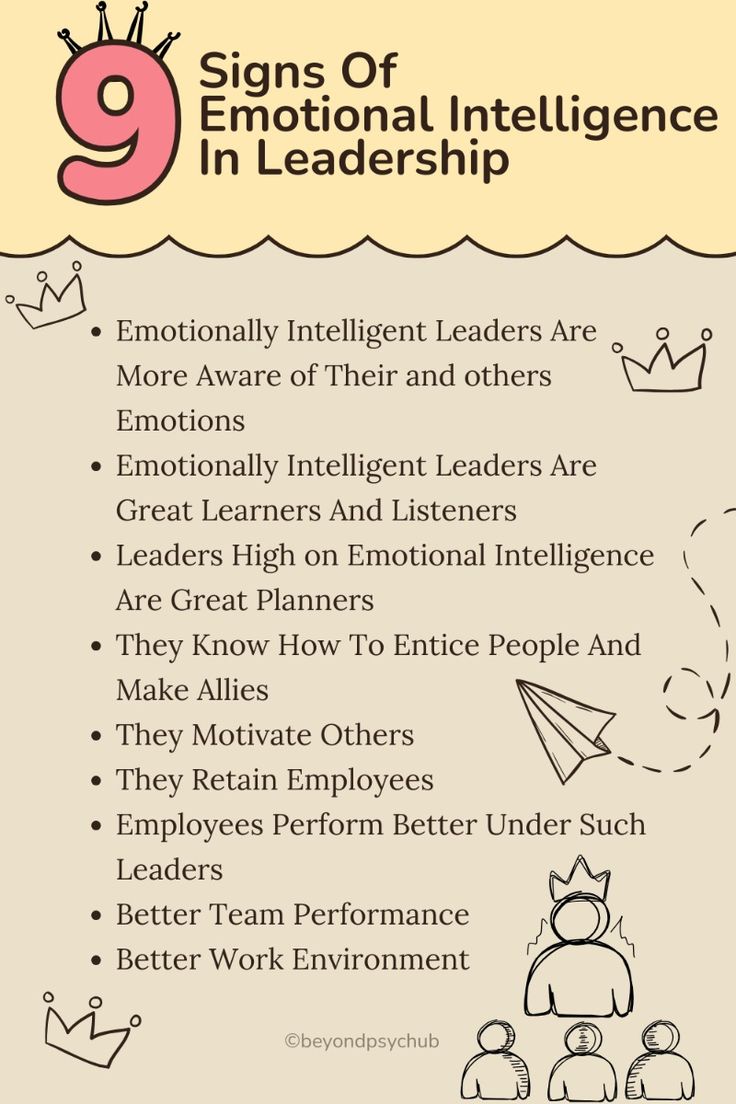
EQ has become a cornerstone of modern leadership theory and organizational development. Research consistently demonstrates that emotional intelligence differentiates outstanding leaders from average ones.
The Goleman Leadership Study
In his influential 1998 Harvard Business Review article "What Makes a Leader?", Goleman analyzed competency models from 188 companies and found:
- Emotional intelligence was twice as important as technical skills and IQ for jobs at all levels
- At senior leadership levels, nearly 90% of the difference between star performers and average ones was attributable to emotional intelligence
- The most effective leaders demonstrated strength across all five EQ components
"In a very real sense we have two minds, one that thinks and one that feels." - Daniel Goleman
Organizational Impact
| Outcome | EQ-Related Finding | Source |
|---|---|---|
| Leadership effectiveness | EQ predicts 58% of a leader's job performance | TalentSmart, 2009 |
| Employee retention | Managers with high EQ have 20% lower team turnover | Bradberry & Greaves, 2009 |
| Team performance | Emotionally intelligent teams outperform by 20% | Druskat & Wolff, 2001 |
| Customer satisfaction | High-EQ service employees generate 12% higher satisfaction scores | Kernbach & Schutte, 2005 |
| Conflict resolution | 75% of workplace conflicts are resolved more effectively by high-EQ managers | TalentSmart research |
Real-world example: Satya Nadella's transformation of Microsoft's culture after becoming CEO in 2014 is frequently cited as a case study in emotionally intelligent leadership. Nadella shifted Microsoft from a competitive, know-it-all culture to a collaborative, learn-it-all culture, emphasizing empathy and growth mindset. Under his leadership, Microsoft's market capitalization grew from $300 billion to over $2 trillion.
Common Misconceptions About Emotional Intelligence
Despite decades of research, several persistent myths surround EQ. Addressing these misconceptions is crucial for accurate understanding.
Myth 1: EQ Is Just About Being Nice
High EQ does not mean avoiding conflict or always being agreeable. It means handling difficult conversations constructively - giving honest feedback with empathy, setting boundaries clearly, and addressing problems directly while maintaining respect.
Myth 2: EQ Is Innate and Cannot Change
While there is a genetic component to emotional intelligence (estimated at 40-50% heritable), significant development is possible throughout life. Unlike fluid IQ, which tends to decline after the mid-20s, EQ generally increases with age and deliberate practice.
Myth 3: EQ Is Less Scientific Than IQ
Emotional intelligence is supported by thousands of peer-reviewed studies, validated measurement tools, and neuroscience research. The Salovey-Mayer ability model meets the same psychometric standards applied to cognitive intelligence tests.
Myth 4: High IQ Means High EQ
Research shows only a modest correlation between IQ and EQ. Many individuals with exceptional cognitive abilities struggle with emotional regulation and social skills. The reverse is also true - high EQ does not guarantee high IQ.
Myth 5: EQ Only Matters in Personal Life
Emotional intelligence is a critical professional skill. Research from TalentSmart, the Harvard Business Review, and numerous organizational studies demonstrates that EQ is a stronger predictor of workplace performance than IQ or technical expertise for the majority of roles.
Developing Emotional Intelligence: Evidence-Based Strategies
EQ development is supported by a growing body of intervention research. The following strategies have empirical backing:
- Mindfulness meditation - A 2019 meta-analysis found that mindfulness-based interventions significantly improved emotional regulation and self-awareness (Guendelman et al., Frontiers in Psychology)
- Emotional labeling - The simple act of naming your emotions ("I am feeling frustrated") activates the prefrontal cortex and reduces amygdala reactivity (Lieberman et al., 2007, Psychological Science)
- Perspective-taking exercises - Deliberately considering situations from others' viewpoints strengthens empathy and social awareness
- Feedback loops - Regularly seeking honest feedback from peers about your emotional impact builds self-awareness
- Cognitive reappraisal - Reframing situations to change their emotional impact is one of the most effective emotion regulation strategies (Gross, 2002)
"Emotional intelligence is not fixed at birth. It continues to develop through our life as we learn from our experiences." - Peter Salovey, President of Yale University and co-creator of the EQ construct
Individuals interested in tracking their development across both emotional and cognitive domains can use validated EQ assessments alongside cognitive tests such as our full IQ test or IQ practice test. Combining emotional and cognitive self-knowledge leads to more balanced personal growth.
References
- Salovey, P., & Mayer, J. D. (1990). Emotional intelligence. Imagination, Cognition and Personality, 9(3), 185-211.
- Goleman, D. (1995). Emotional Intelligence: Why It Can Matter More Than IQ. Bantam Books.
- Mayer, J. D., Salovey, P., & Caruso, D. R. (2002). Mayer-Salovey-Caruso Emotional Intelligence Test (MSCEIT): User's Manual. Multi-Health Systems.
- Bar-On, R. (1997). The Emotional Quotient Inventory (EQ-i): A Test of Emotional Intelligence. Multi-Health Systems.
- Gardner, H. (1983). Frames of Mind: The Theory of Multiple Intelligences. Basic Books.
- Durlak, J. A., Weissberg, R. P., Dymnicki, A. B., Taylor, R. D., & Schellinger, K. B. (2011). The impact of enhancing students' social and emotional learning: A meta-analysis of school-based universal interventions. Child Development, 82(1), 405-432.
- Martins, A., Ramalho, N., & Morin, E. (2010). A comprehensive meta-analysis of the relationship between emotional intelligence and health. Personality and Individual Differences, 49(6), 554-564.
- Bradberry, T., & Greaves, J. (2009). Emotional Intelligence 2.0. TalentSmart.
- Goleman, D. (1998). What makes a leader? Harvard Business Review, 76(6), 93-102.
- Damasio, A. (1994). Descartes' Error: Emotion, Reason, and the Human Brain. Putnam Publishing.
- Petrides, K. V., & Furnham, A. (2001). Trait emotional intelligence: Psychometric investigation with reference to established trait taxonomies. European Journal of Personality, 15(6), 425-448.
- Lieberman, M. D., Eisenberger, N. I., Crockett, M. J., Tom, S. M., Pfeifer, J. H., & Way, B. M. (2007). Putting feelings into words: Affect labeling disrupts amygdala activity in response to affective stimuli. Psychological Science, 18(5), 421-428.
Frequently Asked Questions
Can emotional intelligence be improved at any age?
Yes. Unlike fluid cognitive intelligence, which tends to stabilize or decline after the mid-20s, emotional intelligence *continues to develop throughout the lifespan*. A 2010 study by Kafetsios found that EQ scores increased significantly from age 20 to 50.
Specific strategies for improvement include mindfulness meditation (shown to increase emotional regulation in as little as 8 weeks), cognitive reappraisal training, and structured feedback programs. The key is consistent, deliberate practice - research suggests that meaningful EQ gains require approximately 3-6 months of focused effort.
Is emotional intelligence more important than IQ for success?
The answer depends on how you define success. For *academic achievement and technical problem-solving*, IQ remains the stronger predictor (correlating at r = 0.50 with academic performance). However, for *leadership, relationship quality, mental health, and overall life satisfaction*, EQ is typically more predictive.
TalentSmart's research across 500,000+ individuals found that EQ accounted for 58% of job performance across all job types. The most successful individuals tend to leverage *both* - strong cognitive abilities combined with high emotional intelligence. To assess your cognitive strengths, try our full IQ test.
How is emotional intelligence measured in children?
Children's EQ is assessed through a combination of methods appropriate to their developmental level. For younger children (ages 5-12), behavioral observation and teacher/parent rating scales are most common, including the Devereux Student Strengths Assessment (DESSA) and the Social Skills Improvement System (SSIS).
For adolescents (ages 12-18), the Adolescent Salovsoy-Mayer-Caruso Emotional Intelligence Test (MSCEIT-YV) provides ability-based measurement. Self-report measures like the Bar-On EQ-i:YV are also used for adolescents. Research by Brackett et al. (2011) found that school-based SEL programs improved children's EQ scores by an average of 11 percentile points.
Do high IQ individuals always have high emotional intelligence?
No. Research consistently shows only a *modest correlation* (r = 0.10 to 0.35) between IQ and EQ, meaning they are largely independent constructs. History provides numerous examples: brilliant scientists and mathematicians who struggled with relationships, or gifted artists who suffered from poor emotional regulation. Conversely, many individuals with average IQs demonstrate exceptional emotional intelligence.
The key insight is that *cognitive and emotional abilities develop through different mechanisms* - IQ is heavily influenced by genetics and early brain development, while EQ is more responsive to experience, environment, and intentional practice. Take our quick IQ test to explore your cognitive profile.
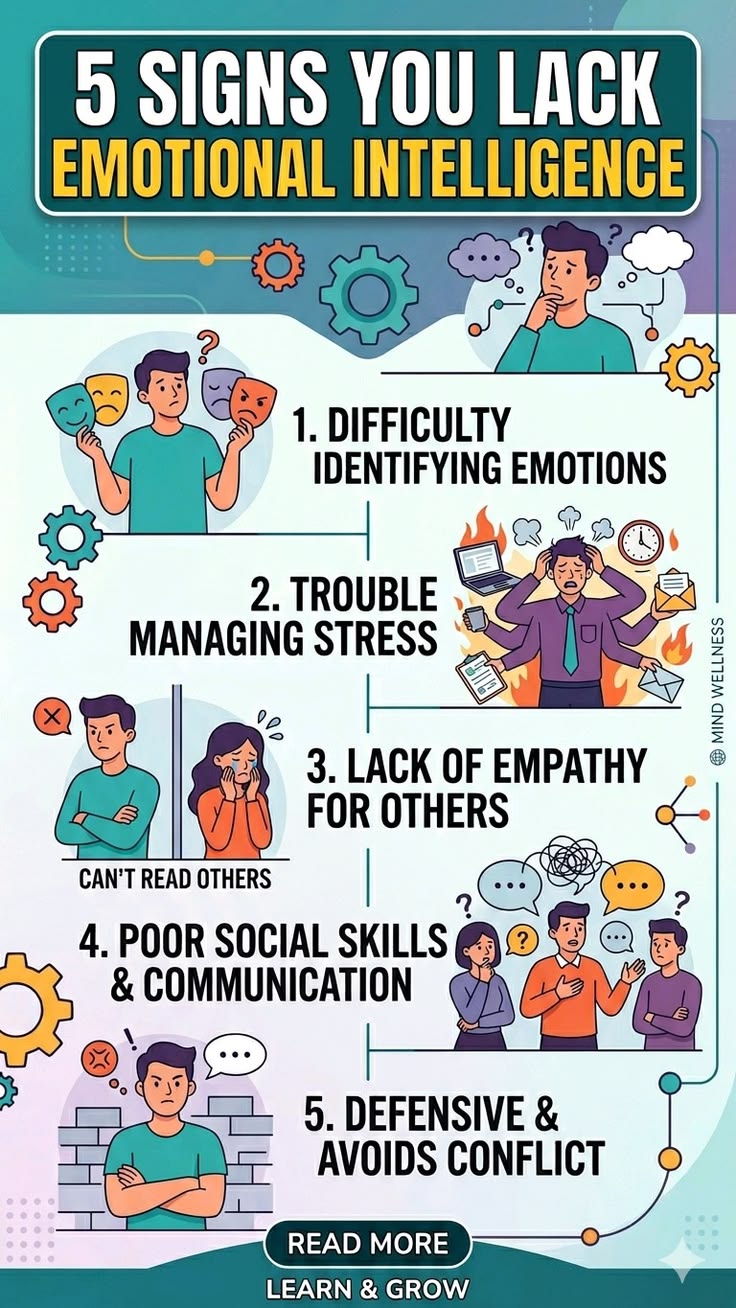
What are common signs of low emotional intelligence?
Research identifies several behavioral indicators of low EQ:
- frequent difficulty identifying or naming one's own emotions (alexithymia affects approximately 10% of the general population);
- *blaming others* for one's emotional reactions;
- difficulty maintaining close relationships;
- frequently being surprised by others' emotional responses;
- struggling to cope with change or setbacks;
- making impulsive decisions driven by emotion rather than reflection;
- and difficulty reading social cues or group dynamics.
Low EQ is not a character flaw - it simply indicates underdeveloped skills that can be strengthened through awareness and targeted practice.
Are there cultural differences in emotional intelligence?
Yes, significant cultural variation exists in how emotions are expressed, perceived, and regulated. Research by Matsumoto et al. (2008) found that collectivist cultures (common in East Asia) tend to emphasize emotional restraint and group harmony, while individualist cultures (common in Western nations) encourage emotional expressiveness and personal assertion.
These differences affect EQ assessment - tools developed in one cultural context may not be valid in another. The TEIQue has been validated across 20+ languages and cultures, showing both universal core components and culture-specific variations. Understanding these differences is essential for fair assessment and culturally sensitive EQ development programs.
Related Articles
Curious about your IQ?
You can take a free online IQ test and get instant results.
Take IQ Test