Odd One Out Questions
Four items share a rule. One breaks it. Find the property that separates the outlier and train your inductive reasoning.
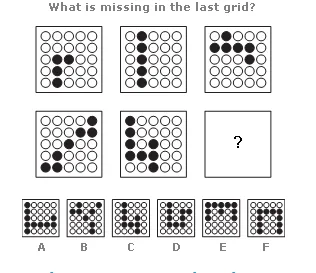
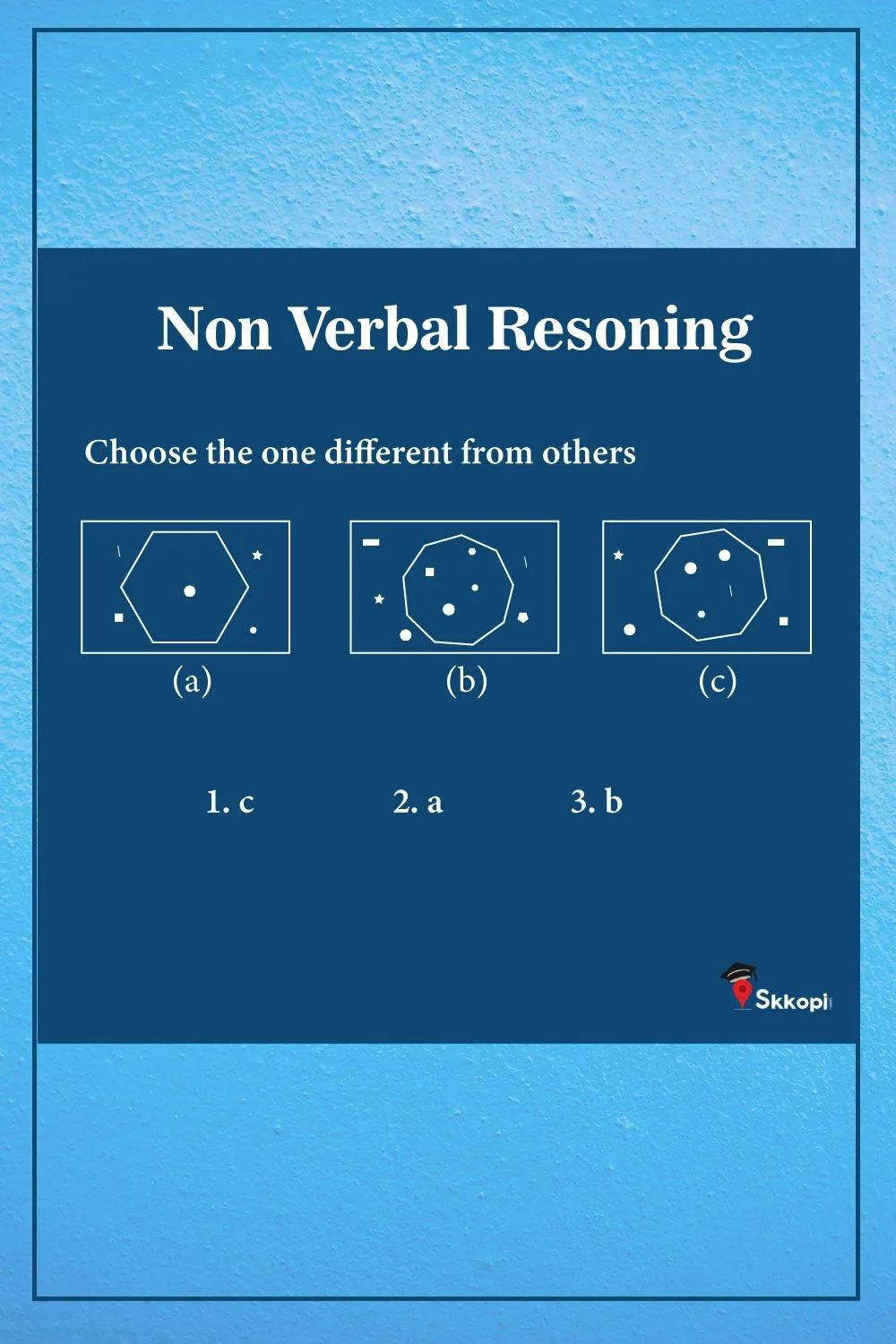
Odd One Out Questions in IQ Tests
Odd one out questions present a set of four or five images and ask you to identify the single item that does not share the property held by all the others. They test a specific and important cognitive skill: the ability to form an abstract category from incomplete examples and identify when an item violates that category. This is inductive reasoning — reasoning from specific instances to a general rule — at its most compressed.
What makes odd one out questions challenging is that the distinguishing property is rarely the most visually obvious one. A set of shapes might all have four sides, but one has a right angle while the others do not. Or four figures might all be rotations of the same shape while one is a reflection. You must consider multiple dimensions of similarity simultaneously and find the one that cleanly separates exactly one item from the rest.
Dimensions to Analyse
Shape and Geometry
Check the number of sides, the presence of curves, symmetry axes, and whether angles are acute, obtuse, or right. One item may have a different vertex count, a curved edge where all others are straight, or an asymmetry that the others lack.
Orientation and Rotation
Four items might all be rotations of the same base shape while the fifth is a different shape entirely. Or four items face left and one faces right — but facing direction may be a red herring if all five are otherwise identical. Always check whether orientation is the only difference before choosing it as the answer.
Colour, Shading, and Fill
Four shapes may be filled and one is outlined, or three are dark and two are light — making shading the separating property. Be precise: light grey and white are different fill levels. Evaluate shading independently of shape before combining both dimensions in your analysis.
Quantity and Internal Structure
Count internal elements: dots, stripes, sub-shapes. Four figures may contain three internal lines each while one contains two. Counting internal structure is often the last dimension solvers check, which is why question designers frequently hide the answer there.
Frequently Asked Questions
What if more than one item seems to be the odd one out?
A well-formed question has exactly one correct answer based on one clean, consistent rule. If two items appear to differ, you have found two separate dimensions of variation. Your task is to find the dimension along which exactly four items are identical and one is different. Isolate that single dimension.
Is there always a visual property, or can the rule be conceptual?
Most IQ-style odd one out questions use purely visual properties. Conceptual rules (e.g., one item is a tool while the others are vehicles) appear in verbal IQ tests but are rare in non-verbal visual formats. If you are looking at images with no text labels, focus entirely on visual and geometric properties.
How do I avoid being misled by an obvious red herring?
Deliberately check the least obvious dimension first. If colour immediately jumps out as different, check shape, orientation, and quantity before confirming colour as the answer. Question designers specifically make the irrelevant dimension the most visually salient to test whether you reason carefully rather than react to the first difference you see.
Are odd one out questions timed on real IQ tests?
Yes. Most tests that include odd one out questions have a time limit per question or per section. Practicing until you can systematically check multiple dimensions in under 30 seconds per question is the target. The systematic approach described above is faster than intuition for difficult questions because it eliminates backtracking.