Number Sequence Questions
Find the missing number by uncovering the mathematical rule connecting each term. Arithmetic, geometric, and alternating patterns.
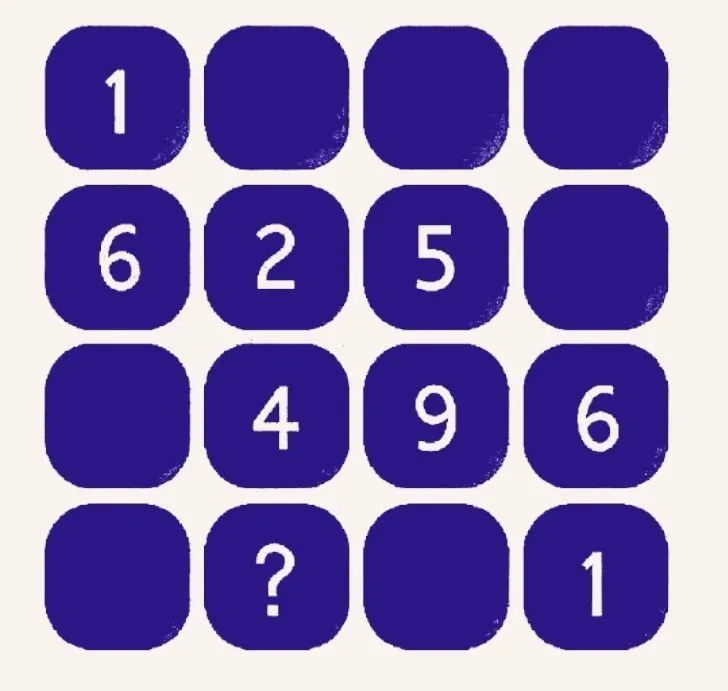 ?
?
4x4 Number Grid: What is the Missing Number?
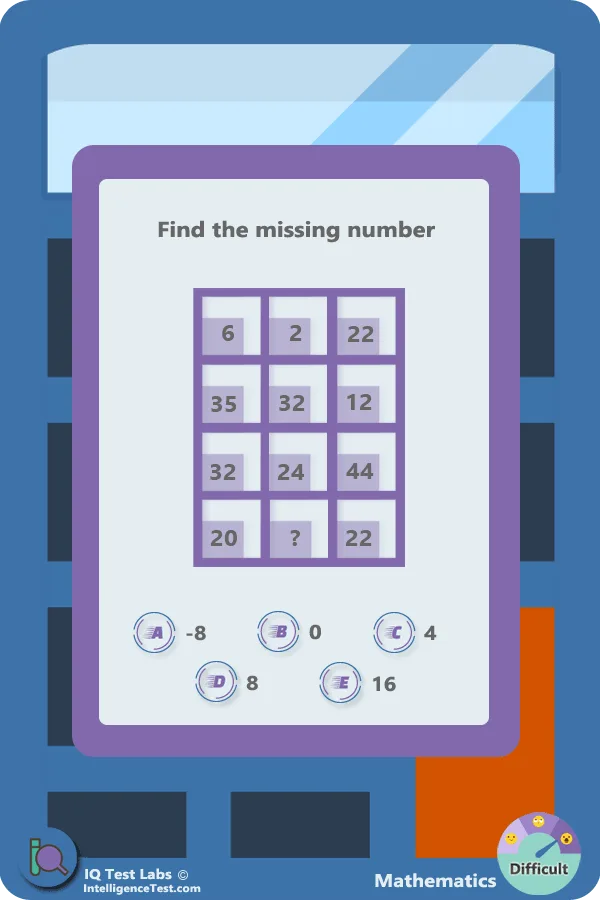 ?
?
4x3 Number Grid: Find the Missing Number
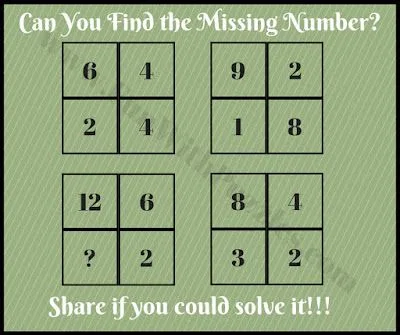 ?
?
Four-Box Number Puzzle: Find the Missing Number
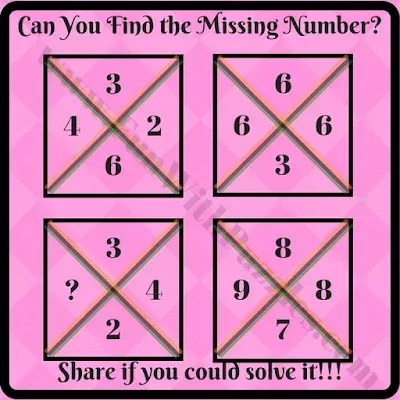 ?
?
Diagonal Square Puzzle: Find the Missing Number
 ?
?
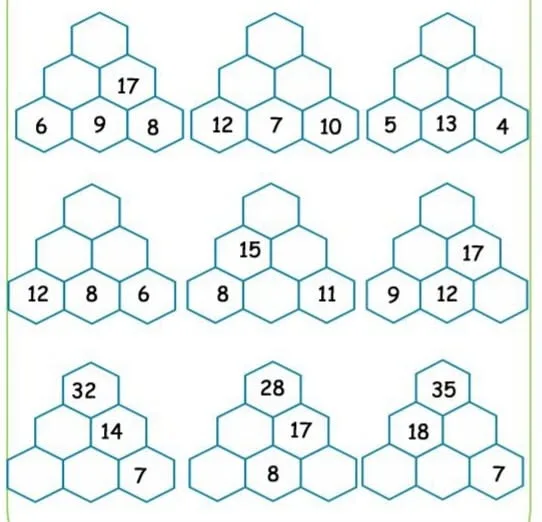
Honeycomb Number Pattern: Spot the Rule
 ?
?
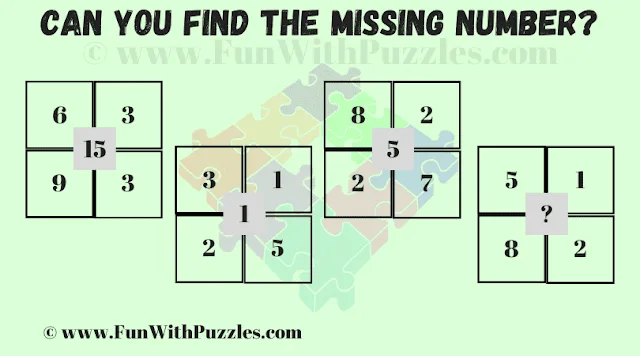
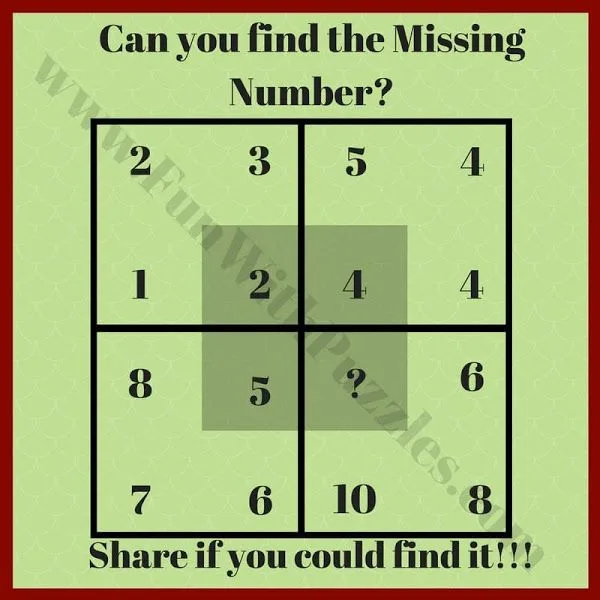
Overlapping Squares: Find the Missing Center Number
 ?
?
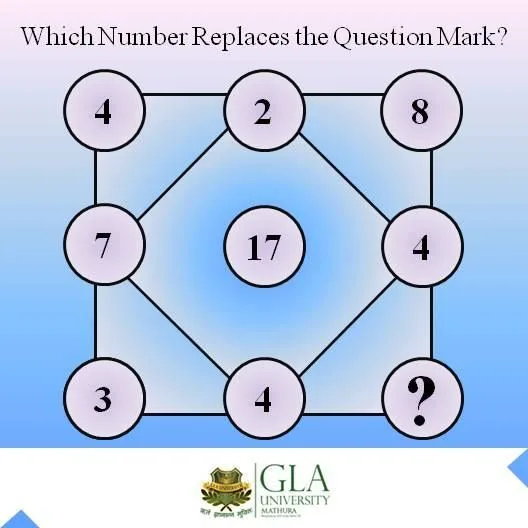
Octagon Number Puzzle: What Replaces the ?
 ?
?
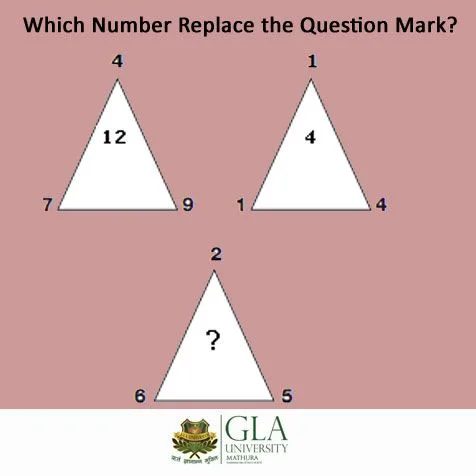
Triangle Puzzle: Which Number Replaces the ?
 ?
?
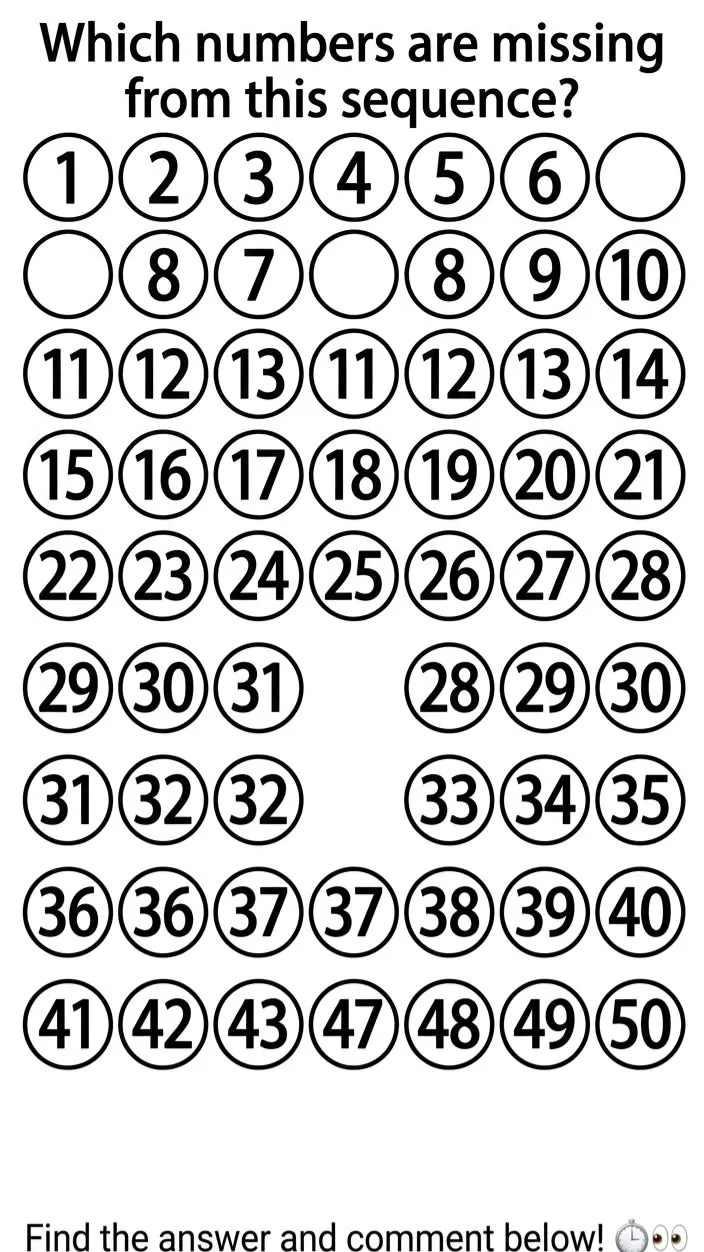
Number Sequence: Which Numbers Are Missing?
 ?
?
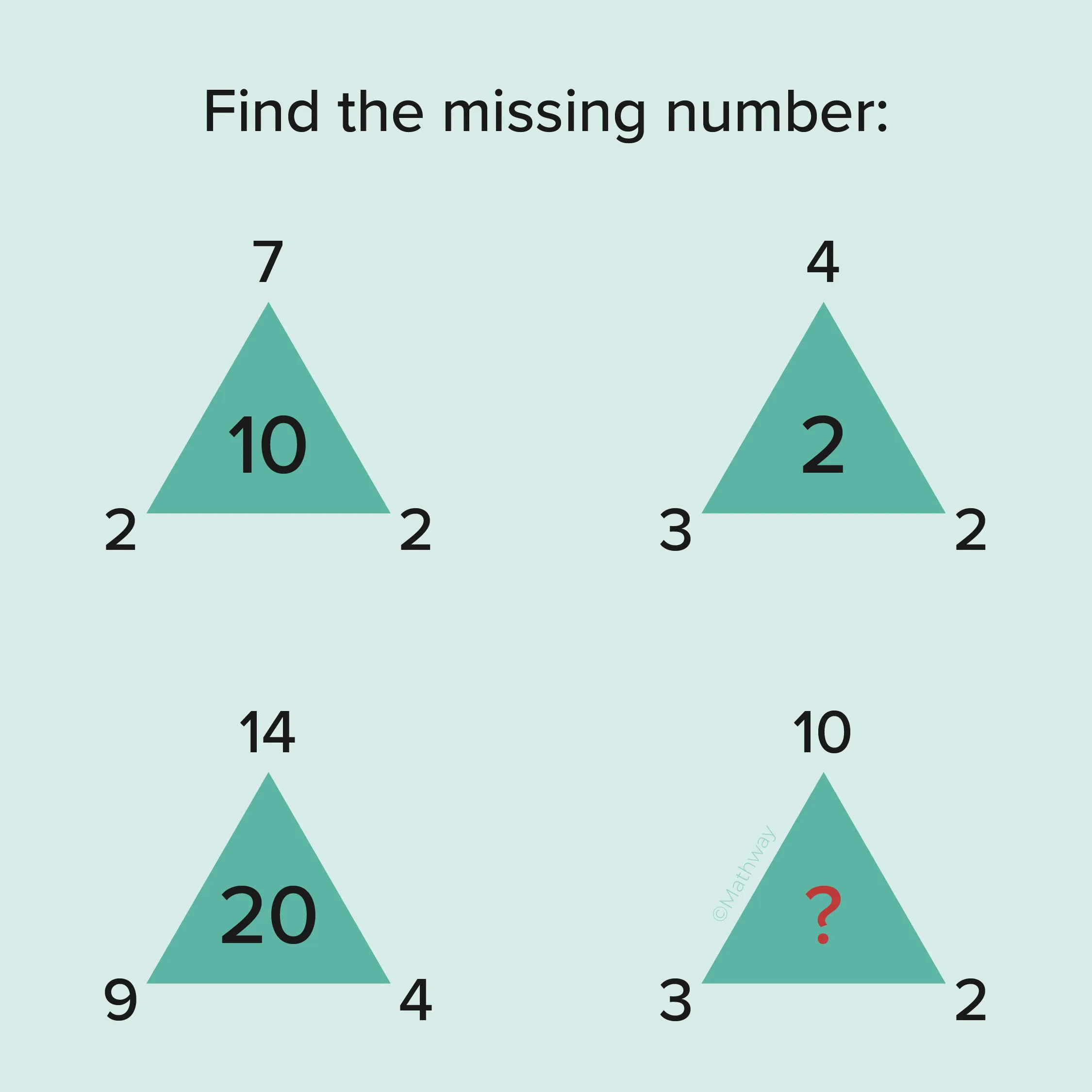
Triangle Corner Numbers: Replace the Question Mark
 ✓
✓
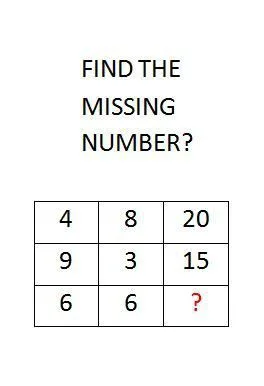
3x3 Number Grid: Find the Missing Number
 ✓
✓
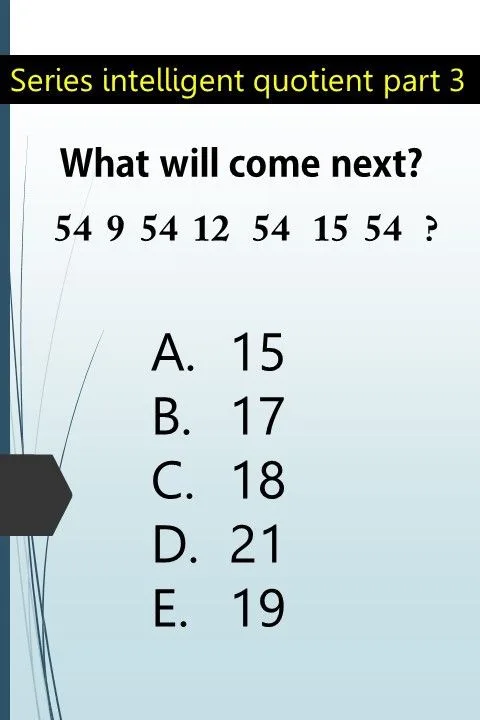
Number Sequence: 54 9 54 12 54 15 54 — What Comes Next?
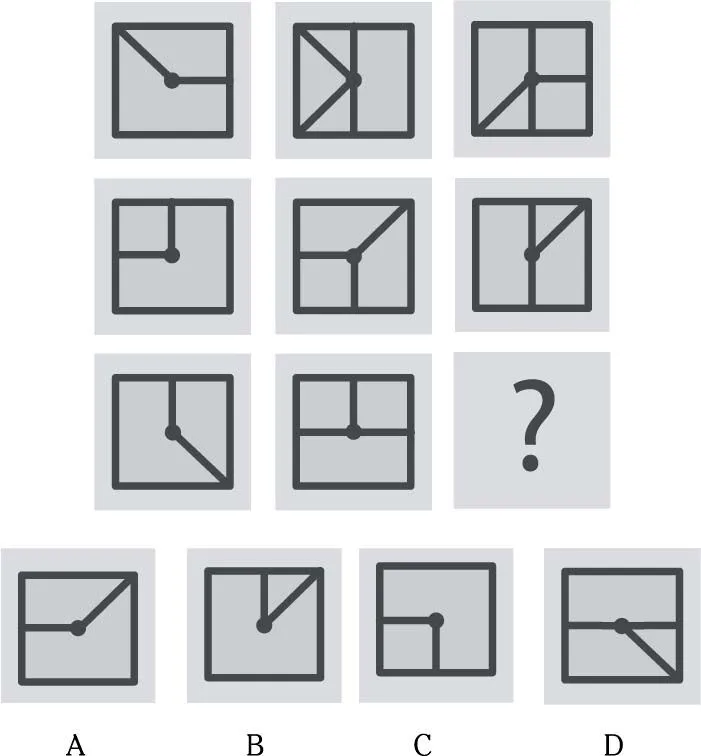 ?
?
Line and Dot Matrix: Which Square Completes It?
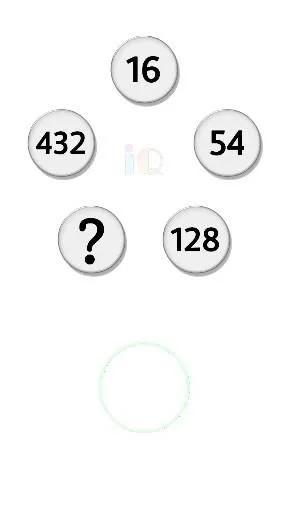 ?
?
Circle Number Puzzle: Find the Missing Value
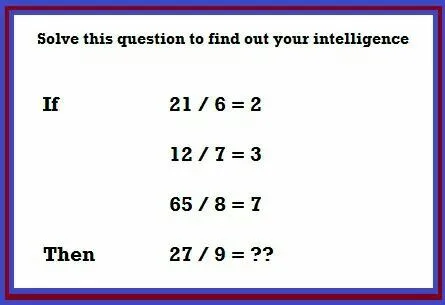 ?
?
Hidden Division Rule: Find the Missing Answer
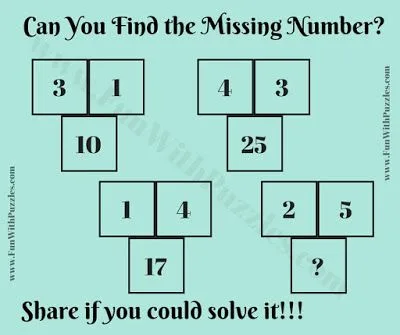 ?
?
T-Shape Box Puzzle: Find the Missing Sum
 ✓
✓
4x4 Number Grid: Find the Missing Number
Number Sequence Questions in IQ Tests
Number sequence questions require you to identify the mathematical relationship between consecutive terms and use it to predict the next value — or find a missing term within the sequence. They appear in virtually every major IQ and aptitude test, from Mensa to military officer selection to graduate recruitment assessments, because they efficiently measure numerical reasoning and the ability to extract rules from data.
Unlike arithmetic exercises, sequence questions rarely involve complex calculation. The numbers are chosen to make the rule apparent to someone who reasons carefully. The challenge is not the arithmetic itself but identifying which relationship — addition, multiplication, alternation, geometric growth — governs the sequence, often under time pressure.
Common Sequence Types
Arithmetic Sequences
Each term increases or decreases by a constant difference: 3, 7, 11, 15, ... (difference = 4). These are the most common entry-level sequences. To find the rule, subtract any term from the one that follows. If the difference is constant, you have an arithmetic sequence.
Geometric Sequences
Each term is multiplied by a constant ratio: 2, 6, 18, 54, ... (ratio = 3). Divide consecutive terms to find the ratio. Geometric sequences grow rapidly, so look for them when numbers increase faster than an arithmetic rule would suggest.
Alternating and Interleaved Sequences
Two separate sequences are interleaved: 1, 10, 3, 20, 5, 30, ... (odd positions: +2; even positions: +10). Identify these by checking whether every other term follows its own independent rule. Split the sequence into two sub-sequences and analyse each separately.
Multi-Operation and Fibonacci-Style
Each term is derived from the two or more preceding terms, or alternating operations are applied: +1, ×2, +1, ×2, ... The most difficult sequences combine multiple rules simultaneously. Work backwards from a known term if the forward rule is unclear.
Frequently Asked Questions
What is the best strategy for solving number sequences quickly?
Always start by finding the first difference (subtract consecutive terms). If the differences are constant, it's arithmetic. If the differences themselves form a sequence, it's a second-order pattern. If neither works, try ratios. This systematic approach eliminates trial-and-error and gets you to the rule in three steps or fewer.
Can a sequence have more than one valid rule?
Mathematically, infinitely many rules can fit any finite sequence. In practice, IQ questions are designed so that one rule is obviously simpler and more elegant than any alternative. If you find a rule that requires five operations where a two-step rule also works, the two-step rule is almost certainly the intended one.
How many terms do I need to confirm a rule?
A rule confirmed against three consecutive term-pairs is almost always reliable. If the sequence has five or more terms and your rule works for all transitions, proceed with confidence. Longer sequences give you more data to verify the rule before applying it to the missing position.
Are decimal or fractional sequences common on IQ tests?
Most standardised IQ test sequences use integers to keep the arithmetic clean. Fractions occasionally appear in harder items, typically as ratios (1/2, 1/4, 1/8). If you encounter what appears to be an untidy decimal, re-examine the sequence — you may be computing differences when ratios are the rule, or vice versa.