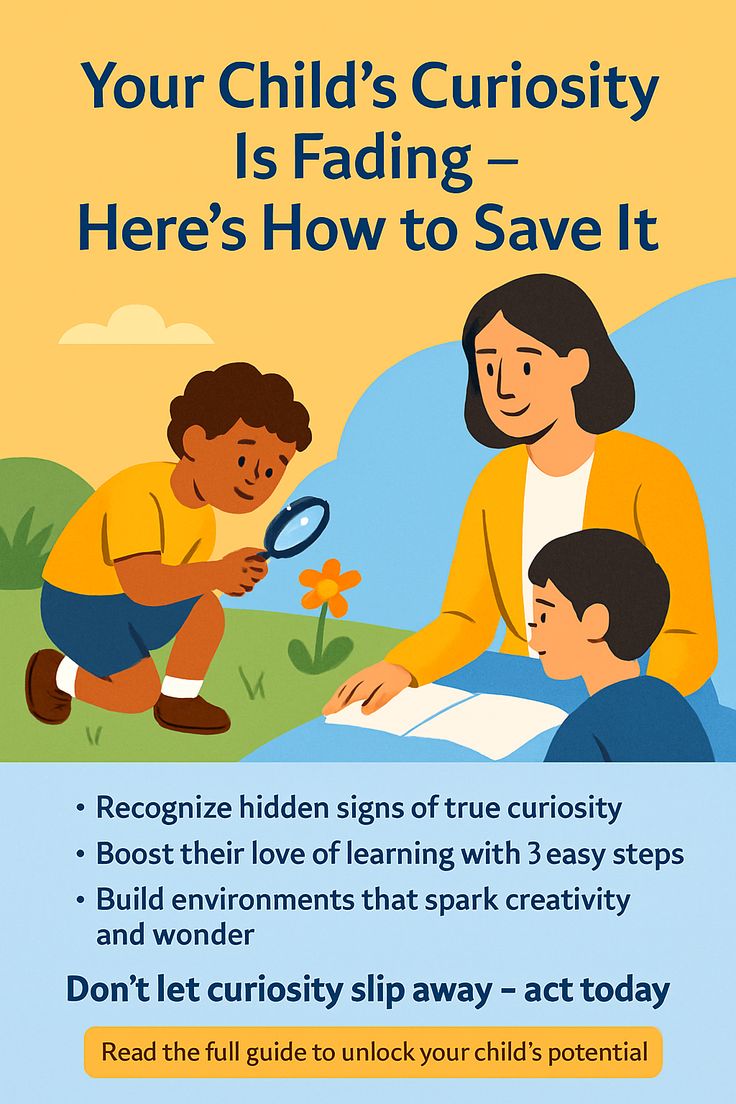
Introduction: Why Curiosity Is the Engine of Intelligence
Curiosity is far more than a personality quirk or a childhood phase. It is a fundamental cognitive drive that shapes how the brain builds knowledge, forms neural connections, and develops the reasoning abilities measured by IQ tests. Research increasingly shows that curiosity is not just correlated with intelligence - it actively drives cognitive development across the lifespan.
"Curiosity is as important as intelligence in predicting academic achievement. In fact, the combination of curiosity and conscientiousness compensates for lower IQ scores." - Sophie von Stumm, University of York, Perspectives on Psychological Science (2011)
This finding, from a landmark meta-analysis by von Stumm, Hell, and Chamorro-Premuzic (2011), challenged the assumption that cognitive ability alone determines intellectual achievement. Their analysis of over 200 studies found that intellectual curiosity predicted academic performance almost as strongly as IQ itself - and that the combination of high curiosity and high conscientiousness could compensate for lower cognitive ability.
In this article, we explore the science behind this relationship: what curiosity actually is (it has more dimensions than you might expect), how it changes the brain at a neurological level, and how you can harness it to enhance cognitive development. If you are curious about your current cognitive profile, you can start by taking our full IQ test to establish a baseline.
What Is Curiosity? Beyond the Simple Definition
Two Fundamental Types of Curiosity
Psychologists distinguish between two major forms of curiosity that drive learning and cognitive development:
Epistemic curiosity is the desire to acquire new knowledge and eliminate gaps in understanding. It is the force behind scientific inquiry, deep reading, and intellectual exploration. Berlyne (1954) further divided this into:
- Diversive curiosity: A broad desire for stimulation and novelty - exploring new topics, browsing, and seeking variety
- Specific curiosity: A focused drive to resolve a particular knowledge gap - the nagging question you cannot stop thinking about until you find the answer
Perceptual curiosity is triggered by novel or surprising sensory stimuli - the impulse to investigate an unusual sound or examine an unfamiliar object. While important for learning in early childhood, it is epistemic curiosity that most strongly drives adult cognitive development.
"Curiosity is not a single trait. It is a family of related but distinct motivational states that each play different roles in learning and cognitive growth." - Daniel Berlyne, Conflict, Arousal, and Curiosity (1960)
Kashdan's Five-Dimensional Model of Curiosity
Psychologist Todd Kashdan and colleagues at George Mason University developed the most comprehensive modern framework for understanding curiosity. Their Curiosity and Exploration Inventory-II (CEI-II) and subsequent Five-Dimensional Curiosity Scale (2018) identify distinct curiosity dimensions:
| Dimension | Description | Cognitive Impact |
|---|---|---|
| Joyous Exploration | Delight in discovering new information | Drives voluntary learning and knowledge acquisition |
| Deprivation Sensitivity | Discomfort with knowledge gaps; need to resolve uncertainty | Fuels deep, focused problem-solving |
| Stress Tolerance | Willingness to embrace anxiety of not knowing | Enables engagement with challenging cognitive tasks |
| Social Curiosity | Interest in how other people think and behave | Enhances theory of mind and social cognition |
| Thrill Seeking | Willingness to take physical and social risks for new experiences | Broadens experiential learning opportunities |
Kashdan's research (2018) found that these dimensions are not equally distributed. Some people score high on joyous exploration but low on stress tolerance - meaning they love learning but avoid difficult or anxiety-producing intellectual challenges. For optimal cognitive development, the combination of high joyous exploration and high deprivation sensitivity appears most beneficial.
"The people who grow the most intellectually are those who can tolerate - even embrace - the discomfort of not knowing. They sit with uncertainty long enough to develop deep understanding." - Todd Kashdan, Curious? Discover the Missing Ingredient to a Fulfilling Life (2009)
Need for Cognition: The Intellectual Hunger That Shapes IQ
What Is Need for Cognition?
The need for cognition (NFC) is a psychological construct developed by John Cacioppo and Richard Petty (1982) that measures an individual's tendency to engage in and enjoy effortful thinking. People high in NFC do not just tolerate complex thinking - they actively seek it out.
NFC is measured through statements like:
- "I prefer complex to simple problems"
- "I find satisfaction in deliberating hard and for long hours"
- "The notion of thinking abstractly is appealing to me"
How NFC Relates to IQ and Cognitive Development
The relationship between NFC and intelligence is bidirectional and powerful:
| Finding | Study | Key Result |
|---|---|---|
| NFC predicts academic achievement beyond IQ | von Stumm et al., 2011 | Intellectual curiosity explained ~10% additional variance in grades beyond IQ |
| NFC correlates with crystallized intelligence | Fleischhauer et al., 2010 | r = 0.30-0.40 correlation with Gc (knowledge-based intelligence) |
| NFC predicts knowledge acquisition over time | Cacioppo et al., 1996 | High-NFC individuals accumulate more knowledge even at equal IQ levels |
| NFC moderates the Flynn Effect | Pietschnig & Voracek, 2015 | Populations with greater access to intellectual stimulation show larger IQ gains |
Real-world example: Consider two students with identical IQ scores of 110. Student A has high NFC and spends free time reading challenging books, exploring new subjects, and debating ideas. Student B has low NFC and prefers passive entertainment. After four years of university, Student A will likely have developed significantly greater crystallized intelligence (Gc) - not because of innate ability, but because curiosity drove voluntary cognitive engagement that compounded over time.
"People who are high in need for cognition are not necessarily smarter. But they are more likely to become smarter over time because they voluntarily expose themselves to challenging cognitive activities." - John Cacioppo, Loneliness: Human Nature and the Need for Social Connection (2008)
The Neuroscience of Curiosity: How It Physically Changes the Brain
The Dopamine-Curiosity-Learning Circuit
When curiosity is activated, the brain undergoes measurable changes that directly enhance learning and memory:
- Activation of the mesolimbic dopamine system: The ventral tegmental area (VTA) and nucleus accumbens - the brain's reward circuitry - fire when a person encounters an information gap they want to close (Gruber et al., 2014)
- Enhanced hippocampal activity: The hippocampus, critical for memory formation, shows increased activity when information is learned in a curious state - even for incidental information that was not the target of curiosity
- Strengthened memory consolidation: Gruber, Gelman, and Ranganath (2014) at UC Davis demonstrated that participants remembered not only the answers to questions they were curious about but also unrelated information (random faces) presented during high-curiosity states - with effects persisting 24 hours later
The Curiosity State Enhances All Learning
This finding from Gruber et al. (2014) is remarkable: curiosity does not just help you remember what you are curious about. It creates a brain state that enhances learning across the board. This has profound implications for education and cognitive development.
| Brain Region | Role in Curiosity | Effect on Cognition |
|---|---|---|
| Ventral Tegmental Area (VTA) | Releases dopamine during information gaps | Increases motivation to learn |
| Nucleus Accumbens | Processes reward signals from new information | Reinforces exploratory behavior |
| Hippocampus | Encodes memories during curious states | Enhances memory formation for all information |
| Prefrontal Cortex | Directs attention and evaluation | Improves executive function and reasoning |
| Anterior Cingulate Cortex | Monitors knowledge gaps and uncertainty | Triggers focused curiosity responses |
"Curiosity may put the brain in a state that allows it to learn and retain any kind of information, like a vortex that sucks in what you are motivated to learn, and also everything around it." - Matthias Gruber, UC Davis, Neuron (2014)
Curiosity Across the Lifespan: Developmental Trajectories
Childhood: The Curiosity Explosion (Ages 0-12)
Young children ask an average of 107 questions per hour during peak curiosity phases (Chouinard, 2007). This is not random noise - it is the brain's primary mechanism for building cognitive architecture. Children who are encouraged to ask questions and explore develop:
- Stronger executive function skills
- Better verbal reasoning abilities
- Greater cognitive flexibility (the ability to shift between different thinking strategies)
Real-world example: The television program Sesame Street, designed based on educational psychology research, leveraged children's natural curiosity by presenting information through novel, attention-grabbing formats. Studies showed that regular viewers demonstrated higher vocabulary, numeracy, and problem-solving skills - effects that persisted into high school (Anderson et al., 2001).
Adolescence: Curiosity Meets Abstract Thinking (Ages 13-18)
During adolescence, curiosity shifts from concrete exploration to abstract and social domains. Teenagers who maintain high epistemic curiosity during this period show:
- Superior development of formal operational thinking (Piaget's highest cognitive stage)
- Stronger critical thinking and argumentation skills
- Better academic outcomes independent of IQ (von Stumm et al., 2011)
Adulthood: Use It or Lose It (Ages 18+)
In adulthood, curiosity becomes increasingly voluntary - the environment no longer forces exploration the way school does. Adults who maintain high curiosity show:
- Slower cognitive decline in aging: A Rush University study (Wilson et al., 2007) followed 700+ older adults for 5 years and found that those with high cognitive activity (driven by curiosity) had a 47% lower risk of developing Alzheimer's disease
- Greater crystallized intelligence growth: Curious adults continue accumulating knowledge well into their 60s and 70s
- Better adaptation to technological change: Curiosity predicts willingness to learn new systems and skills
| Life Stage | Primary Curiosity Type | Cognitive Benefit | Key Risk |
|---|---|---|---|
| Early Childhood (0-6) | Perceptual + Diversive | Foundation of cognitive architecture | Suppression by rigid environments |
| Middle Childhood (6-12) | Specific epistemic | Knowledge acquisition and reasoning skills | Loss of intrinsic motivation through excessive testing |
| Adolescence (13-18) | Abstract epistemic + Social | Critical thinking and identity formation | Peer pressure reducing intellectual engagement |
| Young Adulthood (18-35) | Domain-specific epistemic | Professional expertise and crystallized intelligence | Career demands crowding out exploration |
| Middle-Late Adulthood (35+) | Maintained epistemic | Cognitive maintenance and continued growth | Comfort zone stagnation |
Curiosity and IQ Test Performance: The Indirect Connection
Curiosity does not directly raise your IQ score the way studying vocabulary increases your verbal comprehension score. Instead, curiosity operates through several indirect pathways that compound over time:
Pathway 1: Knowledge Accumulation (Gc)
Curious individuals voluntarily read more, explore more topics, and engage with more complex material. Over years, this produces measurably higher crystallized intelligence - the knowledge-based component of IQ.
Pathway 2: Enhanced Working Memory Engagement
When curiosity is activated, working memory operates more efficiently (Gruber et al., 2014). Since working memory is a direct component of IQ test scores, individuals in curious states may perform better on memory-intensive subtests.
Pathway 3: Greater Persistence on Difficult Items
IQ tests include items that increase in difficulty. Curious test-takers are more likely to persist on hard items rather than guessing and moving on - and since harder items are worth more on most IQ scoring systems, this persistence translates to higher scores.
Pathway 4: Transfer of Problem-Solving Strategies
Curious individuals encounter a wider variety of problems in daily life, developing a larger repertoire of problem-solving strategies that transfer to novel IQ test items.
For those interested in evaluating how their cognitive abilities manifest, our full IQ test measures reasoning, memory, and processing speed across multiple domains, while the practice IQ test offers a lower-stakes opportunity to explore your cognitive profile.
Evidence-Based Strategies to Cultivate Curiosity
Strategy 1: Create Information Gaps Deliberately
Curiosity researcher George Loewenstein (1994) proposed the information gap theory: curiosity arises when we become aware of a gap between what we know and what we want to know. You can trigger this deliberately:
- Read the introduction and conclusion of a book chapter, then go back to fill in the middle
- Look at the answer to a puzzle before attempting it, creating a gap between the solution and your understanding of how to get there
- Start a new subject by reading about its most surprising findings first
Strategy 2: Practice "Intellectual Stretching"
Kashdan's research suggests that comfort with not knowing is essential for curiosity-driven growth. Deliberately engage with material slightly beyond your current level:
- Take a course in a subject where you have no background
- Read research papers in unfamiliar fields (even if you only understand 60-70%)
- Engage in discussions where you are the least knowledgeable person in the room
Strategy 3: Cultivate Need for Cognition
NFC can be strengthened through deliberate practice:
- Replace passive entertainment with active engagement (e.g., documentaries with note-taking instead of passive streaming)
- Set a daily "curiosity question" and spend 15-20 minutes researching it
- Engage in cognitively demanding hobbies: chess, programming, learning a language, or mathematical puzzles
Strategy 4: Use Cognitive Assessments as Curiosity Triggers
Taking IQ-style tests can itself stimulate curiosity about your own cognitive processes. Reviewing which types of questions you find easy versus difficult creates natural information gaps that drive learning:
- Start with the quick IQ test to identify your strengths and weaknesses
- Use the practice IQ test to explore unfamiliar question types
- Challenge yourself with the timed IQ test and analyze which time-pressured tasks feel most natural
Strategy 5: Protect Curiosity from Common Killers
Research identifies several curiosity-suppressing factors to avoid:
- Excessive extrinsic rewards: Rewarding curiosity with grades or prizes can paradoxically reduce intrinsic motivation (Deci & Ryan, 2000)
- Fear of looking ignorant: Social pressure to "already know" things suppresses question-asking
- Information overload: Constant passive information consumption (social media scrolling) satisfies diversive curiosity without developing deeper epistemic curiosity
- Routine without variation: Unchanging environments provide no novelty to trigger curiosity responses
"The enemy of curiosity is not ignorance but the illusion of knowledge - the false sense that we already understand something well enough." - Daniel Boorstin, Pulitzer Prize-winning historian
Common Misconceptions About Curiosity and Intelligence
Misconception 1: "Curiosity Equals Intelligence"
Curiosity and intelligence are correlated but distinct constructs. Curiosity is a motivational trait that drives cognitive engagement; intelligence is the capacity to reason and solve problems. A highly curious person with average IQ will learn more over time than an incurious person with high IQ - but the curious person does not automatically have higher cognitive capacity.
Misconception 2: "You Are Either Curious or You Are Not"
Kashdan's research demonstrates that curiosity has multiple dimensions that can be independently developed. Someone may have high joyous exploration but low stress tolerance. Curiosity is also state-dependent - you can be more or less curious depending on context, mood, sleep, and environment.
Misconception 3: "Curiosity Is Only Important for Children"
The Rush University longitudinal study (Wilson et al., 2007) found that cognitive curiosity in older adults was associated with a 47% reduction in Alzheimer's risk. Curiosity remains a critical driver of neuroplasticity and cognitive maintenance throughout the entire lifespan.
Misconception 4: "Internet Access Has Made Everyone More Curious"
Paradoxically, easy access to information may reduce deep curiosity. When answers are one search away, the sustained information gap that drives specific epistemic curiosity closes too quickly for deep learning to occur. Research suggests that people who can easily look things up often develop shallower understanding than those who must work harder to find answers (Sparrow et al., 2011).
Conclusion: Curiosity as a Cognitive Multiplier
Curiosity is not merely a pleasant personality trait - it is a cognitive multiplier that amplifies the impact of whatever intellectual capacity you possess. The research is clear: curious individuals learn more, remember better, solve problems more creatively, and maintain cognitive function longer than their less curious peers, even when controlling for IQ.
The practical message is equally clear. You can cultivate curiosity through deliberate practices: creating information gaps, embracing intellectual discomfort, strengthening your need for cognition, and protecting your curiosity from the common killers of routine and information overload.
To explore your current cognitive abilities and create a baseline for curiosity-driven growth, consider our full IQ test or start with the quick IQ test for a rapid assessment. The practice IQ test is an excellent tool for building familiarity with cognitive challenges, while the timed IQ test tests your processing under pressure.
"The important thing is not to stop questioning. Curiosity has its own reason for existing." - Albert Einstein, as quoted in LIFE Magazine (1955)
References
- Anderson, D. R., Huston, A. C., Schmitt, K. L., Linebarger, D. L., & Wright, J. C. (2001). Early childhood television viewing and adolescent behavior. Monographs of the Society for Research in Child Development, 66(1), 1-147.
- Berlyne, D. E. (1954). A theory of human curiosity. British Journal of Psychology, 45(3), 180-191.
- Berlyne, D. E. (1960). Conflict, Arousal, and Curiosity. McGraw-Hill.
- Cacioppo, J. T., & Petty, R. E. (1982). The need for cognition. Journal of Personality and Social Psychology, 42(1), 116-131.
- Cacioppo, J. T., Petty, R. E., Feinstein, J. A., & Jarvis, W. B. G. (1996). Dispositional differences in cognitive motivation. Psychological Bulletin, 119(2), 197-253.
- Chouinard, M. M. (2007). Children's questions: A mechanism for cognitive development. Monographs of the Society for Research in Child Development, 72(1), 1-112.
- Gruber, M. J., Gelman, B. D., & Ranganath, C. (2014). States of curiosity modulate hippocampus-dependent learning via the dopaminergic circuit. Neuron, 84(2), 486-496.
- Kashdan, T. B. (2009). Curious? Discover the Missing Ingredient to a Fulfilling Life. William Morrow.
- Kashdan, T. B., Stiksma, M. C., Disabato, D. J., McKnight, P. E., Bekier, J., Kaji, J., & Lazarus, R. (2018). The five-dimensional curiosity scale. Journal of Research in Personality, 73, 130-149.
- Loewenstein, G. (1994). The psychology of curiosity: A review and reinterpretation. Psychological Bulletin, 116(1), 75-98.
- Sparrow, B., Liu, J., & Wegner, D. M. (2011). Google effects on memory: Cognitive consequences of having information at our fingertips. Science, 333(6043), 776-778.
- von Stumm, S., Hell, B., & Chamorro-Premuzic, T. (2011). The hungry mind: Intellectual curiosity is the third pillar of academic performance. Perspectives on Psychological Science, 6(6), 574-588.
- Wilson, R. S., Scherr, P. A., Schneider, J. A., Tang, Y., & Bennett, D. A. (2007). Relation of cognitive activity to risk of developing Alzheimer disease. Neurology, 69(20), 1911-1920.
Frequently Asked Questions
How can curiosity improve performance on IQ tests?
Curiosity enhances IQ test performance through several mechanisms. According to Gruber et al. (2014), curiosity activates the brain's dopaminergic reward system, which enhances hippocampal memory encoding - meaning you learn and recall information more effectively when in a curious state.
Curious test-takers also show greater persistence on difficult items (which carry more weight in scoring) and bring a broader repertoire of problem-solving strategies from their wider exploration habits. While curiosity does not directly raise your IQ ceiling, it helps you perform closer to your *actual* cognitive potential.
Can curiosity be developed in adults to boost cognitive abilities?
Yes, and the evidence is strong. Kashdan's Five-Dimensional Curiosity Scale (2018) demonstrates that curiosity is not a single fixed trait but a collection of trainable dispositions. Practical approaches include: setting a daily "curiosity question" and researching it for 15-20 minutes, deliberately engaging with unfamiliar subjects, and replacing passive information consumption with active learning.
The Rush University longitudinal study found that adults who maintained high cognitive engagement had a 47% lower risk of Alzheimer's - suggesting that curiosity-driven learning physically protects the brain over time.
What is the difference between curiosity and intelligence?
Curiosity is a *motivational trait* - the drive to seek new information and resolve uncertainty. Intelligence is a *cognitive capacity* - the ability to reason, process information, and solve problems. Von Stumm et al. (2011) found that intellectual curiosity predicts academic achievement almost as strongly as IQ (r = 0.22 vs. r = 0.25), and that the two constructs are *partially independent*.
Critically, high curiosity can compensate for lower IQ: a person with average IQ but high need for cognition will typically accumulate more knowledge over time than someone with high IQ but low curiosity.
How does curiosity affect memory and learning?
The UC Davis study by Gruber et al. (2014) provided the most compelling evidence: when participants were in a high-curiosity state, they showed enhanced hippocampal activity and remembered not only the information they were curious about but also *unrelated* information presented during that state - effects that persisted for at least 24 hours.
This suggests curiosity creates a generalized brain state that enhances all learning, not just learning about the specific topic of curiosity. Practically, this means studying in a curious, engaged mindset produces better retention than studying in a passive or unmotivated state.
Are there specific IQ tests that measure curiosity directly?
Standard IQ tests (WAIS-IV, Stanford-Binet 5, Raven's Matrices) do not measure curiosity directly - they assess cognitive capacity. Curiosity is measured through specialized instruments: Kashdan's Five-Dimensional Curiosity Scale (2018), the Curiosity and Exploration Inventory-II (CEI-II), and Cacioppo's Need for Cognition Scale (1982).
However, the *effects* of curiosity on cognition are visible in IQ test performance - particularly in crystallized intelligence subtests (vocabulary, general knowledge) where lifelong curiosity produces measurably higher scores.
How can I use curiosity to improve my cognitive skills daily?
Three evidence-based daily practices: (1) Create deliberate information gaps by reading about a topic's most interesting conclusion before understanding the reasoning, then working backward (Loewenstein, 1994).
(2) Spend 20 minutes on a cognitively demanding activity that is slightly beyond your comfort zone - a challenging puzzle, an unfamiliar subject, or a practice IQ test. (3) Keep a "curiosity journal" logging questions that arise during the day and spending time researching one each evening. Kashdan's research suggests that the key is *consistency* - daily curiosity practice produces compound cognitive benefits over months and years.
Related Articles


Curious about your IQ?
You can take a free online IQ test and get instant results.
Take IQ Test