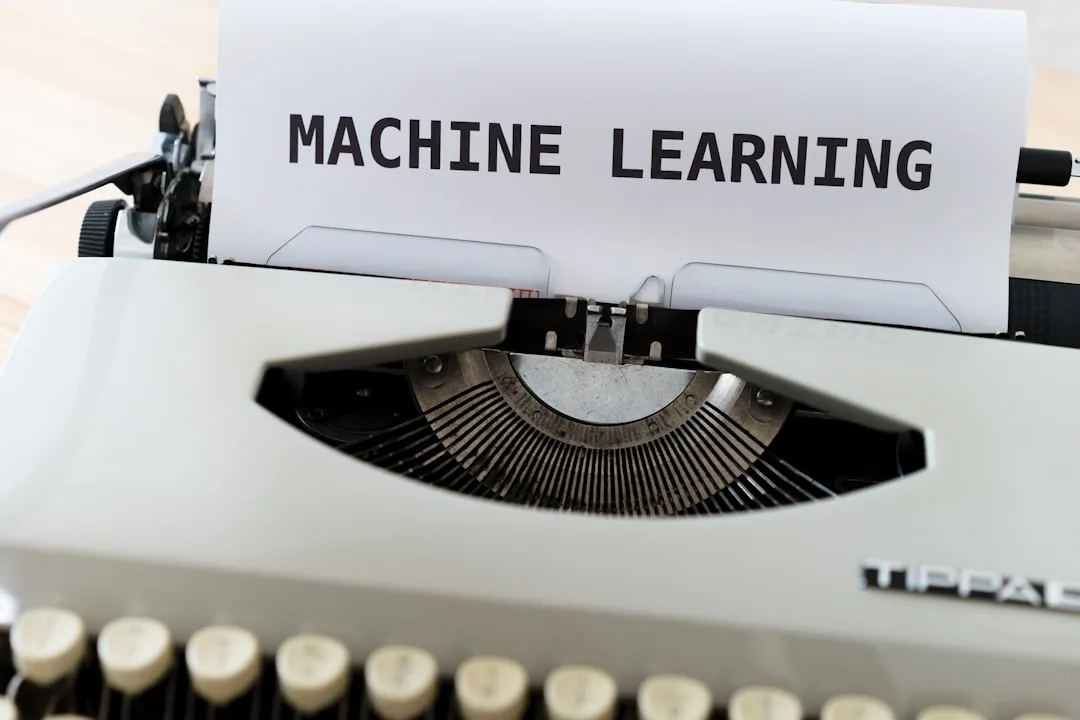
Introduction: A New Era for Intelligence Assessment
The way we measure human intelligence is undergoing its most significant transformation since Alfred Binet created the first IQ test in 1905. Artificial intelligence and machine learning are not simply digitizing old paper-and-pencil tests - they are fundamentally rethinking what we measure, how we measure it, and who gets access to high-quality cognitive assessment.
Three technologies are driving this revolution:
- Computerized Adaptive Testing (CAT) - tests that adjust difficulty in real time based on your answers
- Natural Language Processing (NLP) - AI that can score open-ended verbal responses with human-level accuracy
- Algorithmic bias detection - machine learning systems that identify and correct unfair test items before they affect scores
"We are moving from an era where tests were designed for populations to one where tests are designed for individuals." - David Weiss, University of Minnesota, pioneer of computerized adaptive testing
This article explores how each of these technologies is reshaping IQ testing, the benefits they deliver, and the challenges they create.
Computerized Adaptive Testing: The End of One-Size-Fits-All
Traditional IQ tests present the same questions to every test-taker regardless of ability. This is inherently inefficient - easy items waste the time of high-ability individuals, while difficult items frustrate and discourage those at lower levels. Computerized Adaptive Testing (CAT) solves this problem by selecting each question based on the test-taker's performance on previous items.
How CAT Works
The core of CAT relies on Item Response Theory (IRT), a mathematical framework that models the probability of a correct response as a function of both the item's difficulty and the person's ability level. After each response, the algorithm:
- Updates the estimate of the test-taker's ability using Bayesian probability
- Selects the next item that provides maximum information at the current ability estimate
- Terminates when the ability estimate reaches a predetermined level of precision
"Adaptive testing can achieve the same measurement precision as a conventional test with 50-70% fewer items." - Howard Wainer, National Board of Medical Examiners, Computerized Adaptive Testing: A Primer (2000)
CAT vs. Traditional Testing: Head-to-Head Comparison
| Feature | Traditional Fixed-Form Test | Computerized Adaptive Test |
|---|---|---|
| Number of items | 40-80 (fixed) | 15-35 (variable) |
| Test duration | 60-120 minutes | 20-45 minutes |
| Measurement precision | Uniform (often suboptimal at extremes) | Optimized for each individual |
| Item exposure | All items seen by all test-takers | Items selected from large bank |
| Test security | Lower (fixed forms can be memorized) | Higher (each test is unique) |
| Floor/ceiling effects | Common at ability extremes | Minimized |
| Engagement level | Varies (too easy or too hard) | Consistently challenging |
| Real-time scoring | Not possible | Score available immediately |
Real-World CAT Implementations
CAT is not theoretical - it is already deployed at massive scale:
- GRE (Graduate Record Examination): Switched to adaptive format in 2011, serving over 700,000 test-takers annually. Each section adapts based on performance in the previous section.
- GMAT (Graduate Management Admission Test): Uses item-level adaptation, with each question selected based on all prior responses.
- MAP Growth (NWEA): Used by over 9,500 school districts in the United States to adaptively assess K-12 students three times per year.
- Mensa online admissions tests: Several national Mensa organizations now use adaptive screening instruments.
Try our practice test to experience how adaptive questioning enhances the assessment process.
NLP-Based Scoring: Teaching Machines to Evaluate Thought
One of the most significant limitations of traditional IQ tests is their reliance on multiple-choice formats for efficiency. Rich cognitive abilities like verbal reasoning, creative problem-solving, and conceptual understanding are difficult to assess through forced-choice items. Natural Language Processing (NLP) is changing this.
How NLP Scoring Works in Cognitive Assessment
Modern NLP systems use large language models and transformer architectures to evaluate open-ended responses. In an IQ testing context, this enables:
- Vocabulary assessment: Instead of "which word means X?" (multiple choice), the test can ask "define X in your own words" and the AI evaluates the depth and accuracy of the definition
- Verbal reasoning: Test-takers can explain their reasoning process, and NLP scores both the conclusion and the quality of the logical path
- Similarity judgments: "How are a poem and a statue alike?" - NLP can evaluate the abstraction level and conceptual sophistication of the response
"Natural language processing allows us to assess the richness of thought, not just whether someone picked the right bubble." - Randy Engle, Georgia Institute of Technology, working memory researcher
NLP Scoring Accuracy Compared to Human Raters
| Assessment Type | NLP-Human Agreement | Human-Human Agreement | Status |
|---|---|---|---|
| Vocabulary definitions | r = 0.88-0.93 | r = 0.90-0.95 | Near parity |
| Essay scoring (GRE) | r = 0.92 | r = 0.87 | NLP exceeds human consistency |
| Verbal reasoning explanations | r = 0.78-0.85 | r = 0.85-0.90 | Approaching parity |
| Creative responses | r = 0.65-0.75 | r = 0.70-0.80 | Still developing |
Sources: Attali & Burstein (2006), Shermis & Hamner (2012), ETS research reports
The implications are substantial. NLP scoring enables richer assessment of verbal intelligence without the bottleneck of human raters, making comprehensive testing scalable for online platforms and large populations.
AI Bias Detection: Building Fairer Tests
Perhaps the most socially important application of AI in IQ testing is bias detection and mitigation. Traditional methods for identifying biased test items - primarily Differential Item Functioning (DIF) analysis - require large sample sizes and can only detect bias along pre-specified group dimensions (e.g., race, sex). Machine learning approaches offer more powerful alternatives.
How AI Detects Bias in Test Items
- Automated DIF analysis: ML algorithms can detect differential item functioning across multiple demographic groups simultaneously, flagging items where equally able individuals from different groups have different probabilities of success
- Text analysis: NLP systems scan item content for culturally specific references, idioms, or knowledge that might advantage particular groups
- Response pattern analysis: Deep learning models identify unexpected correlations between demographic variables and item responses that traditional statistics might miss
- Fairness-aware item calibration: Algorithms can optimize item parameters while constraining for equal measurement across groups
"Machine learning does not eliminate bias - but it gives us unprecedented tools to find it, measure it, and reduce it." - Jill-Jenn Vie, Inria, researcher in fair machine learning for educational assessment
Bias Detection Methods Compared
| Method | Traditional Approach | AI/ML Approach |
|---|---|---|
| DIF detection | Mantel-Haenszel chi-square; logistic regression | Gradient-boosted models; deep IRT |
| Content review | Human expert panels (expensive, slow) | NLP content scanning (fast, scalable) |
| Sample size needed | 500+ per group | Effective with smaller samples via transfer learning |
| Groups analyzed | Usually 2-3 at a time | Multiple groups simultaneously |
| Speed | Weeks to months | Hours to days |
| Intersectional bias | Very difficult to detect | Feasible with ML approaches |
Real-World Impact
- ETS (Educational Testing Service) uses automated systems to flag potentially biased GRE and TOEFL items before they enter operational test forms
- Pearson employs NLP-based content analysis to screen assessment items for cultural sensitivity
- Duolingo English Test uses AI to continuously monitor item fairness across its global test-taking population
Multimodal Assessment: Beyond Right and Wrong
AI enables IQ tests to capture process data - information about how someone solves a problem, not just whether they get the right answer. This represents a fundamental shift from product-based to process-based assessment.
What AI Can Measure Beyond Accuracy
| Data Source | What It Reveals | Traditional Test Equivalent |
|---|---|---|
| Response time per item | Processing speed, strategy shifts | Timed subtests (crude measure) |
| Mouse/touch movement patterns | Decision confidence, exploration vs. exploitation | Not measurable |
| Pause patterns | Working memory engagement, difficulty transitions | Not measurable |
| Answer change behavior | Metacognition, self-monitoring | Not measurable |
| Eye tracking | Attention allocation, reading strategies | Not measurable |
| Keystroke dynamics | Motor planning, cognitive-motor integration | Not measurable |
"The most information-rich moment in a test is not the answer - it is the journey to the answer." - Alina von Davier, Duolingo, former VP of AI and Assessment Research at ACTNext
Practical Example: Response Time Modeling
Consider two test-takers who both correctly answer a matrix reasoning item:
- Person A responds correctly in 8 seconds - suggesting the pattern was immediately obvious, indicating strong fluid reasoning
- Person B responds correctly in 55 seconds - suggesting effortful processing, possibly using a different (slower but effective) strategy
Traditional scoring treats these identically. AI-enhanced scoring can differentiate between automated and effortful correct responses, providing a richer picture of cognitive ability.
You can explore these concepts firsthand by taking our timed IQ test, which incorporates time-based metrics to assess cognitive agility.
Challenges and Ethical Considerations
The integration of AI into IQ testing raises significant concerns that the field must address responsibly.
Data Privacy
AI-powered tests collect far more data than traditional assessments - response times, behavioral patterns, and potentially biometric information. Key concerns include:
- Consent: Test-takers may not fully understand what data is collected
- Storage and access: Who has access to detailed cognitive profiles?
- Secondary use: Could cognitive data be used for purposes beyond the original assessment?
Algorithmic Transparency
- Black-box problem: Deep learning models can be highly accurate but difficult to interpret. A test-taker (or clinician) may not understand why a particular score was assigned
- Validation standards: The APA's Standards for Educational and Psychological Testing require evidence of validity - how should this apply to AI-generated scores?
- Regulatory landscape: The EU AI Act classifies educational and employment-related AI as "high-risk," requiring transparency and human oversight
The Risk of Automation Bias
"The danger is not that AI will be wrong - it is that we will trust it too uncritically when it is." - Cathy O'Neil, mathematician and author of Weapons of Math Destruction (2016)
When AI systems provide confident-looking scores, there is a risk that clinicians, educators, and employers will treat them as more definitive than warranted. Human judgment and contextual understanding remain essential.
Ethical Considerations Summary
| Concern | Current Status | Mitigation Strategy |
|---|---|---|
| Data privacy | Inconsistent regulations | GDPR-compliant frameworks; minimal data collection |
| Algorithmic bias | Active area of research | Fairness constraints in model training; continuous monitoring |
| Transparency | Often lacking | Explainable AI (XAI) methods; clear documentation |
| Access equity | Digital divide persists | Offline-capable assessments; mobile-first design |
| Over-reliance on AI | Growing concern | Human-in-the-loop scoring for high-stakes decisions |
Our full IQ test is designed with these principles in mind, combining adaptive technology with ethical testing practices.
The Future: What IQ Testing Will Look Like by 2030
Based on current research trajectories and technology development, several trends are likely to shape intelligence assessment in the coming years.
Near-Term Developments (2025-2027)
- Widespread CAT adoption: Most major cognitive assessments will move to adaptive formats
- NLP-scored verbal subtests: Open-ended verbal items will become standard in online IQ tests
- Real-time norming: AI will continuously update normative data rather than relying on re-norming every 10-15 years
Medium-Term Developments (2027-2030)
- Continuous assessment: Instead of single-point-in-time testing, AI will track cognitive performance across multiple sessions and contexts
- VR-based assessment: Virtual reality environments will present ecologically valid problems (e.g., navigating a virtual city to assess spatial intelligence)
- Multimodal integration: Combining behavioral, physiological, and performance data for holistic cognitive profiles
Long-Term Questions
- Will AI make IQ testing too precise, creating pressure for micro-optimization?
- How will societies handle the democratization of cognitive assessment - when anyone can get a detailed cognitive profile?
- Could AI-powered cognitive training, informed by precise assessment, genuinely raise intelligence?
"The future of assessment is not a better test - it is a better understanding of the person taking the test." - Robert Mislevy, University of Maryland, assessment design theorist
If you are interested in exploring how modern assessment approaches evaluate your cognitive abilities, consider starting with our practice test or quick IQ assessment.
Conclusion: Enhancement, Not Replacement
The integration of AI and machine learning into IQ testing represents the most significant advance in cognitive assessment since the move from individual to group testing in World War I. These technologies enable:
- More efficient testing through computerized adaptive algorithms
- Richer assessment of verbal and reasoning abilities through NLP scoring
- Fairer measurement through algorithmic bias detection and mitigation
- Deeper insights through multimodal process data analysis
However, AI is enhancing rather than replacing human intelligence assessment. The most effective approach combines AI's computational power with human clinical judgment, contextual understanding, and ethical oversight.
"Technology should serve human understanding, not substitute for it." - Alan Kaufman, creator of the Kaufman Assessment Battery for Children
To explore your intellectual abilities with modern assessment tools, you can take our full IQ test or try a quick IQ assessment. For practice with diverse cognitive challenges, our practice test and timed IQ test provide engaging ways to test your skills.
References
- Attali, Y., & Burstein, J. (2006). Automated essay scoring with e-rater V.2. Journal of Technology, Learning, and Assessment, 4(3).
- Embretson, S. E., & Reise, S. P. (2000). Item Response Theory for Psychologists. Lawrence Erlbaum Associates.
- Lord, F. M. (1980). Applications of Item Response Theory to Practical Testing Problems. Routledge.
- Mislevy, R. J., Almond, R. G., & Lukas, J. F. (2003). A brief introduction to evidence-centered design. ETS Research Report Series, 2003(1).
- O'Neil, C. (2016). Weapons of Math Destruction: How Big Data Increases Inequality and Threatens Democracy. Crown.
- Shermis, M. D., & Hamner, B. (2012). Contrasting state-of-the-art automated scoring of essays. In Handbook of Automated Essay Evaluation. Routledge.
- van der Linden, W. J., & Glas, C. A. W. (Eds.). (2010). Elements of Adaptive Testing. Springer.
- Vie, J.-J., & Kashima, H. (2019). Knowledge tracing machines: Factorization machines for knowledge tracing. Proceedings of the AAAI Conference on Artificial Intelligence, 33, 750-757.
- von Davier, A. A. (2017). Computational psychometrics in support of collaborative educational assessments. Journal of Educational Measurement, 54(1), 3-11.
- Wainer, H. (2000). Computerized Adaptive Testing: A Primer (2nd ed.). Lawrence Erlbaum Associates.
- Weiss, D. J. (1982). Improving measurement quality and efficiency with adaptive testing. Applied Psychological Measurement, 6(4), 473-492.
- Zenisky, A. L., & Hambleton, R. K. (2012). Detection of test fraud using Erasure Analysis. In Handbook of Test Security. Routledge.
Frequently Asked Questions
How does AI improve the fairness of IQ tests?
AI improves fairness through multiple mechanisms. Automated DIF (Differential Item Functioning) analysis uses machine learning to detect items where equally able individuals from different demographic groups perform differently - a signal of potential bias. NLP-based content scanning reviews item text for culturally specific references that might advantage certain groups.
Research by Jill-Jenn Vie at Inria (2019) shows that fairness-aware algorithms can optimize test measurement while constraining for equal accuracy across groups. However, AI cannot eliminate all bias - it requires diverse training data and human oversight to function effectively.
Can AI IQ tests replace traditional IQ tests entirely?
Not yet, and likely not for high-stakes clinical decisions in the near term. AI-enhanced tests excel at efficient screening, large-scale assessment, and providing detailed cognitive profiles. However, traditional individually-administered tests (like the WAIS-IV or Stanford-Binet 5) offer clinical observations - noting anxiety, motivation, attention lapses, and behavioral cues - that AI currently cannot replicate.
The future likely involves hybrid models: AI-powered initial assessment followed by human-administered evaluation when clinically warranted.
What are the privacy concerns with AI-powered IQ testing?
AI-powered tests collect substantially more data than traditional assessments: response times, pause patterns, answer changes, and potentially biometric data. Key risks include unauthorized secondary use of cognitive profiles (e.g., by employers or insurers), data breaches exposing sensitive cognitive information, and lack of informed consent about what data is collected.
The EU's GDPR and the EU AI Act (which classifies educational AI as "high-risk") provide regulatory frameworks, but enforcement varies globally. Look for platforms that specify data retention policies and allow deletion of test data.
How can adaptive IQ tests benefit educational settings?
Adaptive tests provide several educational advantages backed by research. The NWEA MAP Growth assessment, used in over 9,500 U.S. school districts, demonstrates that CAT can accurately measure student growth across three annual administrations with tests 40-60% shorter than fixed-form alternatives.
By precisely identifying each student's ability level, adaptive tests enable educators to set appropriate learning targets, identify students needing intervention, and track growth over time - all without the ceiling and floor effects that plague grade-level tests.
Are AI-driven IQ tests accessible to everyone?
Accessibility remains a significant challenge. While AI-powered online tests reduce geographic barriers, they require reliable internet, appropriate devices, and digital literacy. According to the International Telecommunication Union, approximately 2.6 billion people globally still lack internet access. Additionally, adaptive algorithms must be validated across diverse populations to ensure accuracy.
Leading test developers are addressing this through mobile-first design, offline-capable assessments, and multilingual NLP models, but equitable global access remains a work in progress.
What role does machine learning play in detecting test-taking anomalies?
Machine learning excels at identifying aberrant response patterns that might indicate cheating, random guessing, or disengagement. Algorithms analyze features such as: response time consistency (extremely fast answers suggest pre-knowledge or random clicking), unusual accuracy patterns (very difficult items correct but easy items wrong), and statistical improbability of response sequences.
ETS uses such systems for the GRE and TOEFL, flagging approximately 1-2% of test administrations for further review. These systems achieve detection rates of 85-95% with false positive rates below 2%.
Related Articles

Curious about your IQ?
You can take a free online IQ test and get instant results.
Take IQ Test