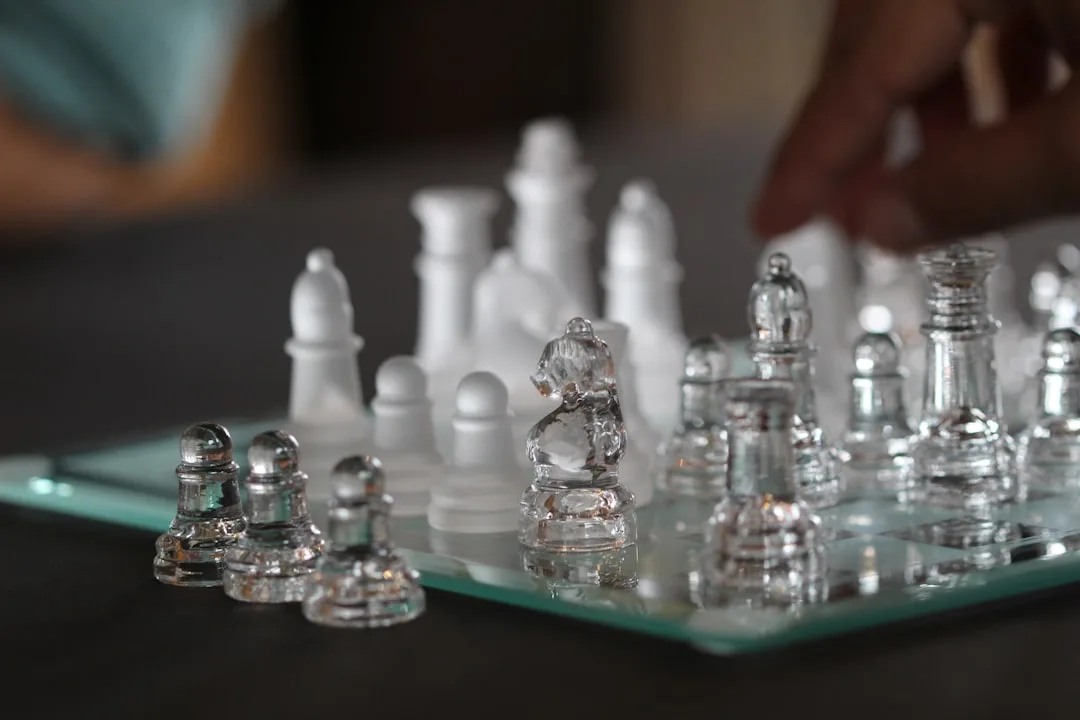
Introduction: The Grandmaster's Mind
In 1997, when Garry Kasparov faced IBM's Deep Blue in a historic match, something remarkable became apparent: while the computer analyzed 200 million positions per second, Kasparov evaluated only about three. Yet the human grandmaster won the first game. How? Not through brute computational force, but through pattern recognition, intuition built on decades of deliberate practice, and a capacity for strategic reasoning that remains one of the most studied phenomena in cognitive science.
Chess is far more than a board game. It is a cognitive laboratory that has fascinated psychologists since Alfred Binet - the inventor of the IQ test - first studied chess players in 1894. Today, researchers at institutions from Carnegie Mellon to the Max Planck Institute continue to investigate how chess expertise reshapes the brain, offering insights that apply well beyond the 64 squares.
"Chess is the gymnasium of the mind." - Blaise Pascal, mathematician and philosopher
This article explores the cognitive science behind chess mastery, reveals the specific training methods that grandmasters use to develop extraordinary mental abilities, and shows how you can apply these techniques to sharpen your own intelligence. To establish a baseline for your cognitive abilities, consider starting with our full IQ test.
The Cognitive Architecture of Chess Expertise
What Makes a Grandmaster's Brain Different?
Research in cognitive psychology, pioneered by Herbert Simon and William Chase at Carnegie Mellon University in the 1970s, revealed that chess expertise is built on a foundation of massive pattern libraries. A grandmaster's long-term memory stores an estimated 50,000 to 100,000 distinct board patterns (called "chunks"), each associated with appropriate strategic responses.
This pattern library is not mere memorization. It enables grandmasters to perceive chess positions the way a literate adult perceives words - instantly, holistically, and with immediate comprehension of meaning.
"The situation has provided a cue; this cue has given the expert access to information stored in memory, and the information provides the answer. Intuition is nothing more and nothing less than recognition." - Herbert Simon, Nobel laureate in Economics and pioneer of cognitive science
The Chunking Advantage
Chase and Simon's classic 1973 study demonstrated the power of chunking with an elegant experiment. When shown chess positions from real games for just five seconds, grandmasters could reconstruct the positions with 93% accuracy, while beginners managed only 18%. However, when shown random piece placements (positions impossible in real play), grandmasters performed no better than beginners.
This proved that expert memory is not about superior raw capacity but about organized, meaningful knowledge structures.
| Player Level | Real Game Positions (5-sec recall) | Random Positions (5-sec recall) | Estimated Patterns in Memory |
|---|---|---|---|
| Grandmaster | 93% accuracy | 18% accuracy | 50,000-100,000 |
| Expert (2000+ rating) | 72% accuracy | 20% accuracy | 10,000-50,000 |
| Intermediate (1400-2000) | 51% accuracy | 19% accuracy | 1,000-10,000 |
| Beginner (under 1200) | 18% accuracy | 17% accuracy | Under 1,000 |
Working Memory and Calculation
Beyond pattern recognition, chess demands exceptional working memory - the ability to hold and manipulate multiple variables simultaneously. When a grandmaster calculates a sequence of moves, they must maintain the current position, visualize modifications from each potential move, evaluate the resulting positions, and track multiple branching lines of play - all in their mind's eye.
Research by Fernand Gobet and colleagues has shown that grandmasters do not simply have larger working memory capacity than non-players. Instead, they use their pattern knowledge to compress information, freeing working memory resources for deeper calculation. A position that a beginner sees as 25 individual pieces, a grandmaster perceives as 5-6 meaningful chunks.
How Chess Training Reshapes the Brain
Neuroimaging Evidence
Modern brain imaging has revealed structural and functional differences in the brains of chess experts. A 2011 study by Wan et al. published in NeuroImage using fMRI found that expert shogi players (Japanese chess) showed activation in the caudate nucleus - a brain region involved in automatic pattern matching - when evaluating board positions, while novices relied more on the slower, effortful prefrontal cortex.
This shift from effortful to automatic processing is a hallmark of expertise across domains, and it explains why grandmasters can play multiple simultaneous games or make strong moves in blitz (speed) chess with just seconds per move.
Bilateral Brain Engagement
Unlike many cognitive tasks that rely primarily on one hemisphere, chess expertise engages both hemispheres of the brain. The left hemisphere handles analytical calculation and sequential reasoning, while the right hemisphere processes spatial patterns and holistic board evaluation. This bilateral engagement may explain why chess training produces broad cognitive benefits.
"In chess, as in life, the key is to balance calculation with intuition." - Garry Kasparov, former World Chess Champion and widely considered the greatest chess player of all time
The 10,000-Hour Framework
Anders Ericsson's research on deliberate practice, popularized by Malcolm Gladwell in Outliers, found that reaching expert performance in chess requires approximately 10,000 hours of serious study over a minimum of 10 years. However, the critical insight is that not all practice is equal. Deliberate practice - focused, effortful training on specific weaknesses with immediate feedback - is far more effective than casual play.
| Training Activity | Type of Practice | Cognitive Skills Developed | Estimated Effectiveness |
|---|---|---|---|
| Solving tactical puzzles | Deliberate practice | Pattern recognition, calculation | Very high |
| Analyzing grandmaster games | Deliberate practice | Strategic thinking, evaluation | High |
| Playing tournament games | Performance practice | Time management, stress resilience | High |
| Studying endgame positions | Deliberate practice | Precise calculation, technique | High |
| Playing casual online games | Naive practice | Basic pattern exposure | Low to moderate |
| Watching chess streams | Passive learning | Conceptual exposure | Low |
Kasparov's Training Methods: Lessons for Cognitive Development
Garry Kasparov, who held the world chess championship from 1985 to 2000 and achieved the highest rating in history at the time, employed training methods that offer profound insights into cognitive development.
1. Deep Analysis of Critical Positions
Kasparov would spend hours analyzing a single position, exploring every significant variation to its conclusion. This depth-first approach trained his brain to sustain intense concentration and develop thorough understanding rather than superficial pattern matching.
How to apply this: Choose a complex problem in your field - a difficult mathematical proof, a strategic business decision, or a challenging piece of code - and analyze it exhaustively before seeking the answer. This trains the same sustained analytical thinking that Kasparov developed.
2. Preparation and Opening Theory
Kasparov was legendary for his opening preparation, studying opponents' games for weeks before major matches. He maintained extensive notebooks of analysis, constantly updating his understanding.
"The key to success in chess is the ability to keep learning throughout your life. The day you stop studying is the day you start declining." - Garry Kasparov
How to apply this: Before important meetings, presentations, or decisions, invest serious preparation time. Research thoroughly, anticipate counterarguments, and develop multiple strategic options.
3. Post-Game Analysis
After every game - win or loss - Kasparov conducted rigorous analysis, identifying where he went wrong and what he could have done better. This feedback loop is the essence of deliberate practice.
How to apply this: Maintain a decision journal. After significant choices or projects, review your reasoning process. Where were your assumptions wrong? What information did you miss? This metacognitive practice builds strategic thinking capacity.
4. Physical Fitness
Surprisingly, Kasparov maintained an intensive physical training regimen. He understood that chess at the highest level demands 4-6 hours of sustained concentration, and physical fitness directly supports mental endurance.
How to apply this: Regular cardiovascular exercise has been shown to increase brain-derived neurotrophic factor (BDNF), which supports neuroplasticity and cognitive function.
Chess and IQ: What the Research Actually Shows
The relationship between chess and intelligence is more nuanced than popular culture suggests. Here is what the peer-reviewed research reveals.
Does Chess Increase IQ?
A meta-analysis by Sala and Gobet (2016) examined 24 studies on chess instruction and cognitive abilities. The findings were mixed:
- Chess training showed a moderate positive effect on mathematical ability
- Effects on overall cognitive ability were small but statistically significant
- The strongest transfer effects occurred in children, particularly those from disadvantaged backgrounds
- Benefits were most pronounced when chess instruction was integrated with academic curriculum rather than taught as a standalone activity
A notable study by the University of Memphis found that students who participated in a structured chess program showed a 17% improvement in mathematical reasoning scores compared to a control group.
The Selection vs. Training Debate
One important caveat: much of the research on chess players and intelligence faces a selection bias problem. Do smart people gravitate toward chess, or does chess make people smarter? The answer appears to be both, but the direction of causation is difficult to establish definitively.
"Chess doesn't drive people mad; it keeps mad people sane." - Bill Hartston, International Master and chess columnist, offering a wry commentary on the selection effect
A 2006 study by Bilalic et al. found that while chess players tend to have above-average IQs (mean IQ around 110 in their sample), IQ was a relatively weak predictor of chess rating among serious players. Practice hours and quality of training were far stronger predictors of chess performance than raw intelligence.
| Factor | Correlation with Chess Rating | Implication |
|---|---|---|
| Hours of deliberate practice | Strong (r = 0.54) | Training quality matters most |
| General intelligence (IQ) | Moderate (r = 0.24) | Helpful but not decisive |
| Age started playing | Moderate negative (r = -0.33) | Earlier start provides advantage |
| Working memory capacity | Moderate (r = 0.29) | Supports calculation depth |
| Motivation and persistence | Strong (qualitative) | Sustains long-term development |
Five Chess-Based Training Techniques for Everyday Cognitive Enhancement
You don't need to become a grandmaster to benefit from chess-style cognitive training. Here are five practical techniques adapted from chess training methodology.
1. Tactical Pattern Training (15-20 minutes daily)
What to do: Solve chess puzzles on platforms like Chess.com, Lichess, or Chesstempo. Start with simple 1-2 move tactics and progress to longer combinations.
Cognitive benefit: Trains rapid pattern recognition and visualization - skills that transfer to data analysis, medical diagnosis, and any field requiring quick identification of meaningful patterns in complex information.
2. Blindfold Visualization (10 minutes daily)
What to do: Practice playing through short chess games (5-10 moves) without looking at a board. Gradually increase the number of moves you can track mentally.
Cognitive benefit: Dramatically strengthens working memory and spatial reasoning. Kasparov could play multiple blindfold games simultaneously, a feat that requires extraordinary mental imagery.
3. Strategic Position Evaluation (15 minutes, 3x weekly)
What to do: Take a complex chess position and write down a detailed evaluation: Who stands better? Why? What plans should each side pursue? Then compare your analysis with expert commentary.
Cognitive benefit: Develops structured analytical thinking, the ability to weigh multiple factors simultaneously, and judgment under uncertainty.
4. Decision Journaling (After each game or significant decision)
What to do: After a chess game or important real-life decision, write a brief review: What was your reasoning? What alternatives did you consider? What would you do differently?
Cognitive benefit: Builds metacognitive skills - the ability to monitor and evaluate your own thinking - which are strongly associated with higher fluid intelligence and adaptive reasoning.
5. Time-Pressure Training (10-15 minutes, 2-3x weekly)
What to do: Play rapid or blitz chess games with a clock, forcing quick decisions under pressure.
Cognitive benefit: Trains the ability to make good decisions under time constraints, a skill directly transferable to high-pressure professional situations. You can experience a similar pressure in our timed IQ test, which evaluates processing speed and reasoning under time limits.
Common Misconceptions About Chess and Intelligence
Misconception 1: Chess players are geniuses. While many chess players have above-average IQs, the correlation between IQ and chess rating is only moderate (r = 0.24). Bobby Fischer's estimated IQ of 180 is often cited, but many grandmasters score in the 110-130 range. Deliberate practice, not raw intelligence, is the primary driver of chess expertise.
Misconception 2: You need to be young to start. While starting early provides advantages, adults can still achieve significant improvement. The brain retains neuroplasticity throughout life, and structured training produces measurable cognitive benefits at any age. The key is consistent, focused practice rather than age of onset.
Misconception 3: Playing more games is the best way to improve. Research on deliberate practice consistently shows that studying and analyzing is more effective than simply playing games. Solving puzzles, reviewing master games, and analyzing your own games produce faster improvement than accumulating games without reflection.
"It's not enough to be talented. It's not enough to work hard and to study late into the night. You must also become intimately aware of the methods you use to reach your decisions." - Mikhail Botvinnik, World Chess Champion and mentor to both Karpov and Kasparov
Misconception 4: Chess intelligence doesn't transfer to other domains. While the transfer debate continues, multiple studies show that chess training improves mathematical reasoning, reading comprehension (through improved focus), and executive function in children. For adults, the strategic thinking and analytical skills honed through chess practice are applicable to business strategy, risk assessment, and complex decision-making.
Measuring Your Cognitive Progress
Tracking cognitive development is essential for optimizing your training approach. Here are recommended assessment strategies:
- Baseline testing: Take our full IQ test before beginning a chess-based training program to establish your starting cognitive profile
- Regular check-ins: Use our practice IQ test every 4-6 weeks to monitor changes in pattern recognition, working memory, and reasoning
- Speed assessments: Our timed IQ test evaluates processing speed and accuracy under pressure - skills directly developed by chess training
- Quick snapshots: For rapid evaluation between formal assessments, our quick IQ assessment offers a convenient checkpoint
Combine cognitive assessments with chess-specific metrics (puzzle rating, game rating, accuracy percentage) to build a comprehensive picture of your cognitive development.
Conclusion: Chess as a Lifelong Cognitive Investment
Training your brain like a chess grandmaster is not about memorizing openings or achieving a high rating. It is about adopting the deliberate practice methodology that produces expertise: focused effort on weaknesses, constant feedback, progressive difficulty, and sustained commitment over time.
The cognitive skills developed through chess-based training - pattern recognition, working memory, strategic reasoning, and metacognition - are among the most transferable mental abilities. Whether you are a CEO evaluating strategic options, a student preparing for exams, or simply someone who wants to keep their mind sharp, the grandmaster's approach to cognitive development offers a proven framework.
As Kasparov himself wrote: "The ability to work hard for days on end without losing focus is a talent. The ability to keep absorbing new information after many hours of study is a talent. Concentration and stamina are talents." These talents are not fixed at birth - they are built through disciplined training.
Begin your cognitive journey today. Take our full IQ test to understand your current strengths, then apply the chess-based training techniques outlined here to develop them further.
References
- Chase, W. G., & Simon, H. A. (1973). Perception in chess. Cognitive Psychology, 4(1), 55-81.
- Gobet, F., & Simon, H. A. (1996). Templates in chess memory: A mechanism for recalling several boards. Cognitive Psychology, 31(1), 1-40.
- Ericsson, K. A., Krampe, R. T., & Tesch-Romer, C. (1993). The role of deliberate practice in the acquisition of expert performance. Psychological Review, 100(3), 363-406.
- Sala, G., & Gobet, F. (2016). Do the benefits of chess instruction transfer to academic and cognitive skills? A meta-analysis. Educational Research Review, 18, 46-57.
- Bilalic, M., McLeod, P., & Gobet, F. (2007). Does chess need intelligence? A study with young chess players. Intelligence, 35(5), 457-470.
- Wan, X., Nakatani, H., Ueno, K., Asamizuya, T., Cheng, K., & Tanaka, K. (2011). The neural basis of intuitive best next-move generation in board game experts. Science, 331(6015), 341-346.
- Grabner, R. H., Stern, E., & Neubauer, A. C. (2007). Individual differences in chess expertise: A psychometric investigation. Acta Psychologica, 124(3), 398-420.
- de Groot, A. D. (1965). Thought and Choice in Chess. The Hague: Mouton.
- Binet, A. (1894). Psychologie des grands calculateurs et joueurs d'echecs. Paris: Hachette.
- Kasparov, G. (2007). How Life Imitates Chess: Making the Right Moves, from the Board to the Boardroom. New York: Bloomsbury.
Frequently Asked Questions
How can beginners start training their brain like a chess grandmaster?
Start with the fundamentals: learn piece movements, basic tactics (forks, pins, skewers), and simple checkmate patterns. Then establish a daily routine of 15-20 minutes of tactical puzzle solving on platforms like Lichess (free) or Chess.com.
The key insight from deliberate practice research is that *studying* positions, not just playing games, produces the fastest cognitive improvement. After each game, spend at least as much time analyzing your mistakes as you spent playing. Begin tracking your puzzle rating to see concrete progress.
Does playing chess regularly improve IQ scores?
The evidence is nuanced. A 2016 meta-analysis by Sala and Gobet found that chess instruction produces small but statistically significant improvements in overall cognitive ability, with stronger effects on mathematical reasoning. However, the transfer to general IQ scores is modest.
The cognitive benefits are most pronounced in children and when chess is integrated with academic instruction. For adults, chess training most reliably improves specific skills: pattern recognition, working memory, and strategic reasoning, which may contribute to improved performance on our timed IQ test and similar assessments.
What are the best exercises to improve pattern recognition in chess?
The gold standard is spaced repetition tactical training: solve diverse tactical puzzles daily, with the platform adjusting difficulty based on your performance. Studies show that solving 1,000+ tactical puzzles produces measurable improvement in pattern recognition speed. Complement this with:
- analyzing annotated grandmaster games to learn strategic patterns;
- practicing "guess the move" exercises where you cover the moves and predict the grandmaster's choice;
- reviewing the same tactical themes from multiple positions to build robust pattern libraries.
How important is mental endurance in competitive chess?
Mental endurance is *decisive* at the competitive level. Top-level classical games last 4-6 hours, and tournament events span 2 weeks with games nearly every day. Research shows that blood glucose levels drop significantly during chess games, and most blunders occur after the 4th hour of play.
Kasparov, Carlsen, and other world champions all maintain rigorous physical fitness programs specifically because cardiovascular fitness supports sustained cognitive performance. Magnus Carlsen, the current era's dominant player, regularly plays soccer and cross-country skis to maintain his mental stamina.
Can cognitive training from chess transfer to other areas of life?
Yes, with important caveats. The strongest evidence for transfer is in mathematical reasoning (particularly in children), reading comprehension (through improved sustained attention), and executive function (planning, cognitive flexibility, and inhibitory control). A study of Venezuelan students found that chess instruction improved performance on standardized tests by 17%.
For adults, the strategic thinking, risk assessment, and decision-making skills honed through chess are directly applicable to business, medicine, and other fields requiring complex judgment. The key is to *consciously apply* chess-derived thinking frameworks to non-chess problems.
Is natural talent more important than practice in becoming a chess grandmaster?
Research strongly favors practice over talent. Ericsson's deliberate practice framework, supported by studies of chess players, shows that *accumulated hours of quality practice* predict chess rating far more reliably than IQ or working memory scores.
However, talent is not irrelevant: it likely influences the *rate* of improvement and the ultimate ceiling of performance. The youngest grandmasters (like Sergey Karjakin, who achieved the title at 12 years and 7 months) appear to combine both high cognitive ability and extraordinarily intense training from a very early age.
What role does working memory play in chess performance?
Working memory is essential for calculation depth, the ability to see multiple moves ahead and evaluate resulting positions. Research shows a moderate correlation (r = 0.29) between working memory capacity and chess rating. However, expert chess players effectively *bypass working memory limitations* by using chunked pattern recognition from long-term memory.
This is why grandmasters can play strong blitz chess (where there is little time for deep calculation): they recognize patterns so quickly that they require less working memory than beginners analyzing the same position. Strengthen your working memory baseline with our practice IQ test.
Related Articles
Curious about your IQ?
You can take a free online IQ test and get instant results.
Take IQ Test