Introduction: Two Pillars of Human Intelligence
For over a century, IQ - the intelligence quotient - served as the dominant measure of human potential. Then, in the 1990s, a wave of research on EQ - the emotional quotient - challenged that single-metric view and transformed how psychologists, educators, and employers think about what makes people effective.
But what exactly separates these two constructs? The answer goes far deeper than "one is about thinking, the other is about feeling." IQ and EQ differ in their neurological foundations, their measurement methodologies, their developmental trajectories, and the life outcomes they predict.
"Anyone can become angry - that is easy. But to be angry with the right person, to the right degree, at the right time, for the right purpose, and in the right way - that is not easy."
- Aristotle, Nicomachean Ethics (often cited by Daniel Goleman as the foundational insight behind emotional intelligence)
This article provides a comprehensive, science-backed comparison of IQ and EQ. Whether you are a student exploring cognitive science, a professional seeking self-improvement, or simply curious about the architecture of human intelligence, you will find concrete definitions, neuroscience research, measurement details, and practical applications below.
Ready to see where your cognitive abilities stand? Start with our full IQ test for a thorough assessment, or try a quick IQ test if you are short on time.
Defining IQ: The Cognitive Intelligence Quotient
Origins and Evolution
The concept of IQ originated with Alfred Binet and Theodore Simon in 1905, who developed the first practical intelligence test to identify French schoolchildren needing academic support. William Stern later introduced the term "intelligence quotient" in 1912, and Lewis Terman adapted Binet's work into the Stanford-Binet Intelligence Scales, which remain in use today.
Modern IQ testing measures a cluster of cognitive abilities that psychometricians refer to as the g factor (general intelligence), first proposed by Charles Spearman in 1904. The g factor represents the shared variance across diverse cognitive tasks - the reason someone who is good at math tends also to be above average in vocabulary and spatial reasoning.
What IQ Tests Actually Measure
IQ assessments evaluate several distinct cognitive domains:
- Verbal comprehension - vocabulary, reading comprehension, verbal reasoning
- Perceptual reasoning - pattern recognition, spatial visualization, matrix reasoning
- Working memory - the ability to hold and manipulate information in short-term memory
- Processing speed - how quickly you can scan, discriminate, and sequence information
- Fluid reasoning - solving novel problems without relying on prior knowledge
- Crystallized intelligence - applying accumulated knowledge and experience
"Intelligence is the aggregate or global capacity of the individual to act purposefully, to think rationally, and to deal effectively with his environment."
- David Wechsler, creator of the Wechsler Adult Intelligence Scale (WAIS)
The IQ Score Distribution
IQ scores follow a normal distribution (bell curve) with a mean of 100 and a standard deviation of 15 on the Wechsler scale:
| IQ Range | Classification | Percentage of Population |
|---|---|---|
| 130+ | Very Superior / Gifted | ~2.1% |
| 120-129 | Superior | ~6.7% |
| 110-119 | High Average | ~16.1% |
| 90-109 | Average | ~50% |
| 80-89 | Low Average | ~16.1% |
| 70-79 | Borderline | ~6.7% |
| Below 70 | Extremely Low | ~2.1% |
Curious where you fall on this distribution? Our full IQ test provides a detailed cognitive profile across multiple domains.
Defining EQ: The Emotional Intelligence Quotient
Origins and Evolution
The term "emotional intelligence" was first formally defined by psychologists Peter Salovey and John D. Mayer in a 1990 journal article. However, it was Daniel Goleman's 1995 bestseller Emotional Intelligence: Why It Can Matter More Than IQ that brought the concept into mainstream awareness. Goleman argued that emotional competencies - not just cognitive ones - are critical drivers of life success.
"In a very real sense we have two minds, one that thinks and one that feels."
- Daniel Goleman, Emotional Intelligence (1995)
The Four Branches of Emotional Intelligence
Salovey and Mayer's ability model describes EQ as comprising four hierarchical branches:
- Perceiving emotions - accurately identifying emotions in faces, voices, images, and body language
- Using emotions to facilitate thought - harnessing emotional information to aid reasoning, problem-solving, and creativity
- Understanding emotions - comprehending emotional language, recognizing how emotions evolve and blend (e.g., annoyance escalating to anger)
- Managing emotions - regulating one's own emotions and influencing the emotions of others strategically
Goleman's Competency Framework
Daniel Goleman later expanded the concept into a five-component model widely used in organizational psychology:
| EQ Component | Definition | Example Skill |
|---|---|---|
| Self-awareness | Recognizing your own emotions and their effects | Knowing when stress is clouding your judgment |
| Self-regulation | Managing disruptive impulses and moods | Staying calm during a heated negotiation |
| Motivation | Being driven to achieve for internal reasons | Persisting on a project despite setbacks |
| Empathy | Sensing what others feel and understanding their perspective | Reading a colleague's frustration before they voice it |
| Social skills | Managing relationships and building networks | Resolving a team conflict constructively |
Unlike IQ, which stabilizes in early adulthood, EQ is highly malleable throughout life. Research published in the Journal of Organizational Behavior (2019) found that emotional intelligence training programs produce measurable improvements that persist for at least 18 months.
IQ vs EQ: A Side-by-Side Comparison
The following table summarizes the fundamental differences between IQ and EQ across multiple dimensions:
| Dimension | IQ (Intelligence Quotient) | EQ (Emotional Quotient) |
|---|---|---|
| What it measures | Cognitive abilities: reasoning, memory, processing speed | Emotional abilities: awareness, regulation, empathy |
| First formally studied | 1905 (Binet-Simon Scale) | 1990 (Salovey and Mayer) |
| Brain regions involved | Prefrontal cortex, parietal cortex, hippocampus | Amygdala, insula, anterior cingulate cortex |
| Genetic influence | ~50-80% heritable (twin studies) | ~30-40% heritable; larger environmental component |
| Stability over lifespan | Relatively stable after age 25 | Can improve significantly at any age |
| Primary assessment tools | WAIS, Stanford-Binet, Raven's Matrices | MSCEIT, EQ-i 2.0, TEIQue |
| Test format | Objective, timed tasks with right/wrong answers | Self-report scales, situational judgment, ability tests |
| Strongest predictor of | Academic achievement, technical job performance | Leadership effectiveness, relationship quality, well-being |
| Can be trained | Modestly through cognitive exercises | Substantially through coaching and practice |
"It is not the strongest of the species that survives, nor the most intelligent, but the one most responsive to change."
- Often attributed to Charles Darwin (paraphrased); frequently cited in EQ literature to illustrate adaptability as a form of intelligence
The Neuroscience: How IQ and EQ Operate in the Brain
The Neural Basis of IQ
Cognitive intelligence relies heavily on the prefrontal cortex (PFC), often called the brain's "executive control center." The PFC orchestrates:
- Planning and decision-making - weighing options and selecting strategies
- Working memory - holding information online for manipulation
- Abstract reasoning - identifying patterns and relationships in novel data
Additionally, the parietal cortex supports spatial reasoning and mathematical computation, while the hippocampus is essential for encoding and retrieving memories. Neuroimaging studies using fMRI have shown that higher IQ correlates with greater neural efficiency - the brains of high-IQ individuals often show less activation during cognitive tasks, suggesting they process information more economically (Haier et al., 1988; Neubauer and Fink, 2009).
The Neural Basis of EQ
Emotional intelligence engages a distinct but overlapping set of brain structures:
- Amygdala - the brain's emotional alarm system, responsible for detecting threats, processing fear, and assigning emotional significance to stimuli
- Insula - integrates bodily sensations with emotional awareness, enabling "gut feelings"
- Anterior cingulate cortex (ACC) - monitors conflicts between emotional impulses and rational goals, critical for self-regulation
- Ventromedial prefrontal cortex (vmPFC) - integrates emotional signals into decision-making
| Brain Region | Primary Role | Associated With |
|---|---|---|
| Prefrontal cortex (dorsolateral) | Executive functions, working memory | IQ |
| Parietal cortex | Spatial reasoning, math | IQ |
| Hippocampus | Memory encoding and retrieval | IQ |
| Amygdala | Emotional detection and response | EQ |
| Insula | Interoception, empathy | EQ |
| Anterior cingulate cortex | Self-regulation, conflict monitoring | EQ (and IQ) |
| Ventromedial prefrontal cortex | Emotion-integrated decision-making | EQ |
The Famous Case of Phineas Gage
One of the most instructive cases in neuroscience illustrates the IQ-EQ distinction. Phineas Gage, a 19th-century railroad worker, survived an iron rod blasting through his left frontal lobe in 1848. After his injury, Gage's cognitive abilities remained largely intact - he could still speak, reason, and perform calculations.
However, his personality and emotional regulation changed dramatically. He became impulsive, irreverent, and unable to maintain social relationships. Gage's case demonstrated that cognitive intelligence and emotional intelligence rely on separable neural systems, and damage to one can leave the other relatively untouched.
"The brain is wider than the sky."
- Emily Dickinson (1862), a poetic observation that neuroscience has confirmed: the brain's capacity for both rational thought and emotional depth is extraordinarily vast
How IQ and EQ Are Measured: Tests and Instruments
Major IQ Tests
The following are the most widely used and validated cognitive intelligence assessments:
- Wechsler Adult Intelligence Scale (WAIS-IV) - the gold standard for adult IQ testing, measuring verbal comprehension, perceptual reasoning, working memory, and processing speed
- Stanford-Binet Intelligence Scales (5th Edition) - the oldest continuously used IQ test, covering fluid reasoning, knowledge, quantitative reasoning, visual-spatial processing, and working memory
- Raven's Progressive Matrices - a culture-fair nonverbal test focusing on abstract reasoning and pattern recognition
- Cattell Culture Fair Intelligence Test - designed to minimize cultural and linguistic bias
You can explore your own cognitive abilities with our full IQ test, which evaluates multiple reasoning domains, or warm up with our practice IQ test.
Major EQ Tests
| Test | Developer | Type | What It Measures |
|---|---|---|---|
| MSCEIT | Mayer, Salovey, Caruso | Ability-based | Perceiving, using, understanding, managing emotions |
| EQ-i 2.0 | Multi-Health Systems (based on Bar-On model) | Self-report | Self-perception, self-expression, interpersonal, decision-making, stress management |
| TEIQue | K.V. Petrides | Self-report | Trait emotional intelligence across 15 facets |
| ESCI | Goleman, Boyatzis | 360-degree feedback | Emotional and social competencies in workplace settings |
Key Differences in Testing Methodology
IQ tests and EQ tests differ fundamentally in their approach:
- IQ tests use objective scoring - each item has a correct answer, and scores are normed against population data
- EQ self-report tests rely on subjective self-assessment - respondents rate how well statements describe them (e.g., "I can usually tell when someone is upset even if they don't say so")
- EQ ability tests (like the MSCEIT) attempt to bridge this gap by presenting emotional scenarios with expert-consensus scoring - your answer is evaluated against what emotional intelligence researchers consider the most effective response
This difference in methodology means that IQ scores tend to be more reliable (consistent across retesting) while EQ scores can be more susceptible to response bias (people over- or under-reporting their emotional skills).
Developmental Trajectories: How IQ and EQ Change Over Time
One of the most significant differences between IQ and EQ is how they develop across the lifespan:
IQ Development
- Childhood to adolescence: IQ scores are somewhat fluid and influenced by education, nutrition, and environmental enrichment
- Age 20-25: IQ largely stabilizes; fluid intelligence (novel problem-solving) peaks in the mid-20s
- Age 30-60: Crystallized intelligence (accumulated knowledge) continues to grow, while fluid intelligence gradually declines
- Age 60+: Processing speed and working memory decline; vocabulary and general knowledge often remain strong
EQ Development
- Childhood: Basic emotional recognition develops; children learn to label feelings
- Adolescence: Emotional volatility peaks; the prefrontal cortex (responsible for regulation) is still maturing
- Age 20-40: EQ tends to increase steadily as social experience accumulates
- Age 40-60: Studies show EQ typically peaks in middle age, with improved emotion regulation and empathy
- Age 60+: Emotional intelligence often remains strong or continues improving; older adults frequently show superior emotional regulation compared to younger adults
"Emotional intelligence is not the opposite of intelligence, it is not the triumph of heart over head - it is the unique intersection of both."
- David Caruso, co-developer of the MSCEIT
| Age Period | IQ Trajectory | EQ Trajectory |
|---|---|---|
| Childhood (5-12) | Rapidly developing; influenced by education | Basic emotion recognition emerging |
| Adolescence (13-19) | Approaching adult levels | Volatile; prefrontal cortex still developing |
| Young adulthood (20-30) | Fluid IQ peaks; crystallized IQ growing | Steady improvement through social experience |
| Middle adulthood (30-55) | Crystallized IQ peaks; fluid IQ slowly declining | Often peaks; strong regulation and empathy |
| Later adulthood (55+) | Processing speed declines; knowledge stable | Often remains high; superior emotion regulation |
Common Misconceptions About IQ and EQ
Misconception 1: "IQ is all that matters for success"
Research consistently shows that IQ accounts for roughly 25% of the variance in job performance (Schmidt and Hunter, 1998). The remaining 75% is influenced by personality, motivation, emotional skills, and other factors. IQ is necessary but far from sufficient.
Misconception 2: "EQ is just being nice"
Emotional intelligence is not about being agreeable or pleasant. It includes the ability to deliver difficult feedback effectively, to recognize when someone is being manipulative, and to strategically manage your emotional state under pressure. High-EQ individuals can be assertive, direct, and tough-minded when the situation demands it.
Misconception 3: "You are born with a fixed EQ"
A meta-analysis by Mattingly and Kraiger (2019) reviewed 58 studies and found that EQ training programs produce an average effect size of d = 0.46, a moderate and practically significant improvement. EQ is trainable at any age.
Misconception 4: "IQ tests measure everything about intelligence"
"IQ tests measure an important but limited domain of cognitive functioning. They miss creativity, practical intelligence, wisdom, and the ability to learn from experience."
- Robert Sternberg, developer of the Triarchic Theory of Intelligence
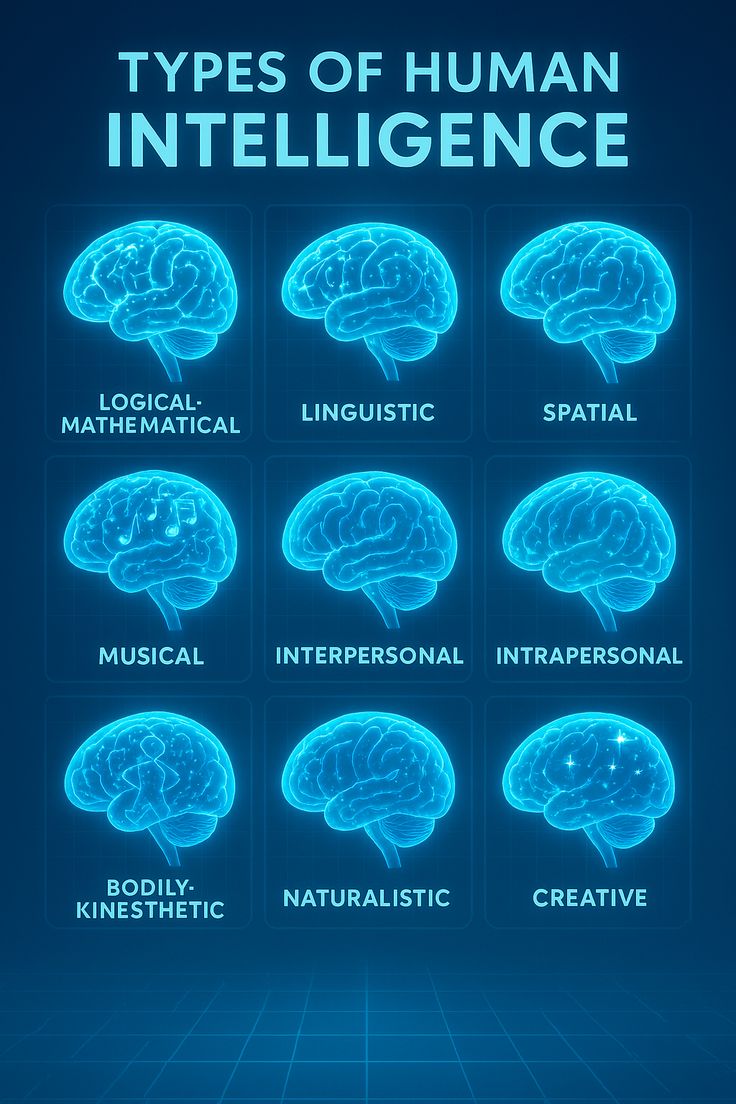
Howard Gardner's theory of multiple intelligences (1983) similarly argues that traditional IQ captures only linguistic and logical-mathematical intelligence, overlooking musical, bodily-kinesthetic, spatial, interpersonal, intrapersonal, and naturalistic intelligences.
Misconception 5: "IQ and EQ are opposites"
IQ and EQ are moderately positively correlated, not opposites. Research published in Emotion (2010) found a correlation of approximately r = 0.25 between cognitive intelligence and emotional intelligence ability measures. People with higher IQs tend to have slightly higher EQs as well, though there is enormous variation.
Practical Applications: When IQ and EQ Matter Most
In Education
- IQ predicts academic grades, standardized test scores, and the speed of learning new material
- EQ predicts classroom behavior, peer relationships, resilience after academic setbacks, and the ability to seek help effectively
- Schools incorporating social-emotional learning (SEL) programs have seen academic performance improve by an average of 11 percentile points (Durlak et al., 2011)
In the Workplace
- IQ is most important for task performance - completing technical work accurately and efficiently
- EQ is most important for contextual performance - teamwork, communication, adaptability, and leadership
- A study of 515 senior executives by Egon Zehnder International found that those with the strongest EQ scores were significantly more likely to succeed than those with the highest IQ or most relevant experience
In Relationships
- IQ plays a minimal direct role in relationship satisfaction
- EQ is strongly associated with relationship quality, conflict resolution skills, and the ability to maintain long-term partnerships
- Research by Brackett, Warner, and Bosco (2005) found that couples where both partners scored high on emotional intelligence reported significantly greater relationship satisfaction
In Mental Health
- Higher IQ is associated with better health literacy and the ability to understand treatment options
- Higher EQ is associated with lower rates of anxiety and depression, better stress management, and greater psychological resilience
- The combination of both predicts the most favorable mental health outcomes
Conclusion: Understanding the Full Spectrum of Intelligence
The difference between IQ and EQ is not a matter of one being "better" than the other. They are fundamentally different systems - rooted in different brain structures, measured by different instruments, developing along different timelines, and predicting different life outcomes.
IQ provides the computational horsepower for reasoning, learning, and solving problems. EQ provides the emotional navigation system for understanding yourself, connecting with others, and adapting to life's social and emotional demands.
The most complete picture of human intelligence emerges when both are considered together. Whether you are evaluating your own strengths, hiring for a team, or designing an educational curriculum, recognizing these distinct dimensions leads to better decisions and fuller human development.
Want to explore your cognitive intelligence? Take our full IQ test for a comprehensive assessment, try our timed IQ test to measure speed and accuracy under pressure, or start with our practice IQ test to familiarize yourself with the question formats.
References
- Binet, A., & Simon, T. (1905). New methods for the diagnosis of the intellectual level of subnormals. L'Annee Psychologique, 11, 191-244.
- Brackett, M. A., Warner, R. M., & Bosco, J. S. (2005). Emotional intelligence and relationship quality among couples. Personal Relationships, 12(2), 197-212.
- Durlak, J. A., Weissberg, R. P., Dymnicki, A. B., Taylor, R. D., & Schellinger, K. B. (2011). The impact of enhancing students' social and emotional learning: A meta-analysis of school-based universal interventions. Child Development, 82(1), 405-432.
- Gardner, H. (1983). Frames of Mind: The Theory of Multiple Intelligences. Basic Books.
- Goleman, D. (1995). Emotional Intelligence: Why It Can Matter More Than IQ. Bantam Books.
- Haier, R. J., Siegel, B. V., Nuechterlein, K. H., Hazlett, E., Wu, J. C., Paek, J., ... & Buchsbaum, M. S. (1988). Cortical glucose metabolic rate correlates of abstract reasoning and attention studied with positron emission tomography. Intelligence, 12(2), 199-217.
- Mattingly, V., & Kraiger, K. (2019). Can emotional intelligence be trained? A meta-analytical investigation. Human Resource Management Review, 29(2), 140-155.
- Mayer, J. D., & Salovey, P. (1990). Emotional intelligence. Imagination, Cognition and Personality, 9(3), 185-211.
- Neubauer, A. C., & Fink, A. (2009). Intelligence and neural efficiency. Neuroscience & Biobehavioral Reviews, 33(7), 1004-1023.
- Schmidt, F. L., & Hunter, J. E. (1998). The validity and utility of selection methods in personnel psychology: Practical and theoretical implications of 85 years of research findings. Psychological Bulletin, 124(2), 262-274.
- Sternberg, R. J. (1985). Beyond IQ: A Triarchic Theory of Human Intelligence. Cambridge University Press.
- Wechsler, D. (1944). The Measurement of Adult Intelligence (3rd ed.). Williams & Wilkins.
Frequently Asked Questions
Can someone have a high IQ but low EQ, and how does that affect their life?
Yes, and this dissociation is more common than many people realize. Research suggests that the correlation between IQ and EQ ability measures is only about r = 0.25 (Joseph and Newman, 2010), meaning they are *largely independent traits*. A person with high IQ and low EQ may excel in analytical roles - scientific research, software engineering, financial modeling - but struggle with teamwork, romantic relationships, and leadership.
Studies at the Yale Center for Emotional Intelligence have found that high-IQ individuals with low EQ report higher rates of workplace conflict and lower job satisfaction despite strong technical performance. The good news: targeted EQ development through coaching, mindfulness practice, and social skills training can significantly close this gap, even in adulthood.
How can I improve my emotional intelligence if my IQ is average?
Emotional intelligence is one of the most trainable psychological attributes. A meta-analysis by Mattingly and Kraiger (2019) found that EQ training programs produce *meaningful improvements with a moderate effect size (d = 0.46)*. Specific evidence-based strategies include:
- Mindfulness meditation - even 8 weeks of practice increases emotional regulation and empathy (Kemeny et al., 2012)
- Labeling emotions precisely - research by Matthew Lieberman at UCLA shows that simply naming an emotion reduces amygdala activation by up to 50%
- Active listening exercises - practicing reflective listening improves empathy scores within weeks
- Journaling about emotional experiences - written emotional disclosure improves self-awareness and reduces stress (Pennebaker, 1997)
- Seeking 360-degree feedback - asking trusted colleagues and friends how they experience your emotional behavior reveals blind spots
Are IQ and EQ equally important for leadership roles?
Research strongly favors EQ for leadership effectiveness. Daniel Goleman's analysis of competency models from 188 companies found that *emotional intelligence competencies were twice as important as technical skills and IQ combined* for leadership positions (Goleman, 1998).
However, a threshold level of IQ is necessary - leaders need sufficient cognitive ability to understand complex problems and strategic situations. The most effective leaders score above average on both, but among those who clear the IQ threshold, it is *variation in EQ* that most strongly predicts who rises to the top and who performs best once there.
Do IQ and EQ tests measure all aspects of intelligence?
No. Both IQ and EQ tests capture important but *incomplete slices* of human intelligence. Robert Sternberg's Triarchic Theory identifies analytical intelligence (similar to IQ), creative intelligence, and practical intelligence as three distinct facets. Howard Gardner proposes at least eight distinct intelligences.
Beyond these, constructs like *cultural intelligence (CQ)*, *adversity quotient (AQ)*, and *moral intelligence* have been proposed by various researchers. The most comprehensive assessment of any individual would combine cognitive testing, emotional intelligence measures, personality inventories, creativity assessments, and real-world performance data.
Can emotional intelligence compensate for a lower IQ in professional settings?
In many roles, yes. A landmark study by Claudio Fernandez-Araoz at Egon Zehnder International examined the performance of senior executives and found that *candidates hired primarily for IQ and experience failed 50% of the time*, while those selected for high EQ succeeded significantly more often. In roles requiring interpersonal influence - sales, management, counseling, teaching, healthcare - EQ often matters more than raw cognitive ability.
However, in highly technical roles (data science, engineering, surgery), a minimum IQ threshold is necessary for competent task performance. The optimal approach is developing both: use cognitive strengths for technical mastery and emotional intelligence for collaboration, communication, and career advancement.
Is it possible for IQ and EQ to develop simultaneously?
Yes, and research suggests they can even *reinforce each other*. Cognitive training that involves social interaction (group problem-solving, debate, collaborative learning) develops both IQ-related skills and EQ competencies simultaneously. Similarly, mindfulness-based stress reduction (MBSR) programs have been shown to improve both attentional control (a cognitive function) and emotional regulation (an EQ skill).
A practical approach: combine intellectually stimulating activities - puzzles, reading, our practice IQ test - with emotionally enriching practices like empathetic conversation, conflict resolution exercises, and reflective journaling. This dual-track development creates what psychologists call *psychological capital* - a resilient, adaptable, and effective mind.
Related Articles
Curious about your IQ?
You can take a free online IQ test and get instant results.
Take IQ Test