
Understanding Verbal IQ and Its Importance
Verbal IQ is a crucial component of overall intelligence, reflecting an individual's ability to understand, process, and use language effectively. It encompasses skills such as vocabulary knowledge, comprehension, and verbal reasoning, which are essential for communication and problem-solving. Unlike other facets of IQ that may focus on spatial or mathematical reasoning, verbal IQ centers on linguistic capabilities, making it a vital area of cognitive assessment for both academic and everyday contexts.
The concept of verbal IQ is deeply rooted in the broader framework of intelligence measurement, where it often forms one of the primary indices in standardized IQ tests. These tests evaluate how well a person can understand analogies, interpret vocabulary, and make rapid inferences based on verbal information. Mastery in these areas often correlates with success in language-heavy fields such as law, literature, and education.
Understanding verbal IQ not only helps in assessing intellectual strengths but also guides targeted cognitive development. For example, individuals with strong verbal reasoning skills tend to excel in tasks requiring persuasive communication or complex reading comprehension. This makes verbal IQ a valuable predictor of academic achievement and professional potential. To explore your own verbal reasoning skills, you might consider trying our full IQ test, which offers a comprehensive evaluation of various cognitive domains, including verbal IQ.
The Role of Analogies in Measuring Verbal IQ
Analogies are a cornerstone of verbal IQ assessments because they reveal how well a person can recognize relationships between concepts and apply that understanding to new situations. An analogy typically presents a pair of related words and asks the test-taker to find a similar relationship in another pair. For example, "Bird is to sky as fish is to ___" tests the ability to infer that fish relates to water just as birds relate to the sky.
This process requires more than rote memorization; it demands flexible thinking and the capacity to abstract relationships. Analogies tap into semantic memory and verbal reasoning, which are essential for problem-solving and critical thinking. Their inclusion in IQ tests reflects their importance in evaluating higher-order cognitive functions related to language.
For instance, a person who excels at analogy questions likely possesses a well-developed vocabulary and can quickly identify patterns in language. This skill is not only valuable in testing scenarios but also in real-life situations such as learning new languages, decoding complex texts, or engaging in strategic discussions.
However, a common misconception is that analogy questions merely test vocabulary knowledge. In reality, they assess the ability to perceive relationships and contextual nuances between concepts, which is a more sophisticated cognitive process. To sharpen your analogy skills, practicing with targeted exercises like our practice test can be highly beneficial.
Key Insight: Mastering analogies enhances both verbal IQ and overall cognitive flexibility, enabling better comprehension and communication.
Expanding Vocabulary IQ: Beyond Memorization
Vocabulary IQ measures not just the number of words you know but how effectively you understand and use them in context. A rich vocabulary enables clearer expression of ideas and more precise interpretation of language, which are essential for verbal reasoning tasks.
Developing vocabulary IQ involves exposure to diverse language sources, such as reading widely across genres, engaging in conversations, and learning word roots and affixes. This approach fosters deeper semantic understanding rather than superficial memorization. For example, knowing that "benevolent" relates to kindness helps in grasping related words like "benefactor" or "benign," which share common roots.
In IQ testing, vocabulary questions often require defining words, choosing synonyms or antonyms, or selecting the word that best fits a sentence. These tasks evaluate lexical knowledge and contextual inference, which are critical for academic success and effective communication.
An important nuance is that vocabulary IQ can be influenced by cultural and educational background, which means test results should be interpreted with consideration of these factors. To improve your vocabulary IQ in a structured way, you can try our quick IQ assessment, which includes vocabulary-focused questions designed to challenge and expand your word knowledge.
Key Takeaway: A strong vocabulary IQ supports advanced verbal reasoning by enabling nuanced understanding and expression.
Rapid Inference: Enhancing Verbal Reasoning Speed and Accuracy
Rapid inference is the ability to quickly draw logical conclusions from verbal information, a skill closely tied to verbal reasoning. This facet of verbal IQ tests how efficiently one can process language-based data and make sound judgments under time constraints.
In practice, rapid inference involves interpreting sentences, understanding implied meanings, and identifying relationships between concepts swiftly. For example, when presented with a passage, a person with strong rapid inference skills can extract key points and underlying themes faster than others.
Improving this skill requires practice with timed exercises that simulate real-world scenarios where quick thinking is essential. Many IQ tests incorporate timed verbal reasoning sections to evaluate this ability. Engaging with our timed IQ test can help you develop both speed and accuracy in verbal inference.
One common pitfall is sacrificing accuracy for speed. Effective rapid inference balances both, ensuring that quick decisions are also correct. This balance is critical in academic testing, professional environments, and everyday communication.
Insight: Rapid inference skills enhance verbal IQ by combining speed with comprehension, facilitating better decision-making in language-based tasks.
Practical Strategies to Improve Verbal IQ Skills
Improving verbal IQ involves targeted practice and strategic learning. Here are several effective methods:
- Engage with analogies regularly: Solve analogy puzzles to enhance relational thinking.
- Expand vocabulary contextually: Learn new words through reading and use them in sentences.
- Practice rapid verbal reasoning: Use timed exercises to boost inference speed without compromising accuracy.
- Read diverse materials: Exposure to different writing styles and subjects broadens language comprehension.
- Discuss and debate: Verbal interaction sharpens reasoning and articulation.
Incorporating these strategies can lead to measurable improvements in verbal IQ scores and everyday communication effectiveness. For a structured approach, starting with our practice test can provide a baseline and guide your progress.
Pro Tip: Consistency is key—regular practice over weeks or months yields the best results in verbal IQ enhancement.
Common Misconceptions About Verbal IQ Testing
Many people believe that verbal IQ tests only measure vocabulary size or reading ability. While these elements are part of the assessment, verbal IQ is much broader, encompassing reasoning, inference, and the ability to understand complex language relationships.
Another misconception is that verbal IQ is fixed and cannot be improved. Research indicates that cognitive abilities, including verbal reasoning, can be developed through targeted practice and education. This plasticity means that anyone can enhance their verbal IQ with the right tools and effort.
Additionally, some assume that verbal IQ tests are culturally biased and therefore unreliable. While cultural factors can influence vocabulary and familiarity with certain language constructs, well-designed tests aim to minimize bias by focusing on universal reasoning skills and providing diverse question types.
Understanding these nuances helps test-takers approach verbal IQ assessments with realistic expectations and encourages proactive skill development.
Critical Note: The most critical factor in verbal IQ testing is recognizing its multifaceted nature beyond simple word knowledge.
The Role of Verbal IQ in Broader Intelligence and Daily Life
Verbal IQ is a significant predictor of overall cognitive ability and academic success. It contributes to effective communication, problem-solving, and learning across disciplines. For example, strong verbal reasoning skills facilitate understanding complex instructions, writing clearly, and engaging in persuasive arguments.
In daily life, verbal IQ influences how individuals interpret social cues, negotiate conflicts, and acquire new knowledge. This underscores its importance not only in testing environments but also in real-world interactions.
Moreover, verbal IQ often correlates with other cognitive domains such as working memory and processing speed, which together shape a person's intellectual profile. Understanding your verbal IQ through assessments like our full IQ test can provide valuable insights into your strengths and areas for growth.
Summary Insight: Verbal IQ is foundational to both specialized academic tasks and everyday communication, making its development a lifelong asset.
Conclusion: Elevate Your Verbal IQ for Lifelong Benefits
Verbal IQ encompasses a rich set of cognitive skills including analogical reasoning, vocabulary knowledge, and rapid inference. These abilities are essential for effective communication, academic achievement, and professional success. By understanding the components of verbal IQ and employing practical strategies such as practicing analogies, expanding vocabulary contextually, and honing rapid verbal reasoning, you can significantly enhance your verbal intelligence.
Remember that verbal IQ is not static; with consistent effort and the right tools, improvement is achievable. Engaging regularly with exercises like our practice test, trying a timed IQ test to build speed, or taking a comprehensive evaluation through our full IQ test can provide valuable feedback and motivation.
Exploring verbal IQ also opens doors to deeper cognitive understanding, linking to broader intelligence concepts such as working memory and processing speed. For those interested in further cognitive skill development, these areas offer rich opportunities for growth.
Final Thought: Enhancing your verbal IQ is an investment in your communication skills, critical thinking, and lifelong learning potential.
To begin your journey, consider taking our quick IQ assessment today and discover where your verbal reasoning skills stand.
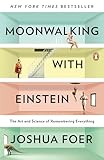
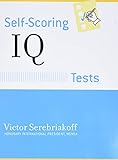
Recommended Reading
Hand-picked books on intelligence, memory, and cognition. As an Amazon Associate we earn from qualifying purchases at no cost to you.


Frequently Asked Questions
How can practicing analogies improve my verbal IQ over time?
Practicing analogies enhances your ability to recognize relationships between concepts, which is a core component of verbal reasoning. Over time, this practice strengthens your cognitive flexibility and pattern recognition, leading to improved performance on verbal IQ tests and better problem-solving skills in everyday situations.
Is vocabulary IQ solely dependent on how many words I know?
No, vocabulary IQ involves not only the number of words you know but also how well you understand their meanings and can use them in context. Deep semantic knowledge and the ability to infer meaning from context are critical, making vocabulary IQ a more nuanced measure than simple word recall.
What is the best way to balance speed and accuracy in verbal reasoning tasks?
The best approach is to practice timed exercises that gradually increase in difficulty, allowing you to build speed without sacrificing comprehension. Focus on understanding question patterns and developing strategies to quickly eliminate incorrect options, which improves accuracy under time pressure.
Can verbal IQ scores be improved with regular practice?
Yes, verbal IQ scores can improve through consistent practice that targets vocabulary expansion, analogy solving, and rapid inference skills. Cognitive training and educational activities that challenge verbal reasoning promote neural plasticity, leading to measurable gains in verbal IQ.
Are verbal IQ tests culturally biased, and how does that affect results?
While some verbal IQ tests may reflect cultural language differences, well-designed assessments aim to minimize bias by focusing on universal reasoning skills and diverse question types. Test-takers should consider cultural and educational backgrounds when interpreting results to ensure a fair understanding of their verbal IQ.
How does verbal IQ relate to other types of intelligence?
Verbal IQ is one facet of overall intelligence, often correlated with other cognitive abilities like working memory, processing speed, and fluid intelligence. It specifically measures linguistic and reasoning skills, which complement nonverbal and spatial intelligence domains to form a comprehensive cognitive profile.
Related Articles



Curious about your IQ?
You can take a free online IQ test and get instant results.
Take IQ Test