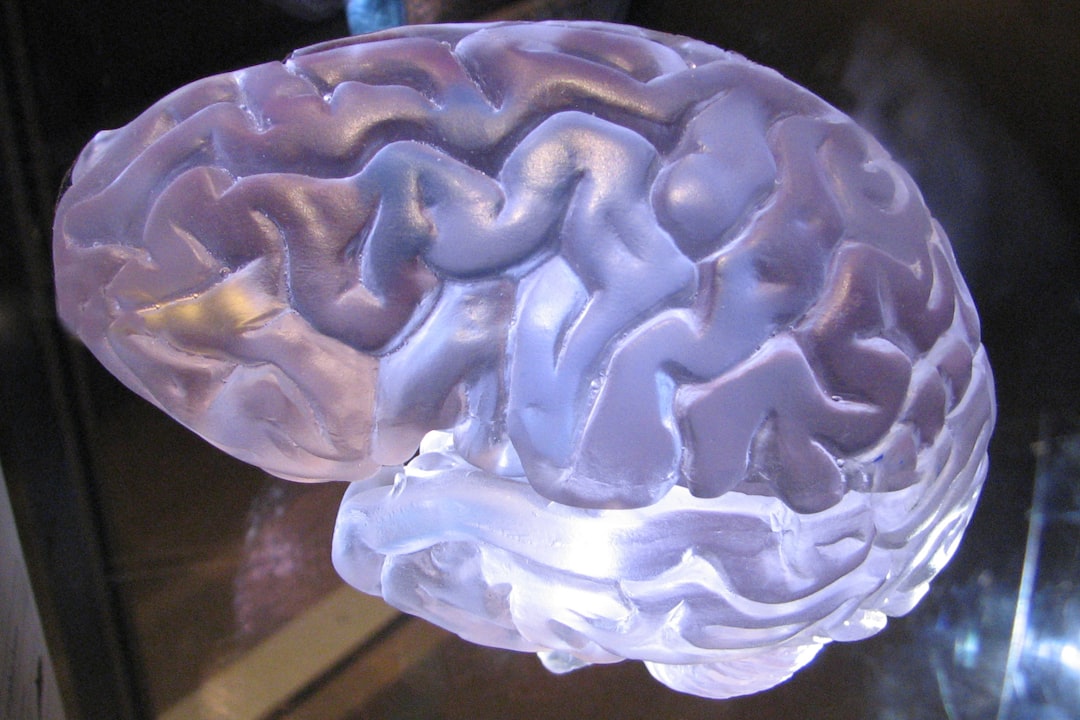
Introduction to the Neuroscience of Intelligence
Understanding the neuroscience of intelligence unlocks a fascinating glimpse into the complex workings of the human brain. Intelligence, often measured by the intelligence quotient or IQ, is not just a number but a reflection of intricate neural processes and brain structures working in harmony. The relationship between the brain and IQ has intrigued scientists for decades, prompting extensive research in cognitive neuroscience to uncover how different regions contribute to intellectual capabilities.
In this article, we will explore the key brain regions involved in intelligence, the neural mechanisms that underlie cognitive abilities, and how neuroscience informs our understanding of IQ. Whether you are new to this topic or seeking advanced insights, this comprehensive overview will deepen your grasp of how intelligence manifests in the brain. Along the way, you’ll also discover practical implications for cognitive assessment and ways to measure your own intelligence through various testing formats.
Key Insight: Intelligence is a multifaceted construct shaped by dynamic brain networks rather than a single brain area, emphasizing the importance of integrated neural activity over isolated regions.
Defining Intelligence in Neuroscientific Terms
To appreciate the neuroscience behind intelligence, we first need to clarify what intelligence entails from a brain perspective. Intelligence broadly refers to the capacity to learn, reason, solve problems, and adapt to new situations. Neuroscientifically, it is understood as the outcome of complex interactions among various cognitive processes such as memory, attention, processing speed, and executive functions.
The field of cognitive neuroscience provides the framework for studying these processes by linking mental functions with brain structures and activity patterns. Intelligence is often conceptualized in terms of the general intelligence factor, or g factor, which reflects shared variance across diverse cognitive tasks. This factor corresponds to neural efficiency and connectivity across brain regions rather than isolated activity.
For example, higher intelligence has been associated with more efficient working memory and faster processing speed, both of which rely on coordinated brain activity. This nuanced understanding moves beyond simplistic ideas of intelligence as a fixed trait, highlighting its basis in flexible and adaptive brain function.
Misconception Alert: Intelligence is not localized to a single brain region but emerges from distributed networks involving multiple areas working together.
Understanding these foundational concepts sets the stage for exploring the specific brain regions and mechanisms that underpin intelligence.
Key Brain Regions Linked to Intelligence
One of the central questions in the neuroscience of intelligence is: which brain regions contribute most to intellectual abilities? Research consistently points to several critical areas, especially within the prefrontal cortex, parietal lobes, and anterior cingulate cortex.
The prefrontal cortex is often dubbed the brain’s executive center, responsible for planning, decision-making, and problem-solving. It plays a pivotal role in managing working memory and cognitive flexibility, both essential for intelligent behavior. Individuals with greater prefrontal cortex volume or activity tend to perform better on IQ tests and complex reasoning tasks.
The parietal lobes contribute to spatial reasoning, numerical cognition, and integrating sensory information. The interaction between the prefrontal cortex and parietal regions forms the backbone of the parieto-frontal integration theory (P-FIT), a leading model explaining intelligence through neural connectivity.
Additionally, the anterior cingulate cortex supports attention control and error monitoring, helping individuals adapt their thinking strategies. Other areas like the temporal lobes and hippocampus also contribute by supporting memory and language skills.
Table: Brain Regions and Their Cognitive Contributions to Intelligence
Brain Region Cognitive Role Intelligence Aspect Prefrontal Cortex Executive functions, working memory Problem-solving, planning Parietal Lobes Spatial and numerical processing Reasoning, integration Anterior Cingulate Cortex Attention and error monitoring Cognitive control Temporal Lobes Language and memory Verbal intelligence Hippocampus Memory consolidation Learning and recall
Understanding these regions helps clarify how intelligence arises from the brain’s architecture and function.
You can explore how these cognitive abilities are assessed by trying our practice test, which targets memory and reasoning skills linked to these brain areas.
Neural Mechanisms Underlying Intelligence
Beyond identifying brain regions, it is crucial to understand the neural mechanisms that enable intelligence. These mechanisms include neural efficiency, connectivity, and plasticity.
Neural efficiency refers to how effectively the brain processes information. Studies suggest that individuals with higher IQs tend to use fewer neural resources to perform cognitive tasks, indicating more efficient brain function. This efficiency manifests as faster reaction times and lower metabolic costs during problem-solving.
Connectivity between brain areas is equally important. Intelligence depends on the strength and quality of communication across neural networks, especially between the prefrontal and parietal cortices. Functional MRI studies reveal that stronger connectivity correlates with better cognitive performance.
Neuroplasticity, the brain’s ability to reorganize and adapt, also plays a key role. Lifelong learning and cognitive training can enhance synaptic connections, potentially improving certain aspects of intelligence. This dynamic nature challenges the misconception that IQ is fixed and unchangeable.
Practical Application: Engaging in activities that promote neuroplasticity, such as learning new skills or practicing challenging cognitive tasks, may support intelligence development.
For those interested in measuring their cognitive efficiency, our timed IQ test offers a way to assess processing speed and accuracy under time constraints.
Measuring Intelligence: The Role of IQ Tests and Cognitive Assessments
The connection between neuroscience and intelligence is often explored through IQ testing and cognitive assessments. These tools aim to quantify intellectual abilities by evaluating various cognitive domains linked to brain function.
IQ tests typically measure verbal comprehension, working memory, perceptual reasoning, and processing speed. By assessing these domains, tests provide a composite score that reflects general intelligence. However, it is important to recognize that IQ tests capture only certain facets of intelligence and may not fully represent creativity or emotional intelligence.
Advances in cognitive neuroscience have informed the design of more nuanced assessments that evaluate specific brain-related functions. For instance, working memory tasks assess prefrontal cortex activity, while spatial reasoning tests engage parietal regions.
Using our full IQ test, individuals can obtain a comprehensive evaluation of their cognitive abilities, reflecting the underlying brain processes discussed. For a quicker overview, the quick IQ assessment offers a brief yet informative snapshot of intellectual strengths.
Important Note: While IQ tests are valuable, they should be interpreted in context, considering factors like education, culture, and motivation.
Common Misconceptions About Intelligence and the Brain
Despite extensive research, several misconceptions about intelligence and the brain persist. One widespread myth is that intelligence is solely determined by brain size. While brain volume correlates modestly with IQ, it is the quality of neural connections and efficiency that matter more.
Another misconception is that intelligence is fixed and cannot be improved. Neuroscience shows that the brain remains plastic throughout life, allowing for cognitive growth through learning and experience. This understanding encourages lifelong intellectual development rather than resignation to a static IQ.
Some also mistakenly believe intelligence is localized to a single “smart” area. As explained earlier, intelligence emerges from integrated networks involving multiple brain regions working together.
Blockquote: "***The most critical factor in intelligence is the brain's ability to coordinate complex networks rather than any single region's size or activity."
Recognizing these nuances helps avoid oversimplifications and promotes a more accurate appreciation of intelligence as a dynamic brain function.
Practical Implications of Neuroscience for Enhancing Intelligence
Understanding the neuroscience of intelligence offers practical benefits for education, cognitive training, and personal development. Insights into brain plasticity suggest that targeted exercises can enhance specific cognitive functions, such as working memory or processing speed.
Educational programs increasingly incorporate neuroscience principles to tailor learning strategies that align with how the brain processes information. For example, breaking complex tasks into manageable chunks supports the prefrontal cortex’s executive functions.
Moreover, cognitive assessments informed by neuroscience can identify individual strengths and weaknesses, guiding personalized interventions. Using tools like our practice test or timed IQ test can help track progress and adapt training accordingly.
List: Ways to Support Brain-Based Intelligence Enhancement
- Engage in challenging cognitive activities (e.g., puzzles, strategy games)
- Maintain physical exercise to support brain health
- Practice mindfulness and stress reduction to improve cognitive control
- Prioritize sleep for memory consolidation
- Use targeted cognitive training programs
By applying these neuroscience-backed strategies, individuals can foster intellectual growth and maintain cognitive vitality.
Conclusion: Integrating Neuroscience Insights Into Understanding Intelligence
The neuroscience of intelligence reveals that intellectual abilities arise from complex, distributed brain systems characterized by efficiency, connectivity, and plasticity. Key brain regions like the prefrontal cortex and parietal lobes work in concert to support the diverse cognitive functions that IQ tests attempt to measure.
Moving beyond outdated myths, neuroscience emphasizes intelligence as a dynamic and modifiable trait shaped by both biology and experience. This perspective encourages ongoing learning and cognitive engagement to maximize intellectual potential.
For those curious about their own cognitive profile, you can take our full IQ test or start with a quick IQ assessment to gauge your abilities. Additionally, practicing with our practice test and challenging yourself with a timed IQ test can help sharpen the neural mechanisms underlying intelligence.
Final Thought: Embracing the neuroscience of intelligence empowers us to appreciate the brain’s remarkable capacity for growth and adaptation, transforming how we understand and cultivate human intellect.
For further reading, consider exploring the cognitive ability and intelligence entries, or resources from the American Psychological Association to deepen your knowledge.
Recommended Reading
Hand-picked books on intelligence, memory, and cognition. As an Amazon Associate we earn from qualifying purchases at no cost to you.




Frequently Asked Questions
How does brain plasticity influence changes in IQ over time?
Brain plasticity allows the neural connections to strengthen or weaken in response to learning and experience, which can lead to changes in cognitive abilities. While IQ scores are relatively stable, engaging in new cognitive challenges and education can enhance specific skills, resulting in measurable improvements in certain IQ test components.
Can specific brain training exercises increase overall intelligence?
Targeted brain training can improve particular cognitive functions like working memory or processing speed, which contribute to intelligence. However, the transfer of these improvements to general intelligence or everyday problem-solving is limited. Sustained and varied cognitive engagement is more effective for broad intellectual enhancement.
Why do some people with similar brain sizes have different IQ scores?
Brain size alone is a modest predictor of intelligence. Differences in neural efficiency, connectivity, and the quality of synaptic networks play a more significant role in determining IQ. Thus, two individuals with similar brain volumes can have varying cognitive abilities due to differences in how their brains process information.
How reliable are IQ tests in reflecting true brain-based intelligence?
IQ tests are designed to assess various cognitive domains linked to brain function and provide a useful estimate of intellectual ability. However, they do not capture all aspects of intelligence, such as creativity or emotional intelligence. Their reliability depends on standardized administration and interpretation within a broader cognitive and environmental context.
What role does the prefrontal cortex play in problem-solving tasks on IQ tests?
The prefrontal cortex governs executive functions such as planning, decision-making, and working memory, which are critical for solving complex problems. During IQ tests, this region helps individuals manipulate information, maintain focus, and adapt strategies, directly influencing performance on reasoning and problem-solving tasks.
Are there differences in brain activity patterns between individuals with high and average IQs?
Yes, individuals with higher IQs often show more efficient brain activity, characterized by lower energy consumption and faster neural processing during cognitive tasks. They also exhibit stronger connectivity between key brain regions, enabling better integration of information. These patterns reflect enhanced neural efficiency rather than simply increased brain activation.
Related Articles



Curious about your IQ?
You can take a free online IQ test and get instant results.
Take IQ Test