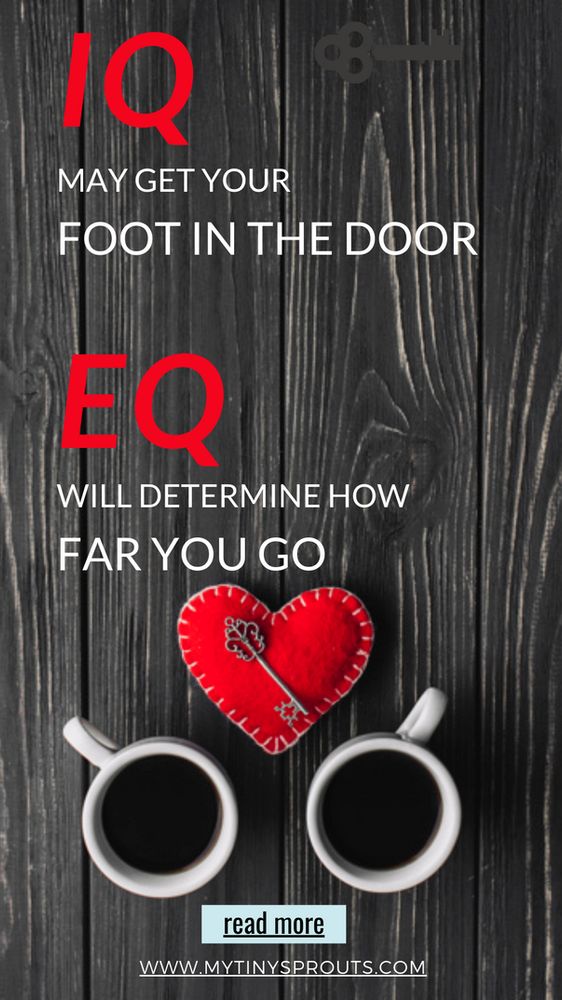
Quick Answer: IQ (Intelligence Quotient) is a standardized score derived from cognitive tests that measure specific mental abilities such as reasoning, memory, and processing speed. Intelligence, by contrast, is a far broader construct that includes creativity, emotional awareness, practical problem-solving, and adaptability.
While IQ tests capture an important dimension of intelligence, they do not, and cannot, measure all of it. Understanding this distinction is essential for interpreting test scores accurately.
When someone says "she has a high IQ," most people hear "she is very intelligent." The two phrases feel interchangeable, but they describe fundamentally different things. One is a test score. The other is a human capacity so complex that psychologists have debated its definition for more than a century.
This confusion is not harmless. Schools use IQ scores to place children into gifted programs or remedial tracks. Employers use cognitive ability tests as hiring filters. Individuals build or destroy self-confidence based on a three-digit number. When we conflate IQ with intelligence, we risk reducing the richness of human cognition to a single data point - and making high-stakes decisions on incomplete information.
"Intelligence is not a single, unitary ability, but rather a composite of several functions. The term denotes that combination of abilities required for survival and advancement within a particular culture."
- Anastasi, A. (1992), What counselors should know about the use and interpretation of psychological tests
The scientific literature draws a clear line between the measurement and the thing being measured. IQ is the ruler; intelligence is the landscape. A ruler can tell you the width of a river, but it cannot describe the current, the depth, or what lives beneath the surface. This article explores both sides of that distinction - what IQ tests actually measure, what they miss, and why the difference matters for education, careers, and self-understanding.
Defining IQ: What the Score Actually Represents
Intelligence Quotient (IQ) is a standardized score calculated from performance on a battery of cognitive tasks administered under controlled conditions. Modern IQ tests are normed so that the population average is 100 with a standard deviation of 15. This means roughly 68% of people score between 85 and 115, and about 95% score between 70 and 130.
The original IQ formula, introduced by German psychologist William Stern in 1912, divided a child's mental age (as determined by test performance) by their chronological age and multiplied by 100. A 10-year-old performing at the level of a 12-year-old would receive an IQ of 120. Modern tests have abandoned this ratio method in favor of deviation IQ, which compares an individual's performance to a statistically normed sample of same-age peers.
What IQ Tests Measure
The most widely used IQ instruments - the Wechsler Adult Intelligence Scale (WAIS-IV), the Stanford-Binet Intelligence Scales (Fifth Edition), and Raven's Progressive Matrices - assess overlapping but somewhat different cognitive domains:
| Test | Primary Domains Measured | Format | Age Range |
|---|---|---|---|
| WAIS-IV | Verbal Comprehension, Perceptual Reasoning, Working Memory, Processing Speed | Individual, proctored | 16-90 |
| Stanford-Binet 5 | Fluid Reasoning, Knowledge, Quantitative, Visual-Spatial, Working Memory | Individual, proctored | 2-85+ |
| Raven's Progressive Matrices | Non-verbal abstract reasoning (fluid intelligence) | Individual or group | 5-65 |
| Cattell Culture Fair III | Fluid intelligence with reduced cultural loading | Group or individual | 8-adult |
Each test yields a composite score that is then converted to the familiar IQ scale. The critical point is that IQ is always relative - it tells you where you stand compared to others, not some absolute quantity of "brain power."
"The IQ test was not designed to measure some platonic ideal of intelligence. It was designed to predict school performance, and at that task it does reasonably well."
- Nisbett, R. E. (2009), Intelligence and How to Get It
Defining Intelligence: The Broader Landscape
Intelligence is a psychological construct - an abstract concept inferred from observable behavior. Unlike IQ, intelligence has no single agreed-upon definition. A 1994 editorial signed by 52 researchers in the Wall Street Journal defined it as:
"A very general mental capability that, among other things, involves the ability to reason, plan, solve problems, think abstractly, comprehend complex ideas, learn quickly and learn from experience."
That definition captures the cognitive core, but many psychologists argue it still leaves out important dimensions. Consider these contrasting scenarios:
- A chess grandmaster who can calculate 20 moves ahead but struggles to navigate a social gathering
- A successful entrepreneur who dropped out of college but reads people brilliantly and adapts to market shifts faster than MBA graduates
- A jazz musician who cannot explain music theory on paper but improvises complex harmonies in real time
All three demonstrate intelligence in meaningful ways, yet only the first would likely score highest on a traditional IQ test.
The Philosophical Divide
The question of whether intelligence is one thing or many things has split the field for over a century:
| Position | Key Proponent | Core Argument | Implication for IQ |
|---|---|---|---|
| Unitary (g-factor) | Charles Spearman (1904) | A single general factor underlies all cognitive performance | IQ tests capture the essential core |
| Multiple Intelligences | Howard Gardner (1983) | At least 8 independent intelligences exist | IQ tests capture only 2-3 of them |
| Triarchic Theory | Robert Sternberg (1985) | Intelligence = analytical + creative + practical | IQ tests measure only the analytical component |
| Emotional Intelligence | Salovey & Mayer (1990) | Emotional processing is a distinct cognitive ability | IQ tests ignore it entirely |
| CHC Theory | Cattell, Horn, Carroll | Hierarchical model with g at the top, broad abilities in the middle, narrow abilities at the base | IQ tests sample broadly but incompletely |
"An intelligence is the ability to solve problems, or to create products, that are valued within one or more cultural settings."
- Gardner, H. (1983), Frames of Mind: The Theory of Multiple Intelligences
The philosophical tension is real: if intelligence is truly a single thing (the g-factor view), then IQ tests are a reasonable approximation. If intelligence is genuinely multiple things, then IQ captures only a fraction of the picture.
The G-Factor: Strongest Argument for IQ
The g-factor (general intelligence factor), first identified by Charles Spearman in 1904, remains the most empirically robust construct in differential psychology. Spearman noticed that students who performed well on one academic subject tended to perform well on others. Statistical analysis revealed a common factor - g - that accounted for a substantial proportion of the variance in test scores across domains.
Why the G-Factor Matters
Modern research has confirmed the g-factor's predictive power:
- Academic achievement: g correlates with school grades at approximately r = 0.50 to 0.60 across meta-analyses (Strenze, 2007)
- Job performance: g predicts job performance at r = 0.50 to 0.65 for complex jobs, making it the single strongest predictor known in industrial-organizational psychology (Schmidt & Hunter, 1998)
- Income: g correlates with lifetime income at roughly r = 0.30 to 0.40 (Strenze, 2007)
- Health and longevity: Higher g is associated with lower mortality risk, likely through better health decision-making (Deary, 2008)
| Outcome | Correlation with g | Source |
|---|---|---|
| Academic performance | r = 0.50-0.60 | Strenze (2007) |
| Job performance (complex roles) | r = 0.50-0.65 | Schmidt & Hunter (1998) |
| Lifetime income | r = 0.30-0.40 | Strenze (2007) |
| Health literacy | r = 0.30-0.50 | Gottfredson (2004) |
| Training success | r = 0.55 | Hunter (1986) |
These are not trivial correlations. In a field where effect sizes above 0.30 are considered meaningful, the g-factor's predictive validity is exceptionally strong.
"The general factor of intelligence is one of the most replicated findings in all of psychology. It is also one of the most misunderstood."
- Deary, I. J. (2001), Intelligence: A Very Short Introduction
The Cattell-Horn-Carroll (CHC) Framework
The CHC theory represents the most comprehensive psychometric model of intelligence. It organizes cognitive abilities into a three-stratum hierarchy:
- Stratum III: General intelligence (g)
- Stratum II: Broad abilities - fluid reasoning (Gf), crystallized intelligence (Gc), short-term memory (Gsm), processing speed (Gs), visual processing (Gv), and others
- Stratum I: Over 70 narrow abilities
IQ tests sample from Stratum II abilities and aggregate upward to estimate g. This means IQ scores are strong but imperfect reflections of general cognitive ability.
Beyond the G-Factor: What IQ Tests Miss
Howard Gardner's Multiple Intelligences
Howard Gardner's 1983 theory proposed that intelligence is not a single capacity but a set of relatively independent modules. His original framework identified seven intelligences, later expanded to eight:
| Intelligence Type | Description | Measured by IQ Tests? | Real-World Example |
|---|---|---|---|
| Linguistic | Sensitivity to language, reading, writing | Yes (partially) | Maya Angelou, skilled trial lawyers |
| Logical-Mathematical | Deductive reasoning, number skills | Yes (directly) | Alan Turing, quantitative analysts |
| Spatial | Mental visualization, navigation | Yes (partially) | Frank Lloyd Wright, surgeons |
| Musical | Perception of rhythm, pitch, timbre | No | Mozart, jazz improvisers |
| Bodily-Kinesthetic | Control of body movements, coordination | No | Simone Biles, skilled surgeons |
| Interpersonal | Understanding others' emotions, motivations | No | Oprah Winfrey, skilled diplomats |
| Intrapersonal | Self-awareness, self-regulation | No | Philosophical thinkers, effective therapists |
| Naturalistic | Recognition of patterns in nature | No | Charles Darwin, experienced botanists |
Gardner's theory has been influential in education - inspiring differentiated instruction and project-based learning - but controversial in psychometrics. Critics, including many intelligence researchers, argue that Gardner's "intelligences" overlap substantially with personality traits, talents, or specific skills rather than meeting the strict criteria for cognitive abilities. The evidence for fully independent intelligences remains debated.
Robert Sternberg's Triarchic Theory
Psychologist Robert Sternberg proposed that intelligence has three distinct components:
- Analytical intelligence - the ability to analyze, evaluate, and judge (what IQ tests measure)
- Creative intelligence - the ability to create, invent, and imagine (largely unmeasured by IQ tests)
- Practical intelligence - the ability to apply knowledge in real-world contexts, sometimes called "street smarts" (not measured by IQ tests)
Sternberg argued that someone with high practical intelligence might outperform a high-IQ individual in business, negotiation, or crisis management - domains where textbook reasoning is insufficient.
"Intelligence, as traditionally defined, is not enough. We need to broaden our concept to include creative and practical abilities."
- Sternberg, R. J. (1997), Successful Intelligence
Emotional Intelligence (EQ)
The concept of emotional intelligence, formalized by Peter Salovey and John Mayer in 1990 and popularized by Daniel Goleman in 1995, describes the ability to:
- Perceive emotions accurately in oneself and others
- Use emotions to facilitate thought
- Understand emotional patterns and their causes
- Manage emotions to achieve goals
Research suggests that EQ contributes to leadership effectiveness, relationship quality, and mental health independently of IQ. A meta-analysis by Joseph and Newman (2010) found that EQ predicted job performance even after controlling for cognitive ability and personality.
Famous Cases: High IQ, Complicated Lives
The distinction between IQ and intelligence becomes vivid when we examine real-world cases:
Christopher Langan (IQ estimated at 195-210) is often called "the smartest man in America." Despite his extraordinary IQ, Langan dropped out of college, worked as a bouncer and a ranch hand for decades, and struggled to gain recognition in academia. His case illustrates that cognitive horsepower alone does not guarantee conventional success - social skills, institutional navigation, and opportunity matter enormously.
Richard Feynman, the Nobel Prize-winning physicist, reportedly scored 125 on a school IQ test - high, but not in the "genius" range. Yet Feynman's contributions to quantum electrodynamics, his extraordinary teaching ability, and his creative problem-solving approach made him one of the most brilliant scientists of the 20th century. His case suggests that creativity, curiosity, and deep engagement can amplify moderate IQ into extraordinary achievement.
Albert Einstein struggled in certain aspects of school and was a late talker as a child. While his IQ is retrospectively estimated at 160+, his genius lay not in raw processing speed but in thought experiments - the ability to imagine himself riding a beam of light or falling in an elevator. This creative, visual intelligence was the engine of general relativity.
How IQ Tests Measure Cognitive Abilities
IQ tests are constructed with considerable psychometric rigor. The most widely administered tests assess four to five broad cognitive domains:
| Cognitive Domain | Example Subtests (WAIS-IV) | What It Measures | How It Relates to Daily Life |
|---|---|---|---|
| Verbal Comprehension | Vocabulary, Similarities, Information | Language knowledge, verbal reasoning | Reading contracts, following complex instructions |
| Perceptual Reasoning | Block Design, Matrix Reasoning, Visual Puzzles | Non-verbal reasoning, spatial analysis | Assembling furniture, reading maps, visual design |
| Working Memory | Digit Span, Arithmetic | Holding and manipulating information | Mental math, following multi-step directions |
| Processing Speed | Symbol Search, Coding | Speed of simple cognitive operations | Data entry, rapid decision-making under time pressure |
Standardization and Norming
IQ tests are normed using large, representative samples - typically 2,000 to 4,000 individuals stratified by age, sex, race/ethnicity, education, and geographic region. The norming process ensures that a score of 100 represents the true population average and that the standard deviation is precisely 15 points.
An important phenomenon to understand is the Flynn Effect: IQ scores have risen approximately 3 points per decade across the 20th century in industrialized nations (Flynn, 1987). This means test norms must be periodically updated, and a score of 100 today represents higher absolute performance than a score of 100 from 30 years ago.
You can take our full IQ test to experience a comprehensive cognitive assessment, or try a quick IQ assessment for a shorter evaluation. For those seeking to improve their familiarity with test formats, a practice IQ test is a useful starting point.
IQ Score Ranges and Their Real-World Meaning
| IQ Range | Classification | Approx. % of Population | Percentile | Real-World Context |
|---|---|---|---|---|
| 145+ | Profoundly Gifted | ~0.1% | 99.9th | Exceptional capacity for abstract, complex work |
| 130-144 | Gifted | ~2% | 98th | Typical threshold for gifted programs; many research scientists, physicians |
| 115-129 | High Average | ~14% | 84th-97th | Above-average academic and professional performance |
| 85-114 | Average | ~68% | 16th-84th | The range where most of the population falls |
| 70-84 | Below Average | ~14% | 2nd-16th | May benefit from additional support in academic settings |
| Below 70 | Significantly Below Average | ~2% | Below 2nd | Often qualifies for specialized educational and social services |
These categories are useful as a general framework, but they should be interpreted with caution. A person scoring 114 and a person scoring 116 differ by only one point - a difference well within the test's margin of error (the Standard Error of Measurement for most IQ tests is approximately 3-5 points). Yet one falls in the "average" category and the other in "high average."
Strengths and Limitations of IQ Testing
Strengths
- Predictive validity: IQ is the single strongest predictor of academic achievement and job performance in cognitively demanding roles
- Reliability: Test-retest reliability for major IQ tests is typically r = 0.90 or higher, meaning scores are very consistent over time
- Standardization: Rigorous norming procedures allow meaningful comparison across populations and time periods
- Clinical utility: IQ tests help identify intellectual disabilities, learning disorders, and giftedness, guiding interventions
Limitations
- Narrow scope: IQ tests do not measure creativity, emotional intelligence, practical wisdom, or social competence
- Cultural loading: Despite efforts to create "culture-fair" tests, performance is influenced by language, education, and familiarity with Western testing conventions
- Situational factors: Test anxiety, motivation, sleep deprivation, and health can all depress scores below true ability
- Reductive framing: Reducing intelligence to a single number can lead to stereotyping, self-limiting beliefs, and misallocation of opportunity
"We should be careful about labeling people on the basis of their IQ test scores. These scores give us a narrow snapshot, not a full portrait."
- Sternberg, R. J. (1997), Successful Intelligence
For those interested in assessing their cognitive abilities, a practice IQ test offers insight into test structure and question types. However, results should always be interpreted as one piece of a larger puzzle.
The Ongoing Debate: Can Intelligence Be Reduced to a Number?
The IQ-vs-intelligence debate is ultimately a question about reductionism: Can a complex, multi-dimensional human capacity be meaningfully captured by a single score?
Proponents of IQ argue that the g-factor is real, measurable, and consequential. It predicts outcomes that matter - education, income, health, even longevity - with a consistency unmatched by almost any other psychological measure. From this perspective, IQ is not perfect, but it is the best tool we have.
Critics of IQ counter that privileging one type of cognitive ability - abstract, decontextualized reasoning - systematically undervalues other forms of intelligence that are equally important for human flourishing. A society that sorts people by IQ risk creating a narrow meritocracy that rewards test-taking skill over creativity, empathy, and practical wisdom.
The truth, as is often the case, lies somewhere in the middle. IQ tests measure something real and important, but that something is a subset of intelligence, not its totality. The most balanced approach is to treat IQ as one lens among many for understanding human cognitive capacity.
Practical Takeaways
- Do not equate your IQ score with your intelligence. IQ measures specific cognitive skills; intelligence encompasses far more.
- Use IQ scores as a starting point, not a final verdict. They are most useful when combined with other assessments and real-world observation.
- Recognize the value of non-IQ strengths. Creativity, emotional intelligence, grit, and practical know-how all contribute to success and fulfillment.
- Be skeptical of anyone who reduces a person to a number. Human cognitive ability is too complex for a single metric.
- Keep learning. The Flynn Effect demonstrates that cognitive abilities are not fixed - they respond to education, environment, and effort.
For those interested in exploring their own cognitive profile, you can take our full IQ test, try a quick assessment, or use a practice IQ test to build familiarity with testing formats. Remember that every assessment reveals only one facet of your unique intellectual profile.
Frequently Asked Questions
Can someone have a high IQ but low intelligence in daily life?
Yes, and it happens more often than people expect. Research on "practical intelligence" by Sternberg (2000) found that analytical ability (what IQ tests measure) and practical ability (solving real-world problems) are only *weakly correlated* at roughly r = 0.20.
High-IQ individuals may struggle with emotional regulation, social navigation, or adapting to unstructured environments. The case of Christopher Langan, estimated IQ above 190, but decades of difficulty translating that into conventional achievement, is a well-known illustration.
Is it possible to improve your IQ score?
Moderately, yes. A meta-analysis by Protzko (2015) found that early childhood education programs can raise IQ by 4-7 points on average. Nutritional supplementation (particularly iron and iodine in deficient populations) can produce similar gains.
In adults, targeted cognitive training can improve performance on *specific* tasks, but the evidence for transfer to general intelligence (raising g) remains mixed. The most reliable ways to maintain and modestly improve cognitive performance are regular exercise, adequate sleep, continuous learning, and social engagement.
Are IQ tests biased against certain groups?
This is one of the most contested questions in psychology. IQ tests are designed to minimize bias through statistical techniques like Differential Item Functioning (DIF) analysis, which identifies and removes questions that perform differently across demographic groups.
However, *structural inequalities* in education, nutrition, healthcare, and exposure to environmental toxins (such as lead) create real differences in test performance that reflect systemic disadvantage rather than innate ability. The American Psychological Association's 1996 task force report, *Intelligence: Knowns and Unknowns*, concluded that group differences in IQ scores are influenced by both genetic and environmental factors, with the relative contributions remaining uncertain.
Does a low IQ mean someone cannot be successful?
Absolutely not. Success is multi-determined, and IQ is only one contributing factor. Research by Angela Duckworth (2016) on *grit*, the combination of passion and perseverance, found that grit predicted achievement in contexts ranging from the National Spelling Bee to West Point military academy, often independently of IQ.
Entrepreneurs, artists, athletes, and community leaders regularly demonstrate that determination, social intelligence, and domain-specific skill can compensate for, and even surpass, raw cognitive ability.
How accurate are online IQ tests compared to official ones?
Most online IQ tests are significantly less reliable. Professionally administered tests like the WAIS-IV have test-retest reliability of r = 0.96 and are validated on samples of thousands. Most online tests lack this rigor: they may not be properly normed, may inflate scores to encourage sharing, and cannot control testing conditions.
A well-designed online test (such as our full IQ test) can provide a *reasonable estimate*, but for clinical, educational, or legal purposes, a proctored test administered by a licensed psychologist is the standard.
What is the main difference between IQ and EQ?
IQ measures cognitive processing: reasoning, memory, pattern recognition, and processing speed. EQ (Emotional Quotient) measures emotional processing: recognizing emotions, understanding their causes, and managing them effectively.
A meta-analysis by O'Boyle et al. (2011) found that EQ accounted for additional variance in job performance beyond what IQ and personality predicted, particularly in roles requiring interpersonal interaction. The two constructs are only modestly correlated (approximately r = 0.15), meaning a person can be high in one and low in the other.
References
- Anastasi, A. (1992). What counselors should know about the use and interpretation of psychological tests. *Journal of Counseling and Development*, 70(5), 610-615.
- Deary, I. J. (2001). *Intelligence: A Very Short Introduction*. Oxford University Press.
- Deary, I. J. (2008). Why do intelligent people live longer? *Nature*, 456, 175-176.
- Duckworth, A. L. (2016). *Grit: The Power of Passion and Perseverance*. Scribner.
- Flynn, J. R. (1987). Massive IQ gains in 14 nations. *Psychological Bulletin*, 101(2), 171-191.
- Gardner, H. (1983). *Frames of Mind: The Theory of Multiple Intelligences*. Basic Books.
- Gottfredson, L. S. (2004). Intelligence: Is it the epidemiologists' elusive "fundamental cause" of social class inequalities in health? *Journal of Personality and Social Psychology*, 86(1), 174-199.
- Joseph, D. L., & Newman, D. A. (2010). Emotional intelligence: An integrative meta-analysis and cascading model. *Journal of Applied Psychology*, 95(1), 54-78.
- Neisser, U., et al. (1996). Intelligence: Knowns and unknowns. *American Psychologist*, 51(2), 77-101.
- Nisbett, R. E. (2009). *Intelligence and How to Get It*. W. W. Norton.
- O'Boyle, E. H., et al. (2011). The relation between emotional intelligence and job performance: A meta-analysis. *Journal of Organizational Behavior*, 32(5), 788-818.
- Protzko, J. (2015). The environment in raising early intelligence: A meta-analysis of the fadeout effect. *Intelligence*, 53, 202-210.
- Salovey, P., & Mayer, J. D. (1990). Emotional intelligence. *Imagination, Cognition and Personality*, 9(3), 185-211.
- Schmidt, F. L., & Hunter, J. E. (1998). The validity and utility of selection methods in personnel psychology. *Psychological Bulletin*, 124(2), 262-274.
- Spearman, C. (1904). "General intelligence," objectively determined and measured. *American Journal of Psychology*, 15(2), 201-292.
- Sternberg, R. J. (1985). *Beyond IQ: A Triarchic Theory of Human Intelligence*. Cambridge University Press.
- Sternberg, R. J. (1997). *Successful Intelligence*. Plume.
- Strenze, T. (2007). Intelligence and socioeconomic success: A meta-analytic review of longitudinal research. *Intelligence*, 35(5), 401-426.
Related Articles

Curious about your IQ?
You can take a free online IQ test and get instant results.
Take IQ Test